

البطولة الوطنية الجامعية للروبوتات وتطبيقات الذكاء الاصطناعيNURAI 2026
شعار NURAIالمشاريع الواعدةحدائق العلوم والتكنولوجيا
→ العودة إلى الجامعات
ملف الجامعة في الدليل الوطني

جامعة المستقبل

⌖ بابل

16 مشروعاً واعداً

الفرق والمشاريع الواعدة

عرض 1–12 من 16 مشروعاً
صورة مشروع "تطبيق أو منظومة PlantX: بيئة برمجية ذكية  لتشخيص أمراض النباتات بالذكاء الاصطناعي متعدد الوسائط وتحسين الري الديناميكي القائم على المناخ المحلي والهندسة المرنة للأنظمة"
المسار البيئي

"تطبيق أو منظومة PlantX: بيئة برمجية ذكية لتشخيص أمراض النباتات بالذكاء الاصطناعي متعدد الوسائط وتحسين الري الديناميكي القائم على المناخ المحلي والهندسة المرنة للأنظمة"

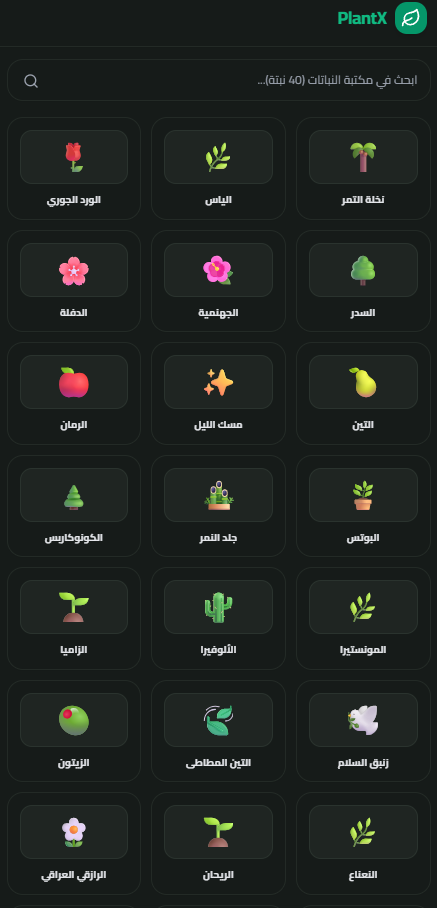
تُمثّل منظومة PlantX نموذجاً هندسياً رائداً في مجال الأنظمة البرمجية الذكية الهجينة وخفيفة الوزن، حيث جرى تصميمها وهندستها بالكامل لتكون تطبيق ويب أحادي الصفحة يعمل بصفة مستقلة على جانب العميل دو…

قراءة الوصف الكامل للمشروع

تُمثّل منظومة PlantX نموذجاً هندسياً رائداً في مجال الأنظمة البرمجية الذكية الهجينة وخفيفة الوزن، حيث جرى تصميمها وهندستها بالكامل لتكون تطبيق ويب أحادي الصفحة يعمل بصفة مستقلة على جانب العميل دون الاعتماد على خوادم خلفية أو قواعد بيانات خارجية تقليدية، مما يضمن كفاءة تشغيلية مطلقة وتكلفة صيانة صفرية للمنظومة. يستهدف هذا المشروع بشكل رئيسي معالجة المعضلة الحرجة المتمثلة في الارتفاع الحاد لمعدلات تلف وموت النباتات والمزروعات المنزلية في البيئات الحضرية، وهو الأمر الذي يعود مباشرة إلى سببين محوريين: الأول هو الافتقار العام للخبرة الزراعية التخصصية لدى الهواة والمزارعين مما يؤدي إلى تشخيصات Phytopathological خاطئة نتيجة تداخل الأعراض البصرية للأمراض الفطرية والبكتيرية ونقص العناصر الغذائية؛ والثاني هو العشوائية وعدم الانتظام في جداول الري التي تعتمد عادةً على توقيتات زمنية جامدة وثابتة لا تأخذ في الحسبان أي تقلبات ومؤشرات مناخية حقيقية وجارية، مما يتسبب في جفاف التربة أو تعفن الجذور. علاوة على التحديات الزراعية، يقدم المشروع حلاً لثغرة برمجية جوهرية تعاني منها التطبيقات الذكية المعاصرة، وهي تجمّد وانهيار برمجيات الويب عند تشغيلها محلياً كملفات أصول داخل الهواتف الذكية نتيجة لقيود الحماية الصارمة للمتصفحات الحديثة وقواعد Sandbox التي تحظر عمل واجهات تحديد المواقع التقليدية GPS في البيئات غير المؤمّنة بشهادات رقمية. ولحل هذه الإشكاليات المعقدة، تدمج المنظومة ثلاثة محاور تقنية غير متزامنة وفائقة المرونة، يبدأ المحور الأول بالتشخيص الذكي متعدد الوسائط عبر توظيف القدرات التحليلية العميقة لنموذج الذكاء الاصطناعي الرائد Gemini 2.5 Flash، حيث يقوم التطبيق بالتقاط دفقات الصور البصرية لأوراق النباتات المصابة محلياً ويقوم بتحويلها فورياً إلى مصفوفات نصية مشفرة بصيغة Base64 وإرسالها عبر بروتوكولات POST آمنة إلى السحابة، ليقوم النموذج بفحص البنية الطيفية لعلامات المرض وإرجاع تقرير تشخيصي محكم البناء مدمج به بروتوكول علاجي تفصيلي وإرشادات للتسميد، مبرمجاً كـ JSON Schema لتحديث واجهات العرض أمام المستخدم بأقل زمن تأخير ممكن. أما المحور التقني الثاني فيرتكز على محرك احتساب ديناميكي يرتبط مباشرة بواجهة Open-Meteo الفلكية للأرصاد الجوية جافاً مؤشرات الرطوبة النسبية ودرجات الحرارة اللحظية المحيطة بالنبات، ليمررها عبر مصفوفة قواعد برمجية مدمجة تعمل بشكل مستمر في الخلفية لتقييم الاحتياجات الهيدرولوجية الفعلية للنبات وتعديل فترات وكميات تذكير الري تلقائياً لتتلاءم مع ظروف المناخ المحلي الغامز من نافذة التغيرات البيئية المستمرة. ويتجلى الابتكار الحقيقي للنظام في المحور الثالث وهو خوارزمية المحاكاة الجغرافية المرنة ثنائية الطبقات المصممة خصيصاً لمقاومة الأعطال؛ حيث يقوم النظام فوراً وعند التقاط أي استثناء أو حظر لواجهة الـ GPS التقليدية بالانتقال صامتاً ودون أي تدخل من المستخدم لتحديد الموقع عبر معرّف الإنترنت IP، وفي حال تعذره التام ينتقل في طبقة الحماية الثانية إلى إحداثيات جغرافية افتراضية ثابتة ومدروسة بدقة جرى إعدادها مسبقاً كخط أساس مرجعي متين متمثل في العراق، مما يضمن استمرارية جلب التنبؤات والبيانات الجوية وتدفق تنبيهات المهام بانتظام تام دون حدوث شاشات بيضاء أو توقف في سياق العمل البرمجي. تم بناء وتطوير المنظومة بالكامل اعتماداً على تقنيات الويب الأساسية والنقية متمثلة في لغة Vanilla JavaScript بمعاييرها الحديثة وتنسيقات Tailwind CSS فائقة الاستجابة، جنباً إلى جنب مع استخدام تقنيات FileReader لترميز الصور محلياً ومحرك LocalStorage لحفظ وتأمين سجلات وحالات البيانات النباتية داخل الحدود الفيزيائية لجهاز المستخدم تعزيزاً لخصوصية البيانات وسريتها المطلقة. هذا التصميم الهيكلي الخالي من أطر العمل الثقيلة والمكتبات المترهلة يضمن سرعة تشغيل واستجابة خاطفة لواجهة المستخدم لا تتعدى 12 مللي ثانية ولا تستهلك موارد الذاكرة أو طاقة البطارية أثناء العمل في الخلفية. وقد أثبتت التجارب العملية والمخبرية للمنظومة كفاءة استثنائية، محققةً معامل دقة وإحكام (F1-Score) يتجاوز الـ 94% عند اختبارها على 150 عينة مخبرية تشمل 40 نوعاً من النباتات والمزروعات المحلية، الأمر الذي يجعل من مشروع PlantX نموذجاً مرناً وقابلاً للتوسع بشكل هائل لدعم مشروعات الزراعة المنزلية المستدامة وتطبيقات الأتمتة الحضرية الذكية بكفاءة تشغيلية واقتصادية لا مثيل لها

صورة مشروع A Hybrid Digital Forensics System for Detecting AI-Generated Fake Images
مسار خدمة المجتمع

A Hybrid Digital Forensics System for Detecting AI-Generated Fake Images

يتناول هذا المشروع حلاً برمجياً مبتكراً لمشكلة سيبرانية حرجة وجوهرية، وهي الانتشار السريع والممنهج للصور والوسائط الرقمية المزيفة والمولدة بالذكاء الاصطناعي التوليدي بدقة فائقة التمويه. يمثل AXON…

قراءة الوصف الكامل للمشروع

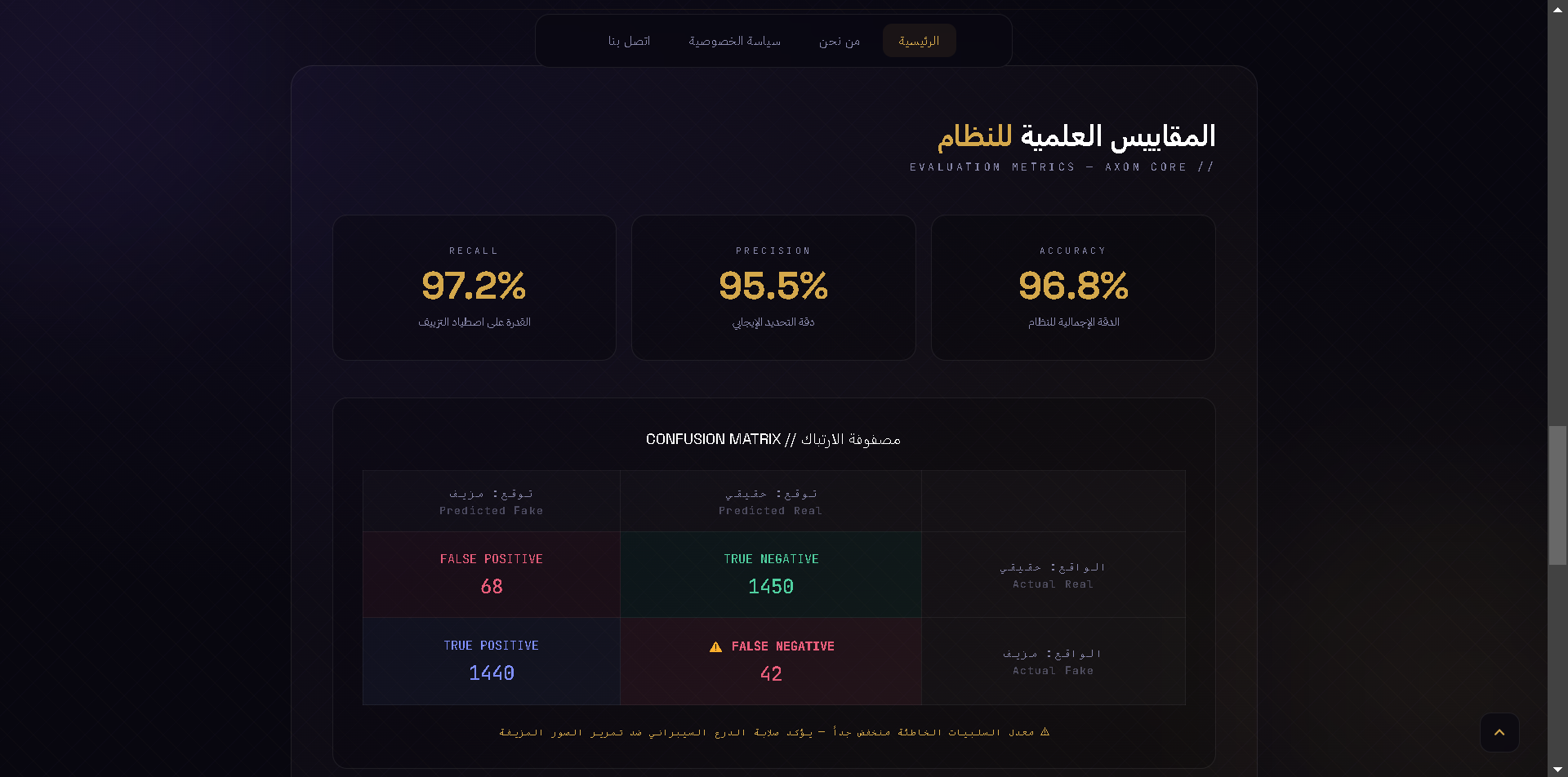
يتناول هذا المشروع حلاً برمجياً مبتكراً لمشكلة سيبرانية حرجة وجوهرية، وهي الانتشار السريع والممنهج للصور والوسائط الرقمية المزيفة والمولدة بالذكاء الاصطناعي التوليدي بدقة فائقة التمويه. يمثل AXON CORE محركاً متكاملاً للتحليل الجنائي الرقمي الهجين (Hybrid Forensic Analysis Engine) ؛ حيث يعمل على كشف تزييف الوسائط البصرية تلقائياً، مع دمج هذا الإطار في تطبيق موبايل هجين وخفيف الوزن يعمل عبر واجهة WebView محسنة تضمن أعلى مستويات الكفاءة والاستقرار. آلية العمل (Methodology & Processing Pipeline) يعمل النظام من خلال معالجة الصور المرفوعة عبر بيئة سحابية آمنة كلياً ومحكومة بسياسة "عدم الاحتفاظ بالبيانات" (Zero-Retention) لحماية خصوصية المستخدمين. بمجرد رفع الملف، يخضع الفحص المتوازي الفوري عبر أربعة أبعاد جنائية منفصلة: شبكات الرؤية المحولة (Vision Transformers - ViTs): لفحص التشوهات الهيكلية الشاملة وتناسق الخصائص البصرية العالمية للصورة. تحويل فوريه السريع (Fast Fourier Transform - FFT): لتحليل النطاق الترددي وكشف الأنماط الشاذة المتكررة الكامنة في عمليات التوليد الاصطناعي. فلاتر النموذج المكاني الغني (Spatial Rich Model - SRM): لاستخراج الضوضاء الفيزيائية الدقيقة (Micro-texture) ورصد أي تلاعب نسيجي على مستوى البكسل. محلل البيانات الوصفية (Metadata Parser): للتحقق من شذوذ بايتات الـ EXIF، وتطابق توقيع الكاميرات، واكتشاف برمجيات التعديل المترابطة. في المرحلة النهائية، يتم دمج وتوليف مخرجات الأبعاد الأربعة بناءً على مبادئ تعلم الآلة الجماعي (Ensemble Learning) لإصدار تقرير جنائي دقيق وحاسم حول موثوقية الصورة. النتائج المتوقعة (Expected Outcomes) دقة جنائية فائقة العتبة: حقق النظام دقة كشف إجمالية موثقة رياضياً تصل إلى 96.8%، بمعدل دقة (Precision) يبلغ 95.5%، ومعدل استدعاء (Recall) يبلغ 97.2% بعد فحص مستودع اختبار ضخم. أداء فائق الخفة والمثالية: أدى الانتقال إلى كتل الأصول الهيكلية الثابتة بدلاً من برمجيات الرسم الديناميكي المستمر إلى خفض استهلاك معالج الأجهزة المحمولة (CPU) بنسبة 70%، مما أزال أي ثقل أو تعليق بداخل الـ WebView. استجابة فورية خالية من التكلفة: انخفض زمن التحليل الشامل السحابي المتوازي إلى أقل من 3 ثوانٍ فقط لكل صورة، مع تصفير التكلفة التشغيلية على حواسب المستخدمين. أمن وخصوصية مطلقة: تصفير مخاطر تسريب البيانات من خلال الحذف التلقائي الفوري للأصول الرقمية بمجرد انتهاء فحص الصور.

صورة مشروع A Non-Intrusive Load Monitoring (NILM) System Using ESP32 and Machine Learning for Real-Time Appliance Recognition
المسار البيئي

A Non-Intrusive Load Monitoring (NILM) System Using ESP32 and Machine Learning for Real-Time Appliance Recognition

يتناول هذا المشروع مشكلةً جوهريةً في مجال مراقبة الطاقة وتصنيف الأحمال الكهربائية المنزلية في الوقت الحقيقي باستخدام أجهزة إنترنت الأشياء منخفضة التكلفة. ويستند الحل المقترح إلى بنية معمارية ثنائ…

قراءة الوصف الكامل للمشروع

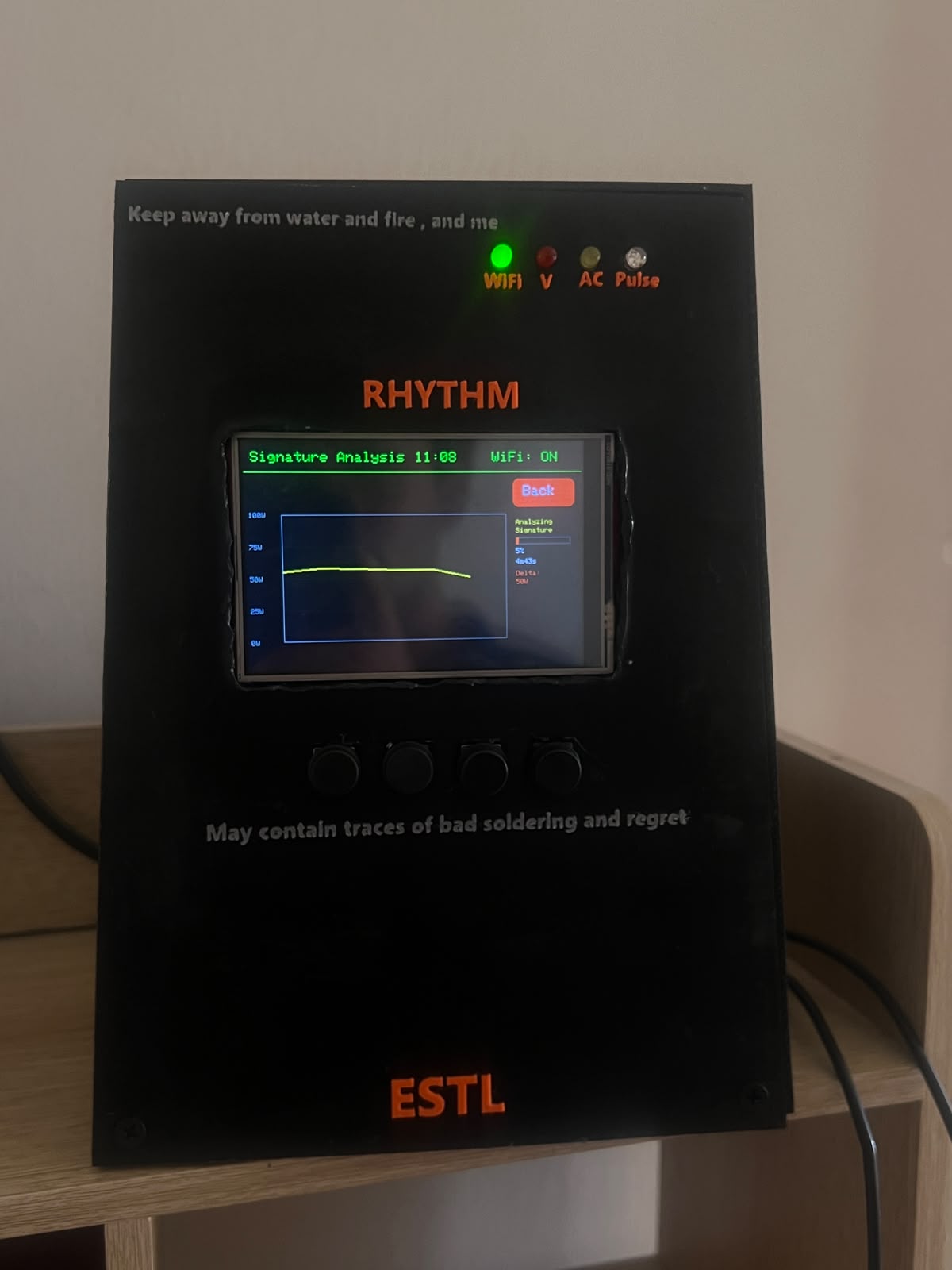
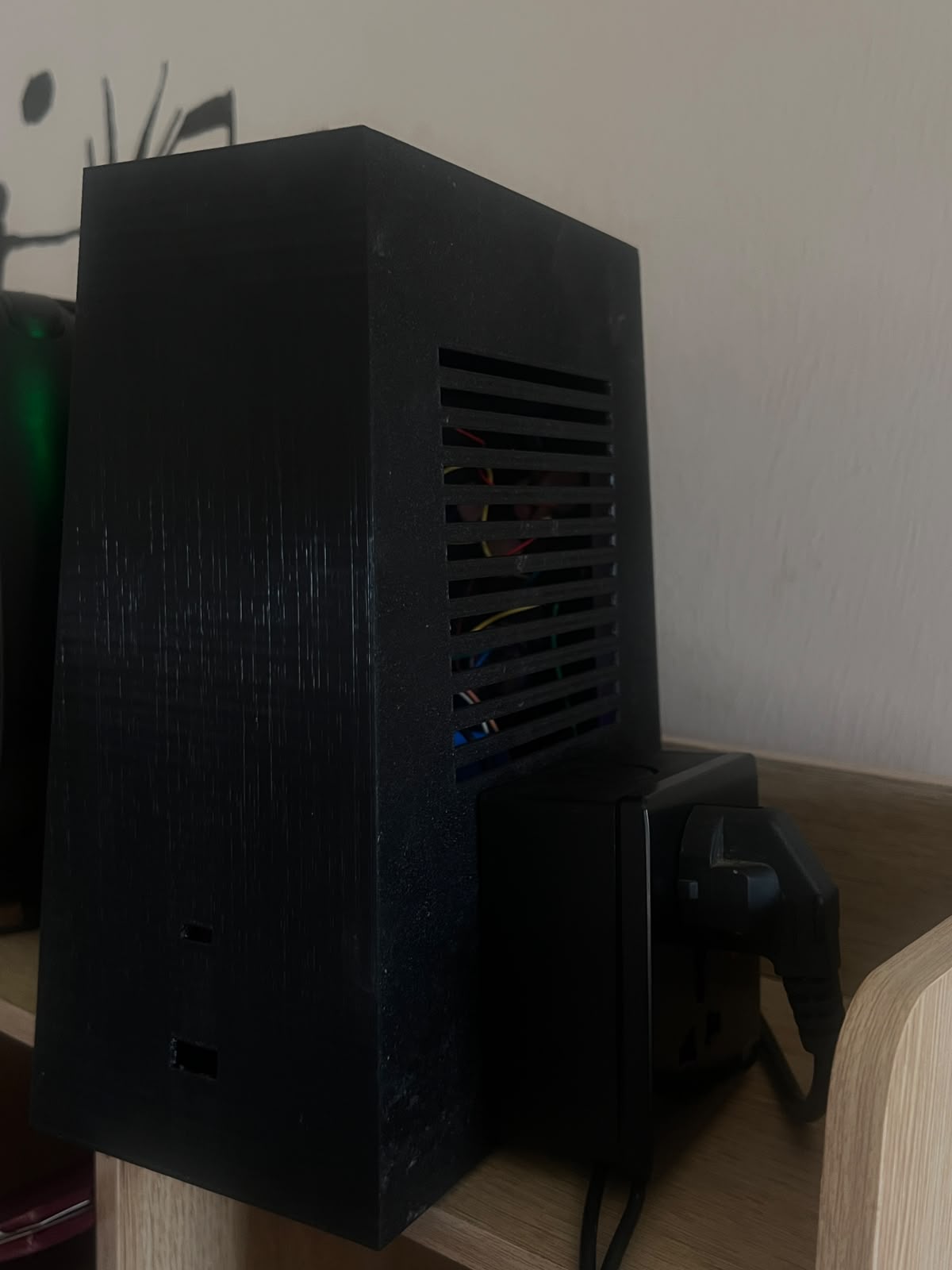
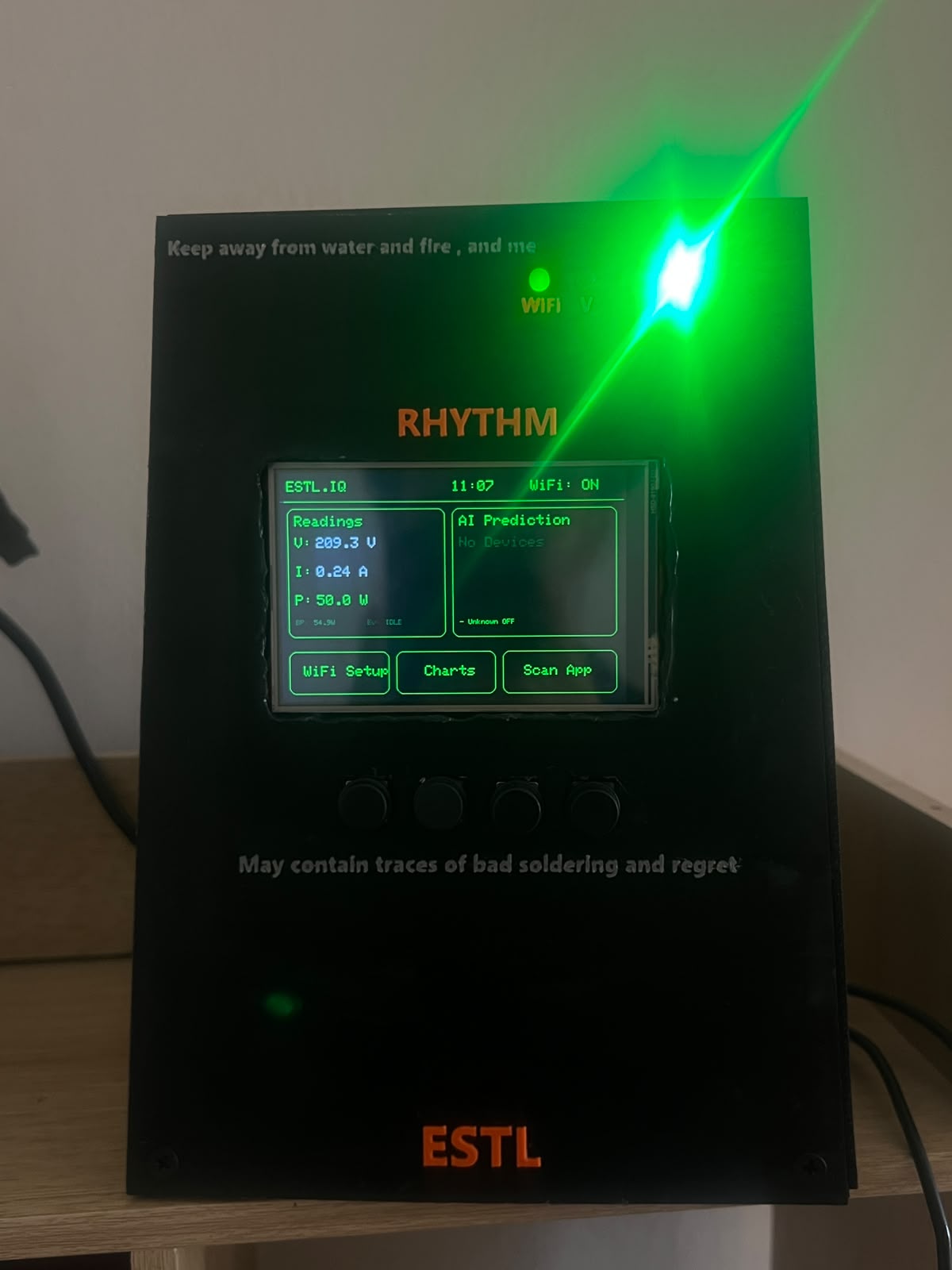
يتناول هذا المشروع مشكلةً جوهريةً في مجال مراقبة الطاقة وتصنيف الأحمال الكهربائية المنزلية في الوقت الحقيقي باستخدام أجهزة إنترنت الأشياء منخفضة التكلفة. ويستند الحل المقترح إلى بنية معمارية ثنائية التحكم، حيث يعمل متحكم أردوينو (Arduino Uno) كعقدة مخصصة لقراءة قراءات الحساسات وتمريرها عبر الاتصال التسلسلي (UART) إلى متحكم Wemos D1 R32 (ESP32) لمعالجة البيانات عند الحافة. يدمج النظام مصنفا هجينا يعتمد على القواعد الحتمية وخوارزمية الغابة العشوائية لتعلم الآلة، وتقنية برمجية مبتكرة لإزالة التشويش تُعرف باسم تعمية قراءات الحساس (ADC Blanking) بهدف تحديد الأحمال المنزلية الفردية بدقة من إشارة القدرة الكلية عند لوحة التوزيع الرئيسية، دون الحاجة إلى مقابس ذكية موجهة أو تعديلات هاردوير. وتشمل النتائج المتوقعة التعرف الآني على الأجهزة بدقة تصنيف تتجاوز 95 % عبر ثماني فئات مختلفة ، والقضاء التام على القراءات الوهمية الناتجة عن إرسال الواي فاي (التي تصل إلى 100 واط)، مع عرض مباشر للبيانات عبر لوحة تحكم ويب سحابية تعتمد على قاعدة بيانات Firebase.

صورة مشروع AI-Enabled Smart Stand-Up Wheelchair with Computer Vision and Gaze-Based Control for Assistive Healthcare Applications
المسار الطبي

AI-Enabled Smart Stand-Up Wheelchair with Computer Vision and Gaze-Based Control for Assistive Healthcare Applications

يمثل هذا المشروع منصة ذكية متكاملة للتنقل والرعاية الصحية المساندة، وتُعد من أوائل المشاريع البحثية في العراق التي توظف تقنيات الذكاء الاصطناعي (AI)، والرؤية الحاسوبية (Computer Vision)، والحوسبة…

قراءة الوصف الكامل للمشروع

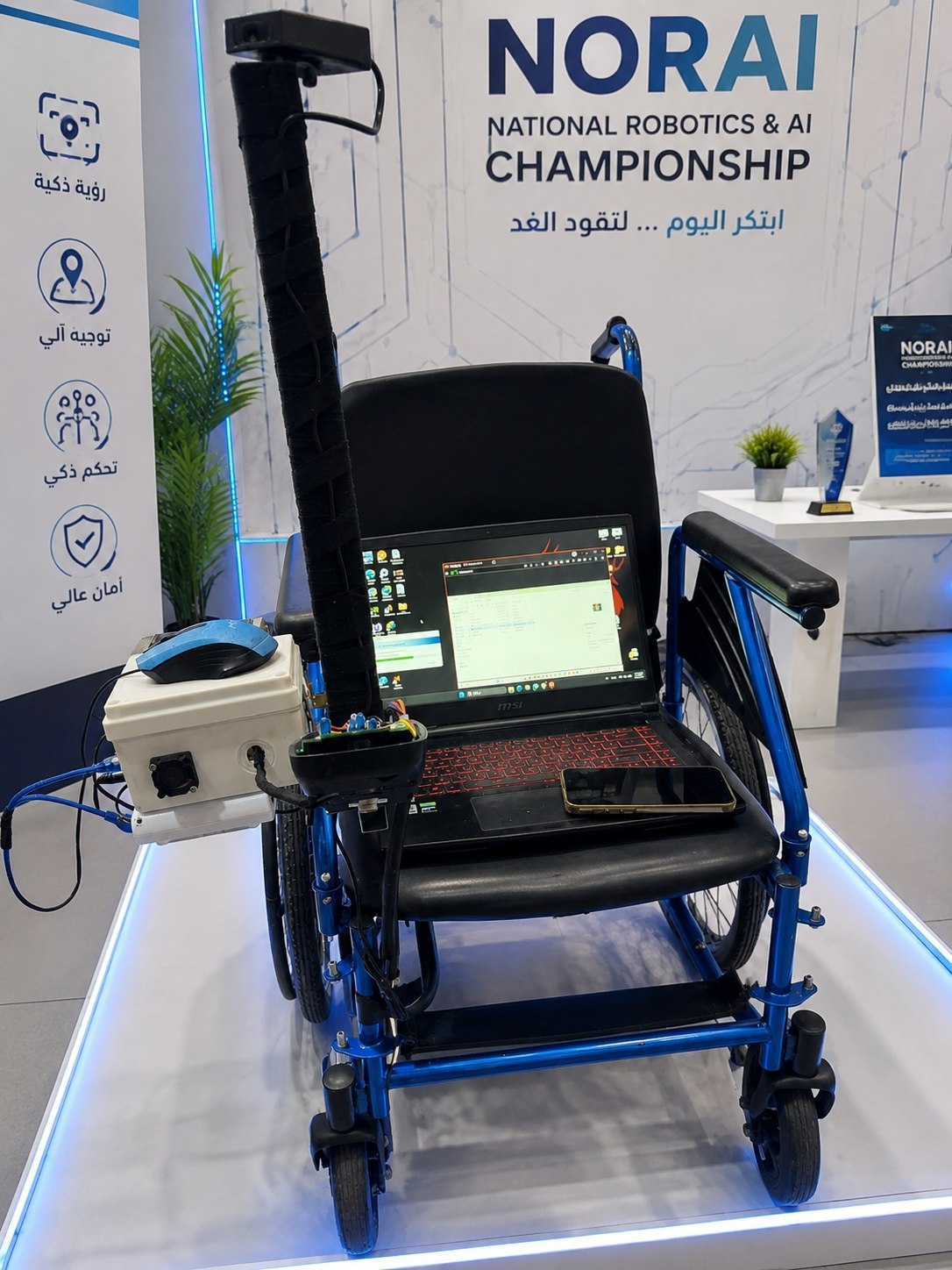
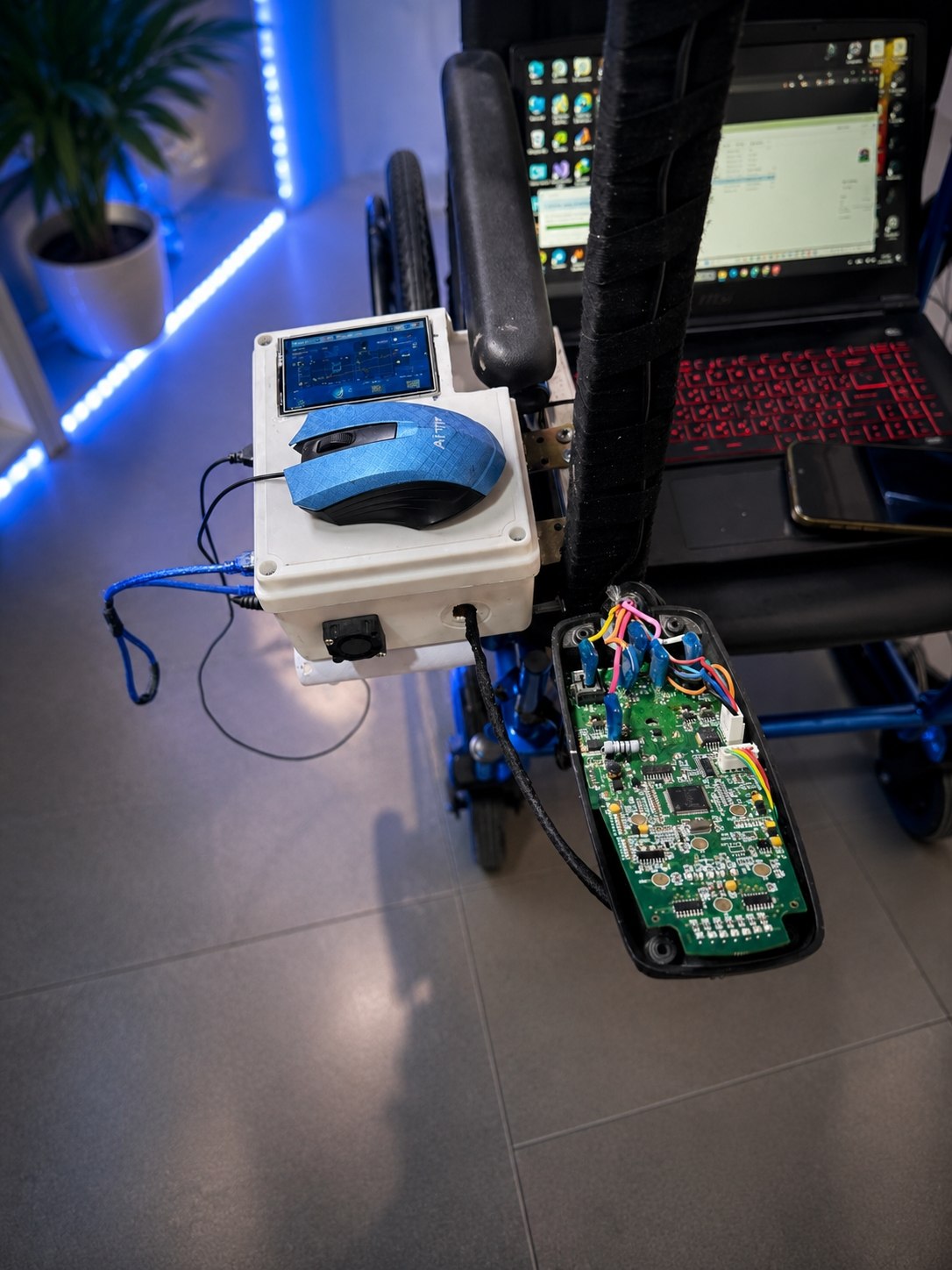
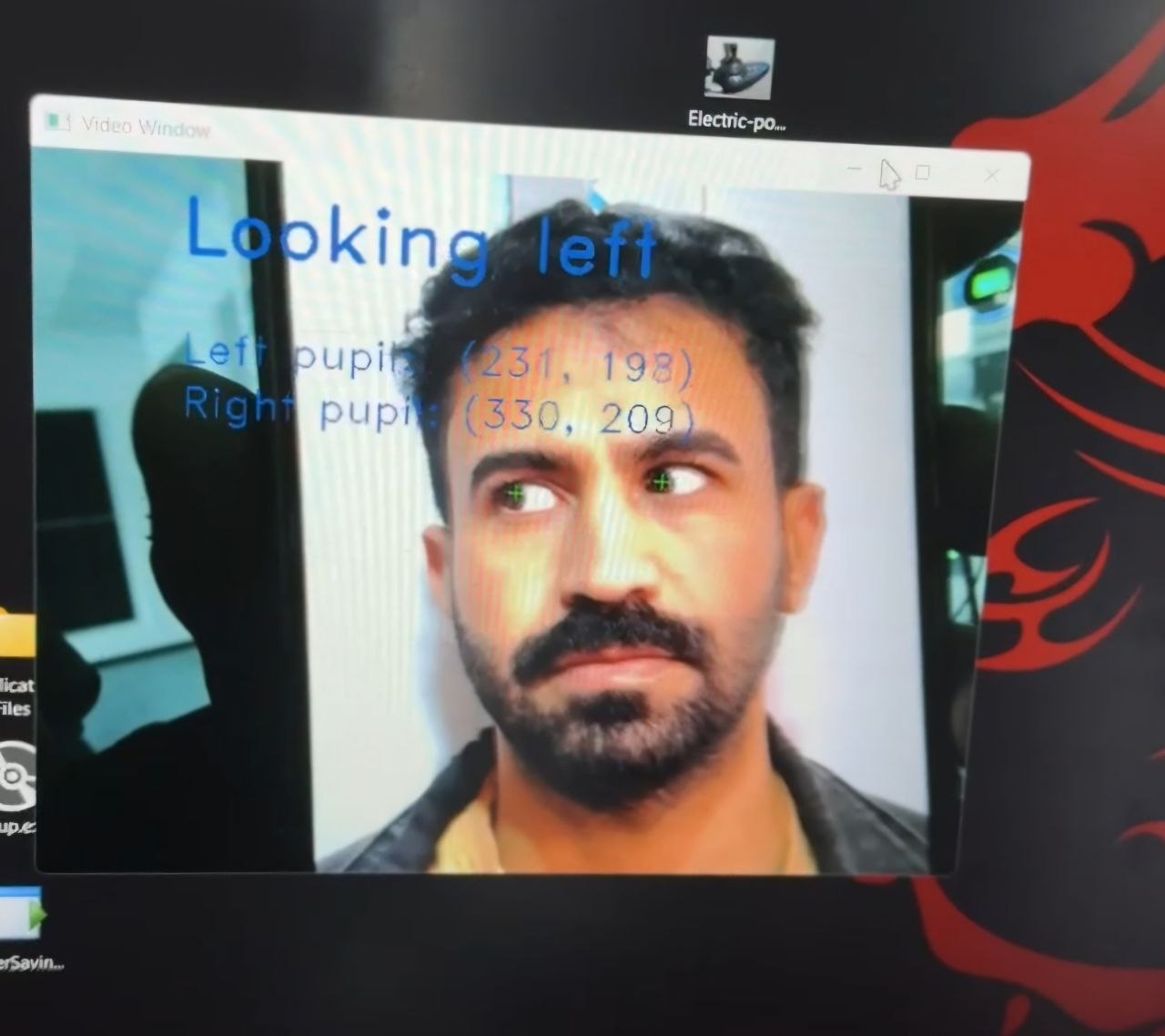
يمثل هذا المشروع منصة ذكية متكاملة للتنقل والرعاية الصحية المساندة، وتُعد من أوائل المشاريع البحثية في العراق التي توظف تقنيات الذكاء الاصطناعي (AI)، والرؤية الحاسوبية (Computer Vision)، والحوسبة الطرفية (Edge Computing)، وإنترنت الأشياء (IoT) ضمن نظام واحد يهدف إلى تمكين الأشخاص ذوي الإعاقة وكبار السن من التنقل بصورة أكثر استقلالية وأماناً. تعتمد المنصة على كرسي متحرك ذكي قابل للوقوف (Stand-Up Wheelchair) مزود بوحدة Raspberry Pi، وكاميرا ذكية، ووحدات تحكم إلكترونية ومستشعرات متنوعة، حيث تتيح للمستخدم التحكم بحركة الكرسي من خلال تتبع حركة العين باستخدام خوارزميات الذكاء الاصطناعي، مع تنفيذ أوامر الحركة بدقة وسلاسة. كما يدعم النظام التعرف على الوجه لضمان الاستخدام الآمن، وإرسال تنبيهات طارئة مرفقة بالموقع الجغرافي (GPS) إلى ذوي المستخدم أو الجهات المسؤولة عند الحاجة، مما يعزز مستوى السلامة والاستجابة السريعة. ويمتاز المشروع بتصميم معياري منخفض الكلفة وقابل للتطوير، يتيح مستقبلاً دمج تقنيات الملاحة الذاتية، وتجنب العوائق، ومراقبة المؤشرات الحيوية، والاتصال السحابي، ليكون منصة بحثية وتعليمية متقدمة تدعم تطبيقات الرعاية الصحية الذكية (Healthcare 5.0)، وتسهم في تحسين جودة حياة المستخدمين وتعزيز الابتكار في مجال التقنيات الطبية المساندة.

صورة مشروع An Intelligent IoT-Based Industrial Robotic Workcell with Edge Computing for Real-Time Material Handling, Remote Supervision, and Environmental Safety Monitoring
المسار الصناعي

An Intelligent IoT-Based Industrial Robotic Workcell with Edge Computing for Real-Time Material Handling, Remote Supervision, and Environmental Safety Monitoring

يمثل هذا المشروع منصة تصنيع ذكية متكاملة تعد من أوائل المنصات البحثية والتعليمية من هذا النوع في العراق، حيث تجمع بين الروبوتات الصناعية، والحوسبة الطرفية (Edge Computing)، وإنترنت الأشياء الصناع…

قراءة الوصف الكامل للمشروع

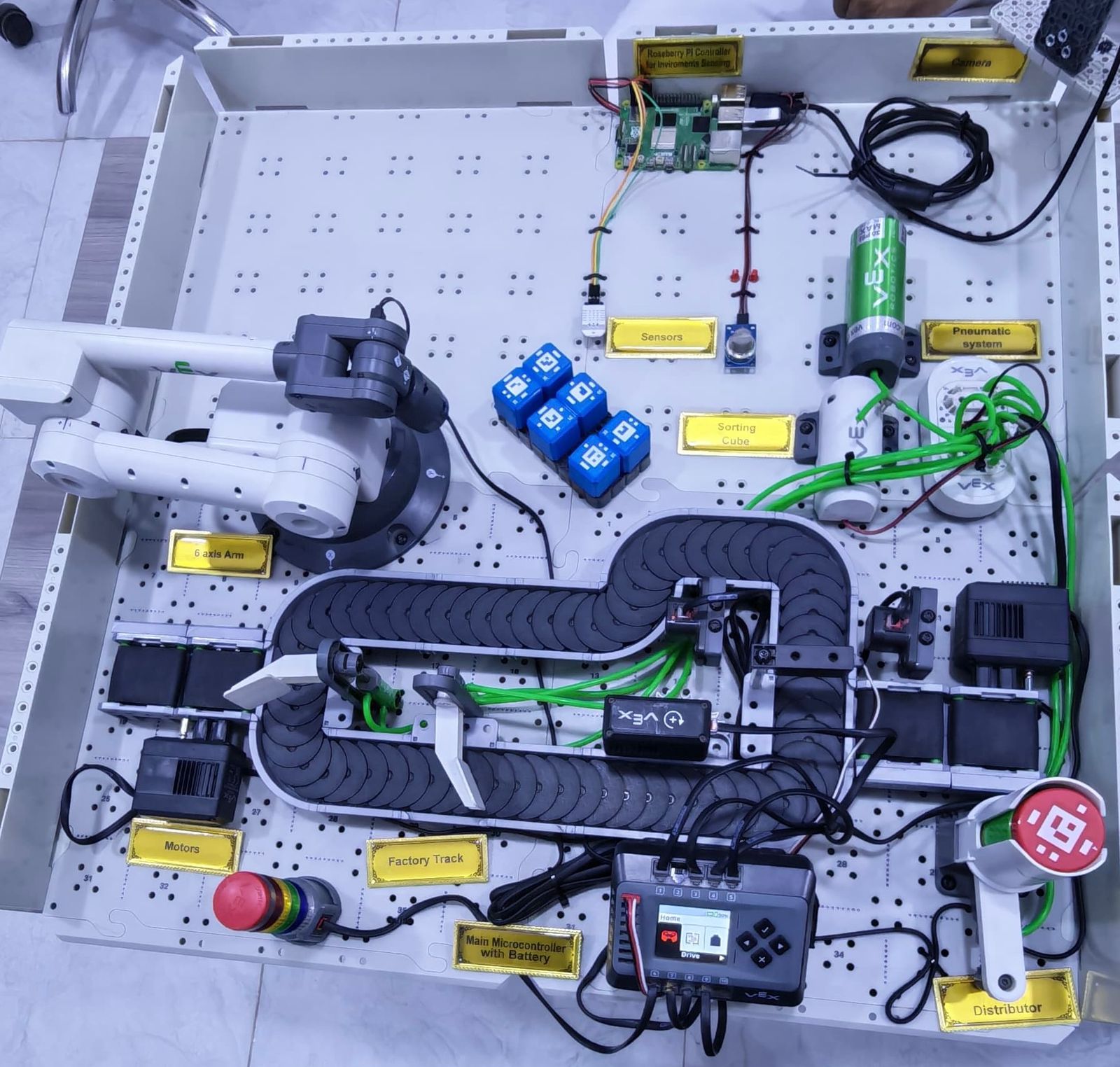
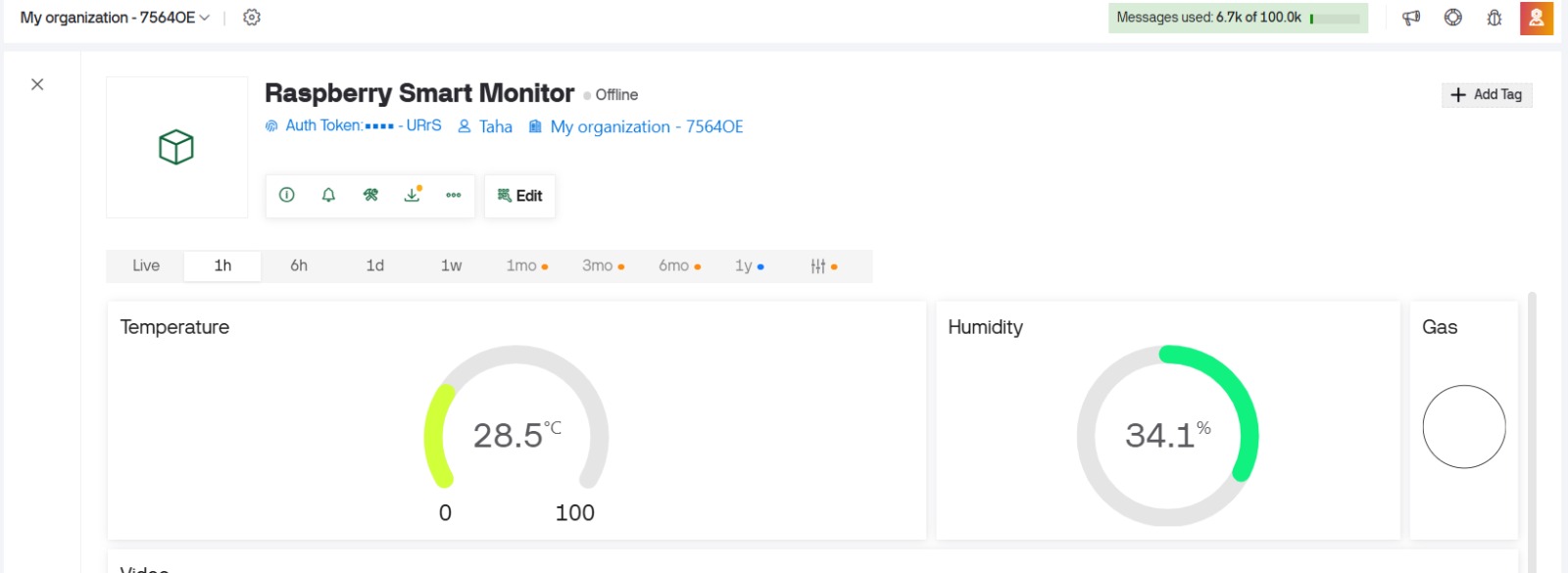
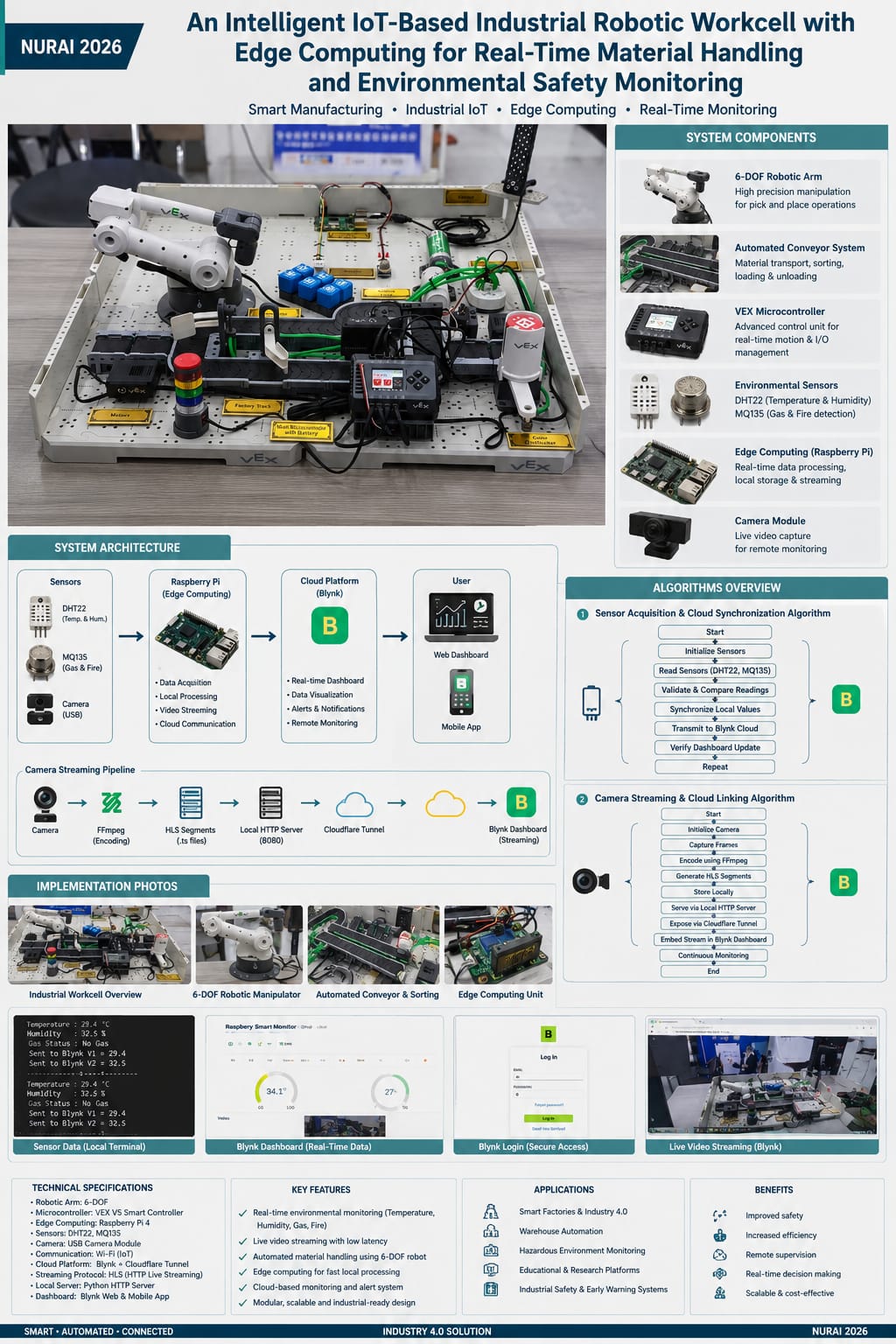
يمثل هذا المشروع منصة تصنيع ذكية متكاملة تعد من أوائل المنصات البحثية والتعليمية من هذا النوع في العراق، حيث تجمع بين الروبوتات الصناعية، والحوسبة الطرفية (Edge Computing)، وإنترنت الأشياء الصناعي (IIoT)، والمراقبة البيئية الذكية، والإشراف الصناعي المباشر ضمن نظام سيبراني–فيزيائي (Cyber-Physical System) موحد، بما يتوافق مع مفاهيم Industry 5.0 والمصانع الذكية. تعتمد المنصة على ذراع روبوتية صناعية سداسية درجات الحرية (6-DOF) مرتبطة بنظام ناقل ذكي لمناولة المواد، ووحدة Raspberry Pi 5 للحوسبة الطرفية، إلى جانب مجموعة من الحساسات الصناعية والكاميرات الذكية. وتتميز بقدرتها على تنفيذ عمليات تحميل ونقل وفرز وتفريغ المنتجات بصورة آلية، مع تمييز ألوان المنتجات (Color Sorting)، وتحديد المسافة والموقع الدقيق لأي منتج أو جسم داخل منطقة العمل باستخدام تقنيات الرؤية الحاسوبية والاستشعار الذكي، إضافة إلى التحكم الديناميكي بسرعة سير الناقل (Conveyor Belt) وفق متطلبات العملية الصناعية وطبيعة المنتجات. كما توفر المنصة نظاماً متكاملاً لمراقبة درجة الحرارة والرطوبة والغازات الخطرة بشكل لحظي، مع معالجة البيانات محلياً عبر الحوسبة الطرفية قبل مزامنتها مع المنصة السحابية، مما يقلل زمن الاستجابة ويعزز موثوقية النظام. وتتيح لوحة التحكم السحابية متابعة جميع العمليات الصناعية والبيئية وبثاً مرئياً مباشراً، بما يسمح بالإشراف والتحكم عن بُعد في الزمن الحقيقي. ويمثل المشروع بيئة بحثية وتعليمية متقدمة لدعم تطبيقات الروبوتات الصناعية، والتصنيع الذكي، وإنترنت الأشياء الصناعي، والحوسبة الطرفية، كما يتميز بتصميم معياري قابل للتطوير مستقبلاً لدمج الذكاء الاصطناعي، والرؤية الحاسوبية، والتوأم الرقمي (Digital Twin)، والصيانة التنبؤية، والروبوتات التعاونية، ليشكل منصة متكاملة تدعم التحول الرقمي والابتكار في المصانع الذكية ومختبرات الهندسة الحديثة.

صورة مشروع EyeQ platform
المسار الطبي

EyeQ platform

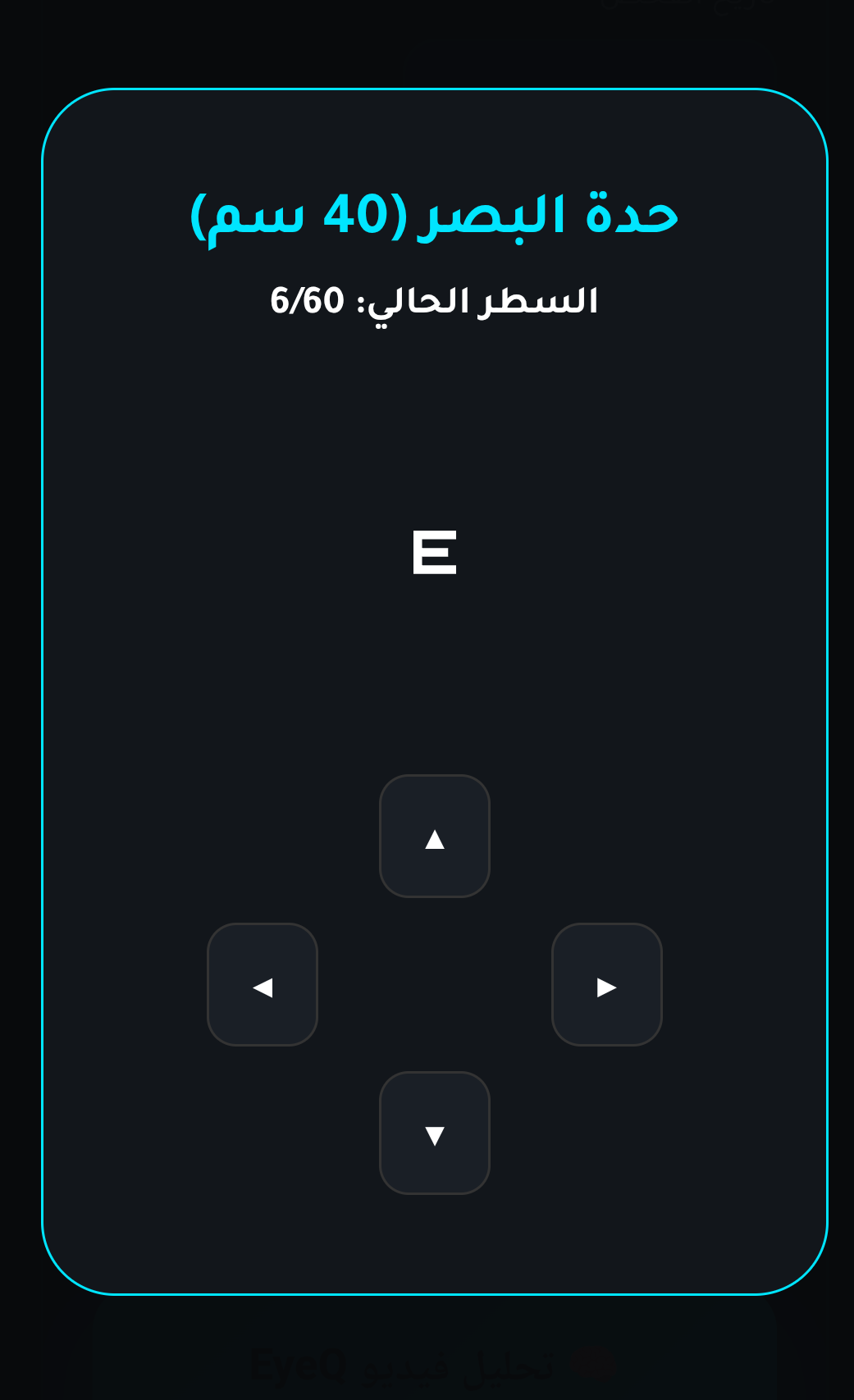
EyeQ is an innovative software platform designed to revolutionize early eye diagnosis by transforming smart devices into comprehensive vision testing tools. It combines standard Visual Acuity tes…

قراءة الوصف الكامل للمشروع

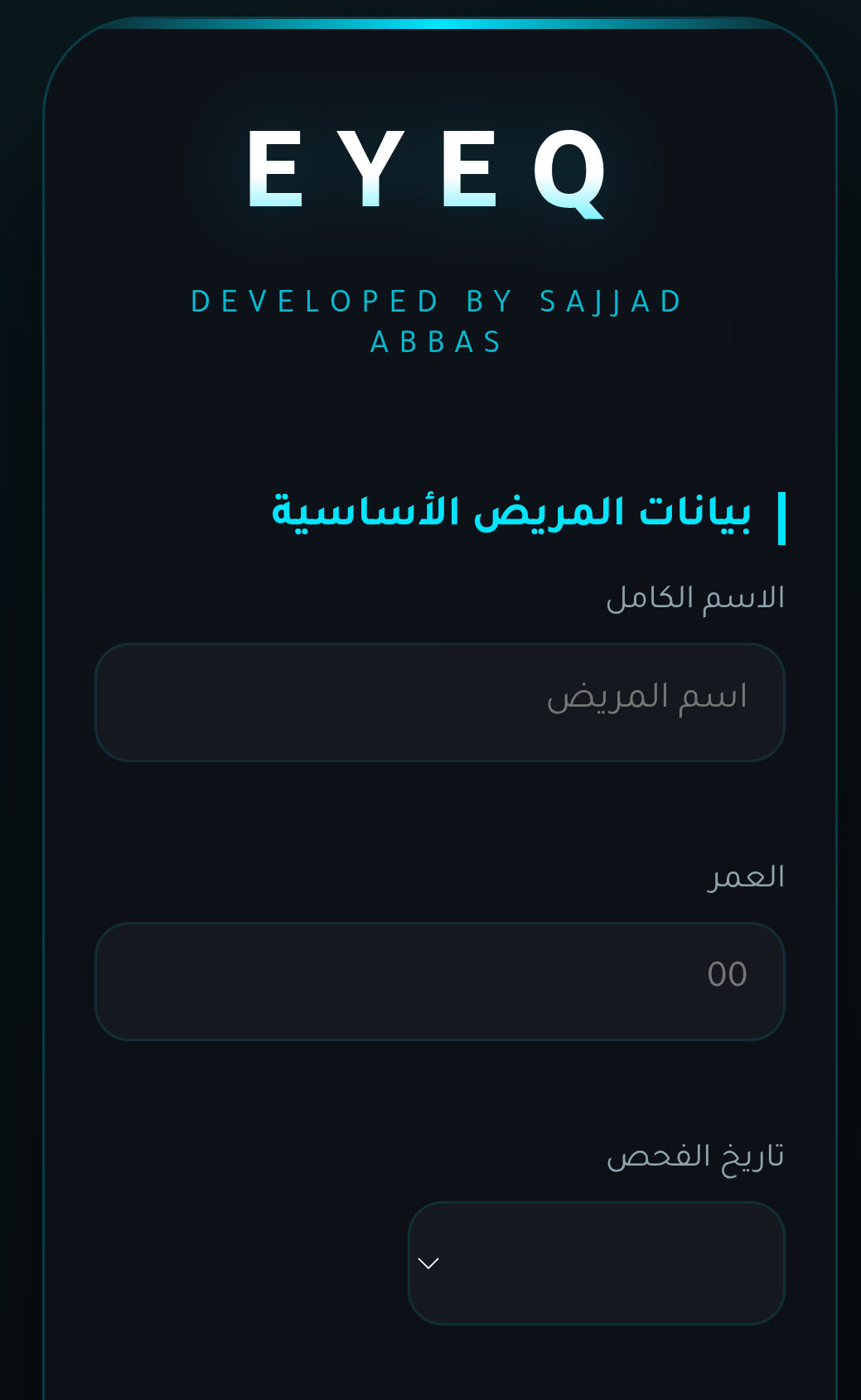
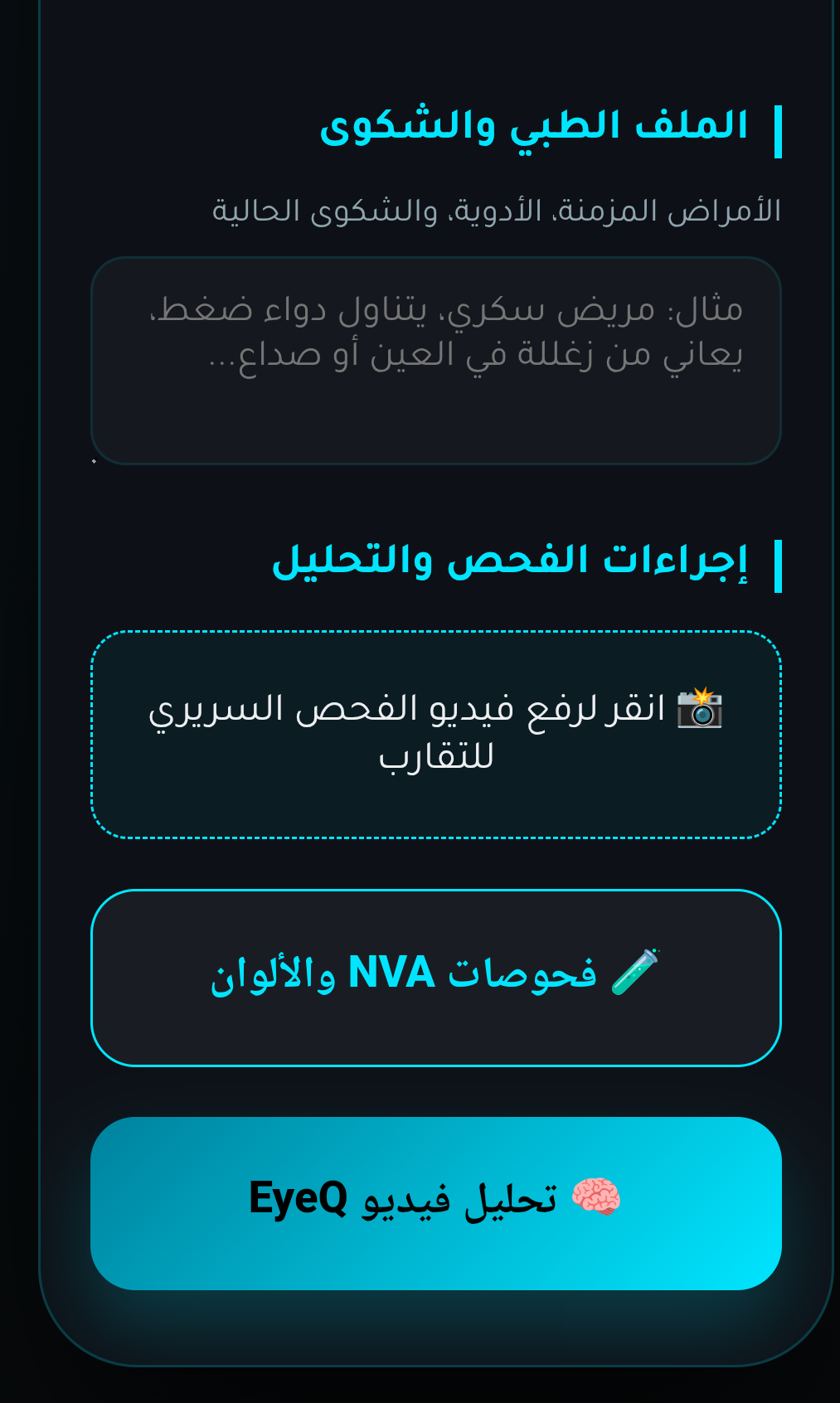
EyeQ is an innovative software platform designed to revolutionize early eye diagnosis by transforming smart devices into comprehensive vision testing tools. It combines standard Visual Acuity testing with advanced neuro-optical analysis to detect both refractive errors and complex eye movement disorders simultaneously. By utilizing computer vision technology, EyeQ offers a precise, non-invasive, and accessible solution for identifying conditions ranging from simple nearsightedness to subtle issues like convergence insufficiency and strabismus, making professional eye care available to everyone.

صورة مشروع Intelligent Robotic Sorting System
المسار الصناعي

Intelligent Robotic Sorting System

This project aims to design and implement an Intelligent Robotic Sorting System based on Artificial Intelligence (AI) and Deep Learning techniques to automate the sorting of industrial components…

قراءة الوصف الكامل للمشروع

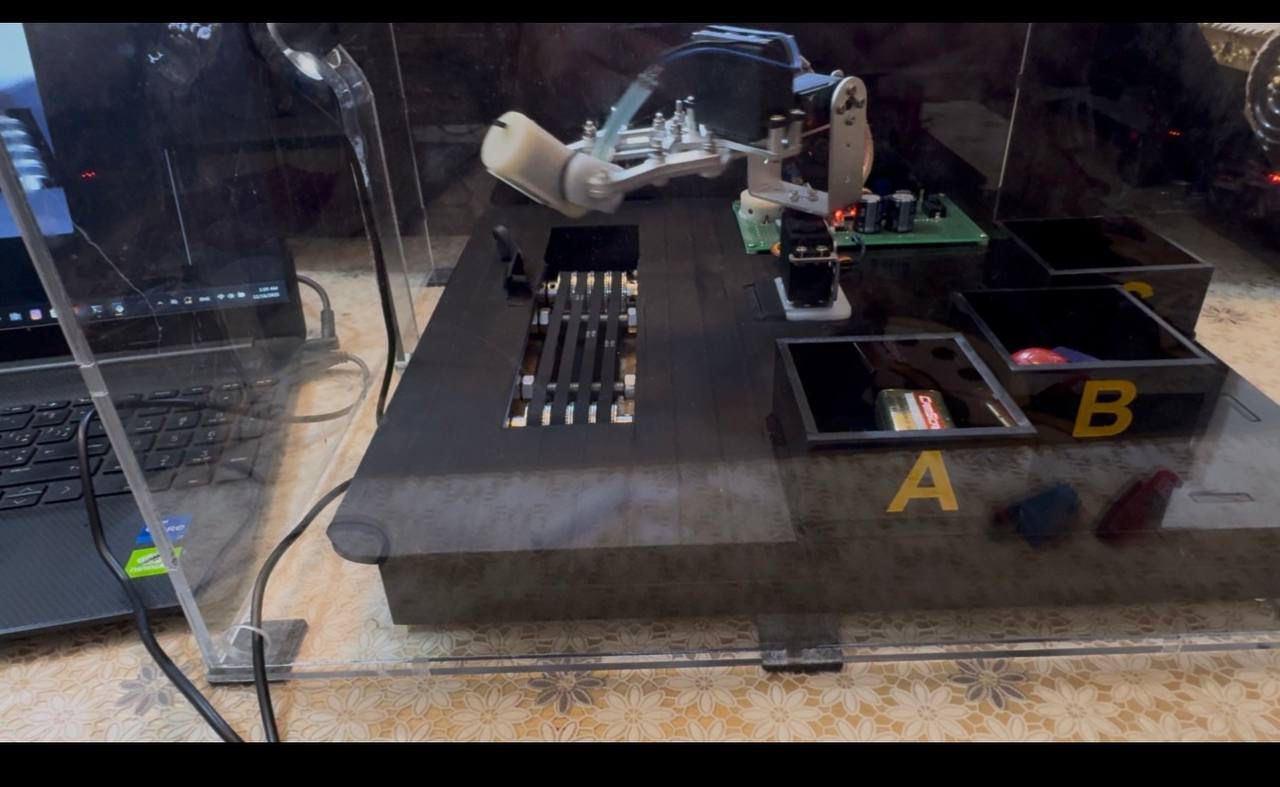
This project aims to design and implement an Intelligent Robotic Sorting System based on Artificial Intelligence (AI) and Deep Learning techniques to automate the sorting of industrial components with high accuracy and efficiency. The system consists of a robotic arm integrated with a vision module (camera), where images of objects on a conveyor belt are captured and processed using a Convolutional Neural Network (CNN) model to identify and classify each item. Based on the classification results, the robotic arm autonomously picks and places each object into its designated category. The system is also capable of detecting unknown or defective items (anomalies) and rejecting them to ensure quality control. A key feature of the system is its ability to operate in unstructured environments, recognizing objects regardless of their orientation or position. Additionally, the system is connected to Microsoft Excel to automatically log production data, including the number of sorted items and rejected impurities, enabling real-time monitoring and performance analysis. This project contributes to reducing human error, increasing productivity, and advancing smart automation in line with Industry 4.0 requirements.

صورة مشروع Ishtar Guardian Eye: A Multi-Modal Sensor Fusion Platform for Autonomous Drone Detection and Tracking
مسار خدمة المجتمع

Ishtar Guardian Eye: A Multi-Modal Sensor Fusion Platform for Autonomous Drone Detection and Tracking

Ishtar Guardian Eye is a low-cost multi-modal cyber-physical platform designed for real-time drone detection, verification, and tracking. The system combines three complementary sensing channels:…

قراءة الوصف الكامل للمشروع

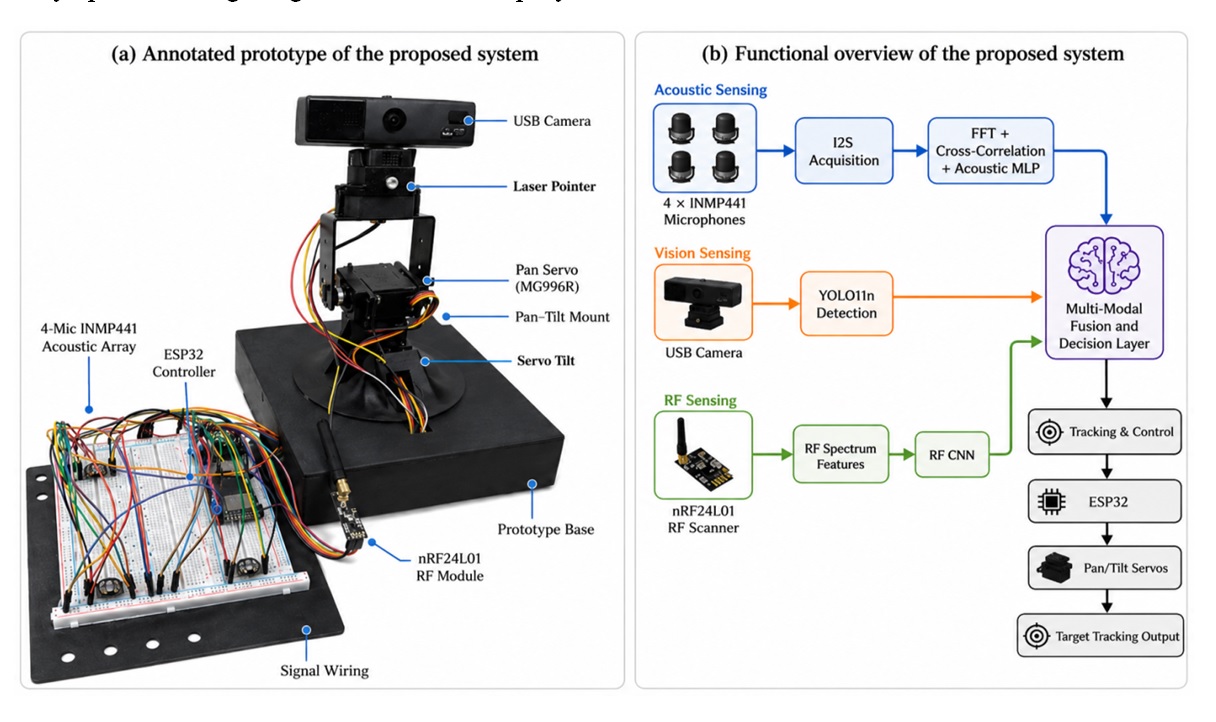
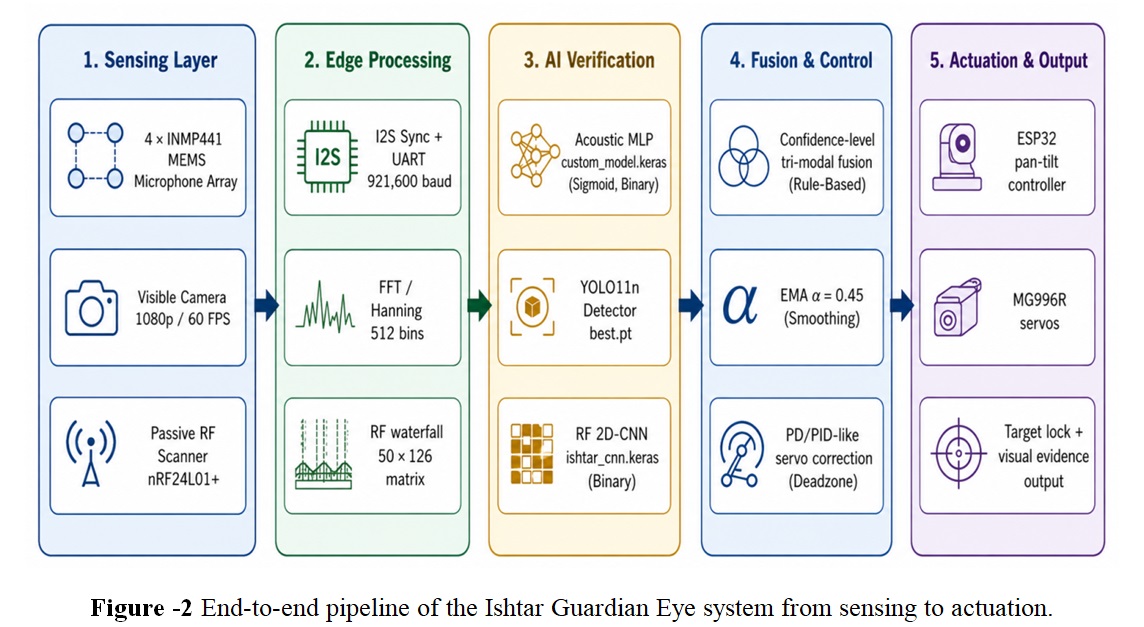
Ishtar Guardian Eye is a low-cost multi-modal cyber-physical platform designed for real-time drone detection, verification, and tracking. The system combines three complementary sensing channels: a four-microphone INMP441 acoustic array for early warning and relative direction estimation, a YOLO11n computer-vision module for drone recognition and target localization, and an nRF24L01-based RF scanner with a CNN model for detecting suspicious 2.4 GHz communication activity. The platform uses ESP32-based embedded hardware to acquire acoustic and RF signals, while the main software coordinates the sensing outputs through rule-based decision logic. Acoustic cues guide the search direction, visual detection activates closed-loop pan-tilt tracking, and RF analysis provides independent supporting evidence. Exponential Moving Average smoothing and deadzone-gated PD-like control improve servo stability and reduce mechanical jitter. Ishtar Guardian Eye demonstrates how artificial intelligence, robotics, IoT, and sensor fusion can be integrated into a practical and scalable solution for community safety, smart surveillance, public-event protection, and critical infrastructure monitoring.

صورة مشروع NeoRad AI
المسار الطبي

NeoRad AI

NeoRad AI هو مشروع مبتكر يعتمد على تقنيات الذكاء الاصطناعي والتعلّم العميق لتطوير منصة ذكية متخصصة في تحليل الصور الطبية، بهدف دعم الأطباء واختصاصيي الأشعة في الوصول إلى التشخيص المناسب بسرعة فائ…

قراءة الوصف الكامل للمشروع

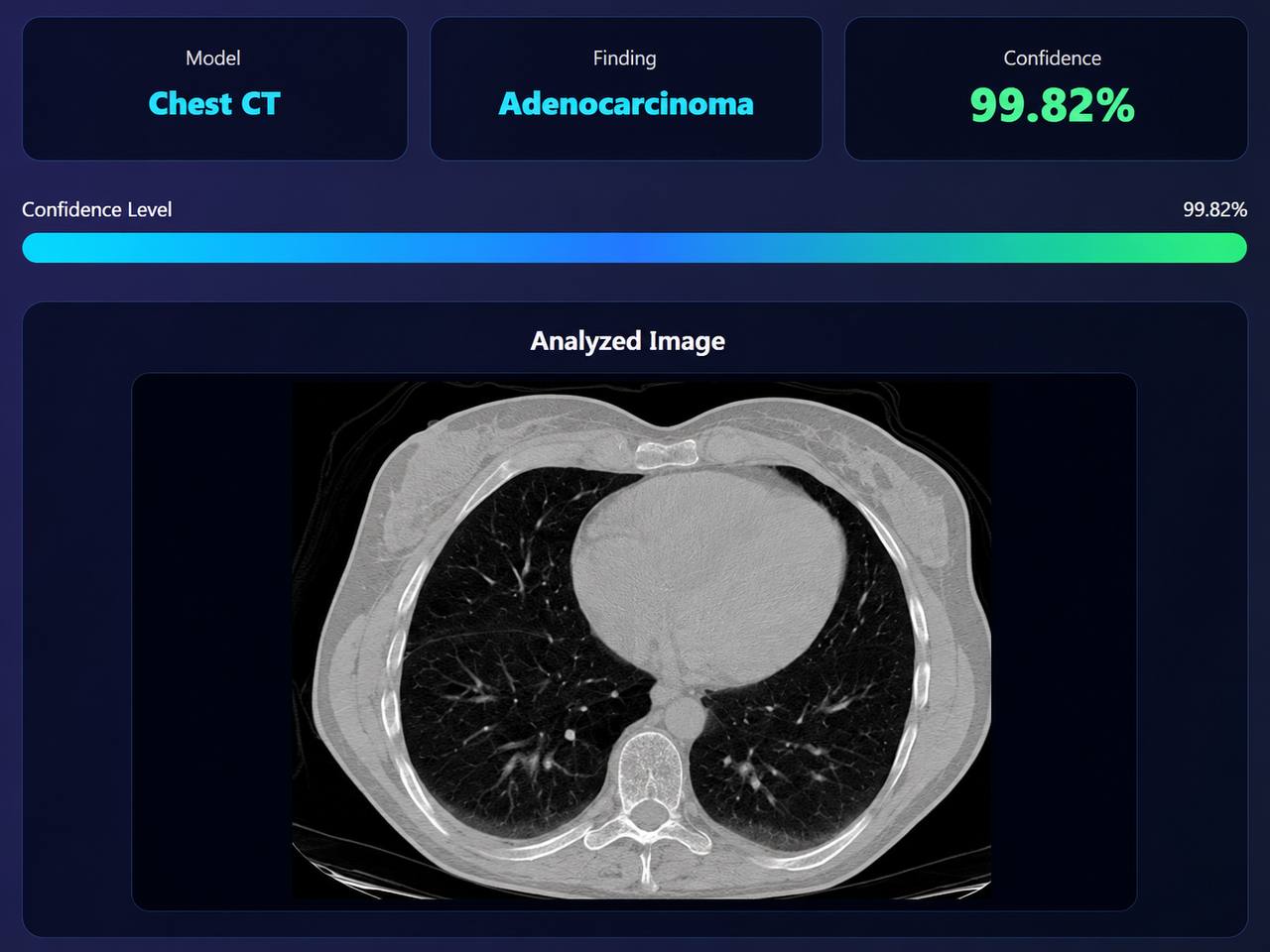
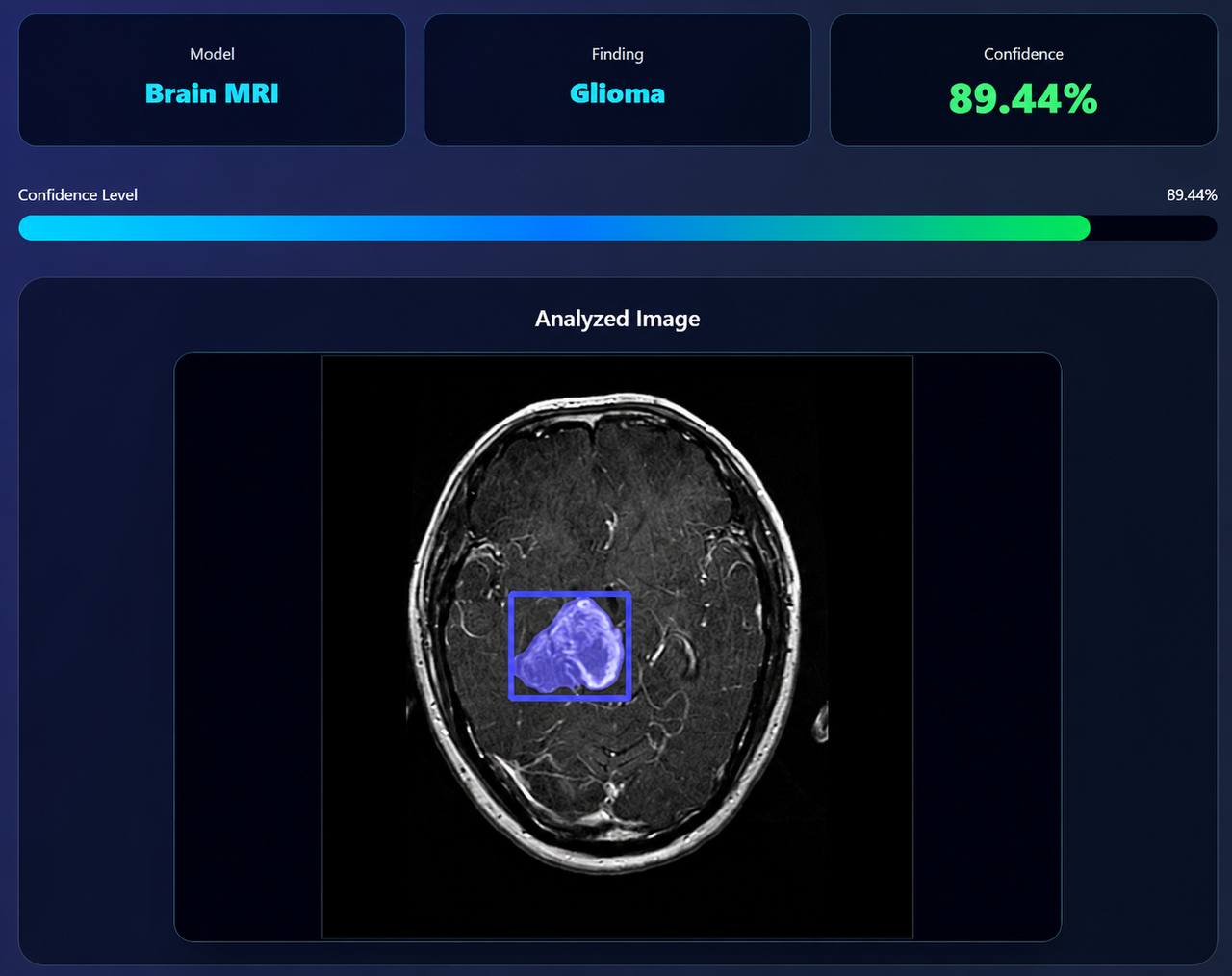
NeoRad AI هو مشروع مبتكر يعتمد على تقنيات الذكاء الاصطناعي والتعلّم العميق لتطوير منصة ذكية متخصصة في تحليل الصور الطبية، بهدف دعم الأطباء واختصاصيي الأشعة في الوصول إلى التشخيص المناسب بسرعة فائقة ودقة عالية، والمساهمة في تحسين جودة الرعاية الصحية وتسريع اتخاذ القرار السريري. صُممت المنصة لتحليل صور الأشعة المقطعية (CT) للكشف المبكر عن سرطان الرئة، وصور الرنين المغناطيسي (MRI) للكشف عن أورام الدماغ، من خلال نماذج ذكاء اصطناعي متقدمة قادرة على التعرف على الأنماط المرضية واكتشاف التغيرات الدقيقة التي قد يصعب ملاحظتها بالطرق التقليدية. تعتمد المنصة على خوارزميات التعلّم العميق (Deep Learning) والشبكات العصبية الالتفافية (Convolutional Neural Networks - CNNs)، وتم تدريبها باستخدام أكثر من 15,000 صورة طبية موسومة لضمان تحقيق مستويات عالية من الدقة والموثوقية. كما تتضمن مراحل متقدمة لمعالجة الصور الطبية تشمل تحسين الجودة، والتطبيع (Normalization)، وتقسيم الصور (Segmentation)، ثم تحليلها وإبراز المناطق المشتبه بها باستخدام خرائط حرارية تفسيرية (Heatmaps)، مع إنشاء تقارير تشخيصية منظمة تدعم الطبيب في تقييم الحالة دون أن تكون بديلاً عن الخبرة الطبية. تم تطوير المشروع باستخدام لغة Python والاستفادة من مكتبات وأطر عمل متخصصة، منها TensorFlow وKeras لبناء وتدريب نماذج الذكاء الاصطناعي، وOpenCV لمعالجة الصور الطبية، إضافة إلى قواعد بيانات متخصصة ووحدات حوسبة مزودة بمعالجات رسومية GPU لتسريع عمليات التدريب والاستدلال. ويمتاز NeoRad AI بدمجه بين الجانب السريري والجانب التعليمي، إذ يتيح لطلبة تقنيات الأشعة والأطباء المتدربين مقارنة نتائج الذكاء الاصطناعي بالتشخيصات المعتمدة، مما يعزز مهاراتهم العملية ويُسهم في ربط الجانب النظري بالتطبيق السريري. ويتميز المشروع بقابليته للتوسع مستقبلًا ليشمل أمراضًا وفحوصات شعاعية أخرى، مع إمكانية دمجه في أنظمة المستشفيات والتحول الرقمي للرعاية الصحية، ليشكل حلًا مبتكرًا يجمع بين الدقة والسرعة والموثوقية والأثر التعليمي.

صورة مشروع Petro-Serpent X: A Biomimetic Snake Robot for AI-Assisted Internal Inspection and Digital-Twin Monitoring of Oil and Gas Transmission Pipelines
المسار الصناعي

Petro-Serpent X: A Biomimetic Snake Robot for AI-Assisted Internal Inspection and Digital-Twin Monitoring of Oil and Gas Transmission Pipelines

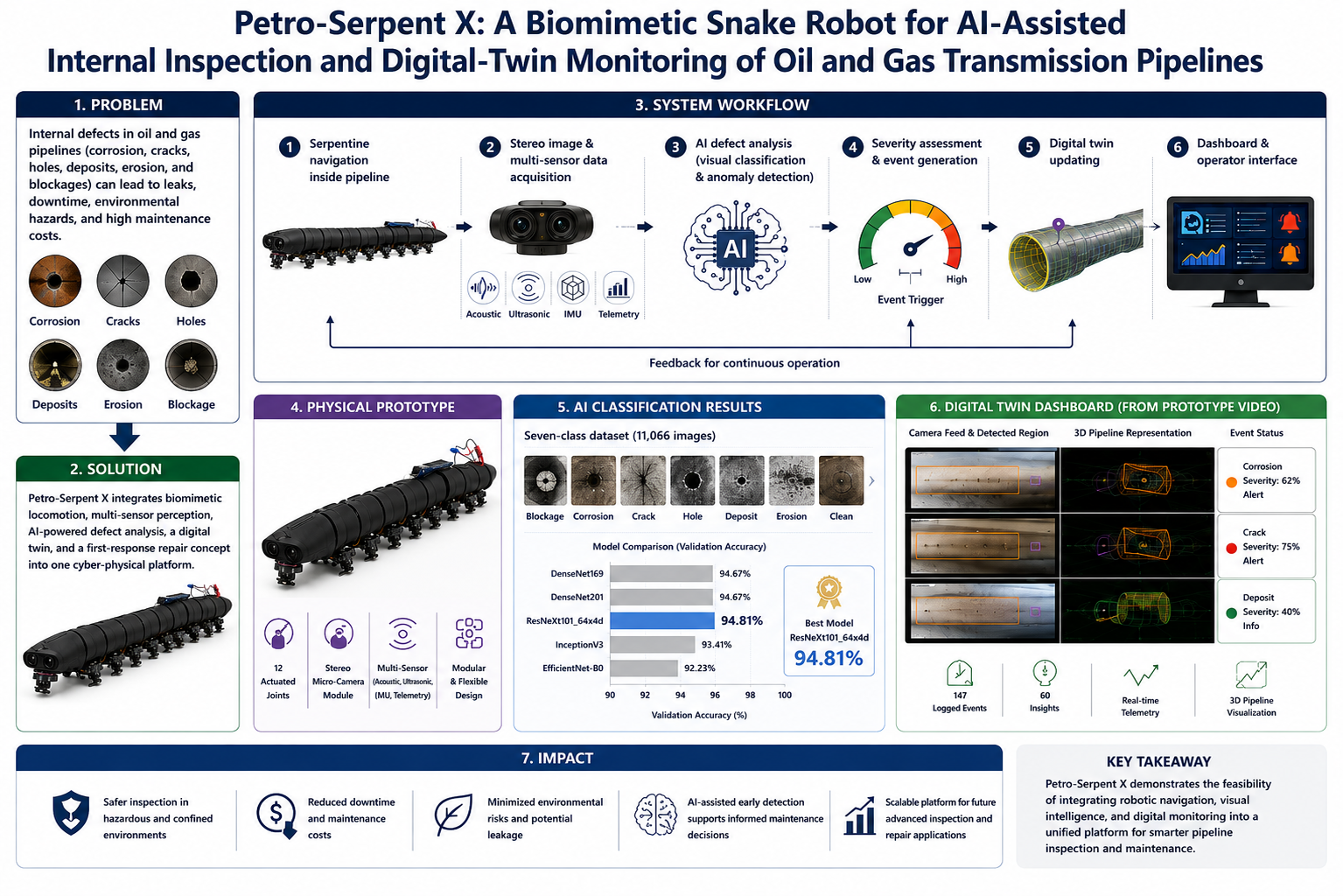
**Petro-Serpent X** is an intelligent biomimetic snake robot designed for internal inspection of oil and gas transmission pipelines, particularly in narrow, curved, and hazardous sections where h…

قراءة الوصف الكامل للمشروع

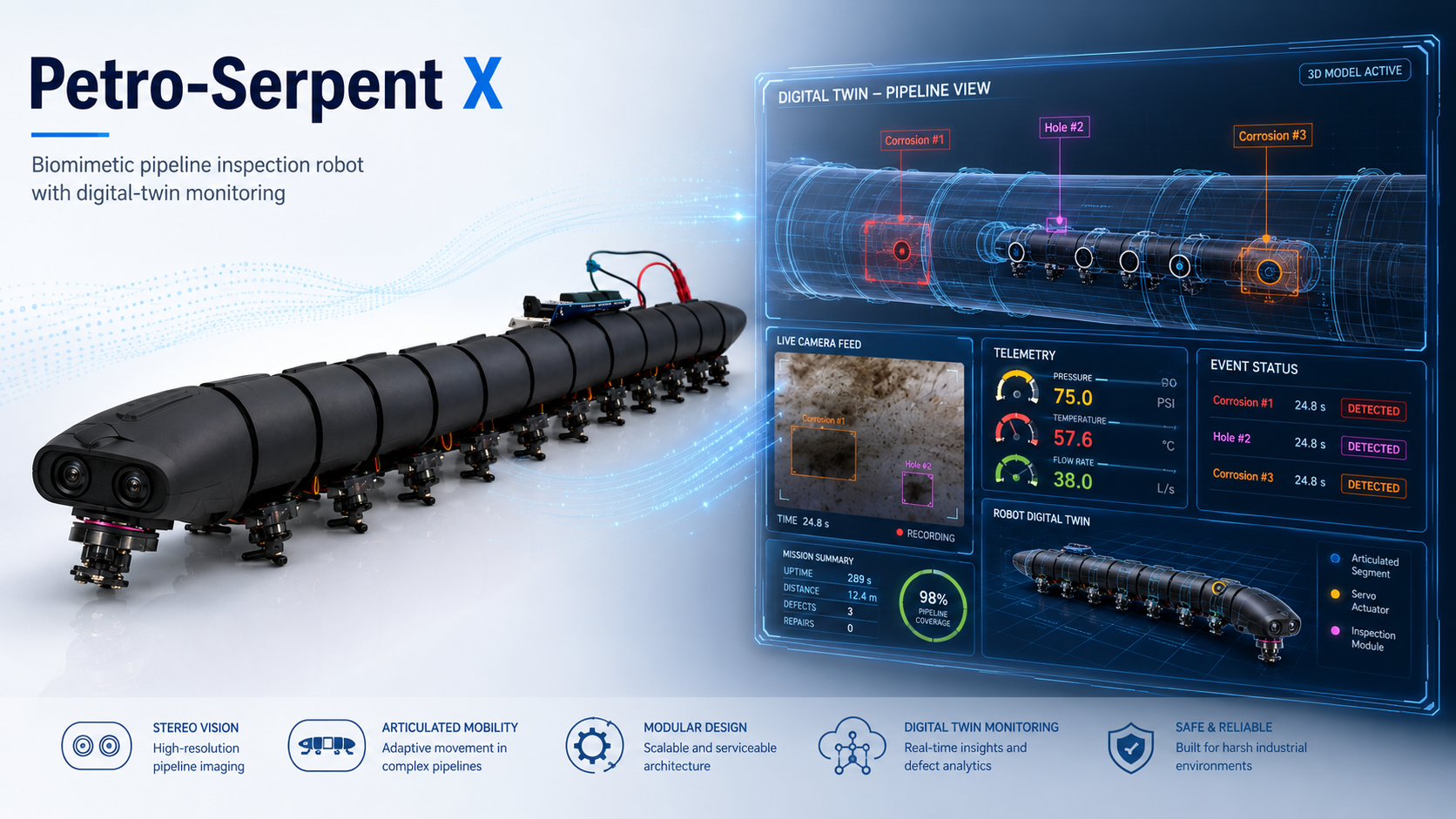
**Petro-Serpent X** is an intelligent biomimetic snake robot designed for internal inspection of oil and gas transmission pipelines, particularly in narrow, curved, and hazardous sections where human access and conventional inspection tools are limited. The project aims to support early detection of internal defects such as corrosion, cracks, holes, deposits, and blockages, enabling safer and faster maintenance decisions. The robot uses a modular articulated body driven by servo actuators to generate serpentine motion inside pipelines. A stereo camera module at the front captures inspection images, while the platform can integrate acoustic, ultrasonic, telemetry, and other sensing inputs. These data are processed using artificial intelligence models to identify defect categories and estimate their severity. The inspection results are connected to an event-driven digital-twin dashboard that displays the camera feed, detected regions, 3D pipeline representation, telemetry indicators, and mission status. The design also includes a first-response repair concept based on a micro-pump and fast-curing resin for localized temporary sealing of critical defects. The expected impact of Petro-Serpent X is to reduce risks associated with manual inspection, shorten fault-detection time, improve maintenance awareness, and provide a scalable foundation for future intelligent maintenance systems for oil and gas pipelines.

صورة مشروع Predictive System for Diabetes and Heart Diseases Using Explainable AI (XAI)
المسار الطبي

Predictive System for Diabetes and Heart Diseases Using Explainable AI (XAI)

Predictive System for Diabetes and Heart Diseases Using Explainable AI (XAI) Project Description The Predictive System for Diabetes and Heart Diseases Using Explainable AI (XAI) is an intelligent…

قراءة الوصف الكامل للمشروع

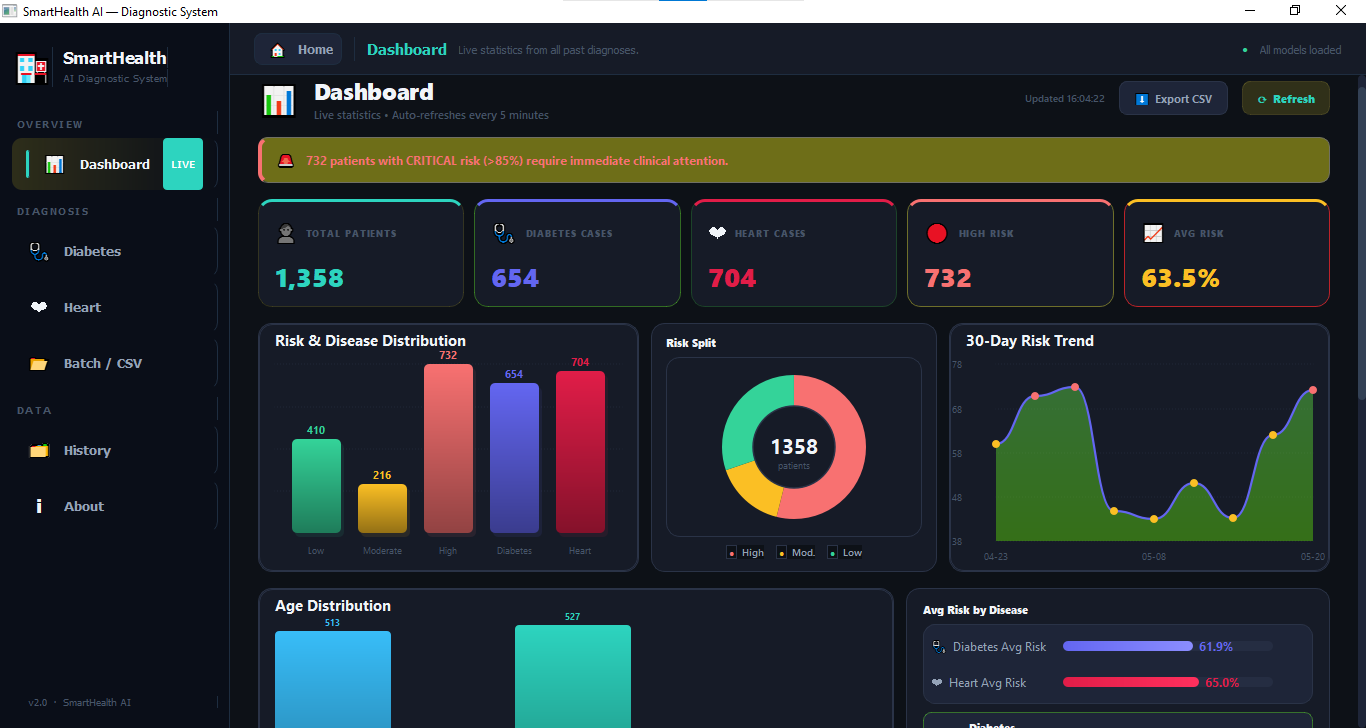
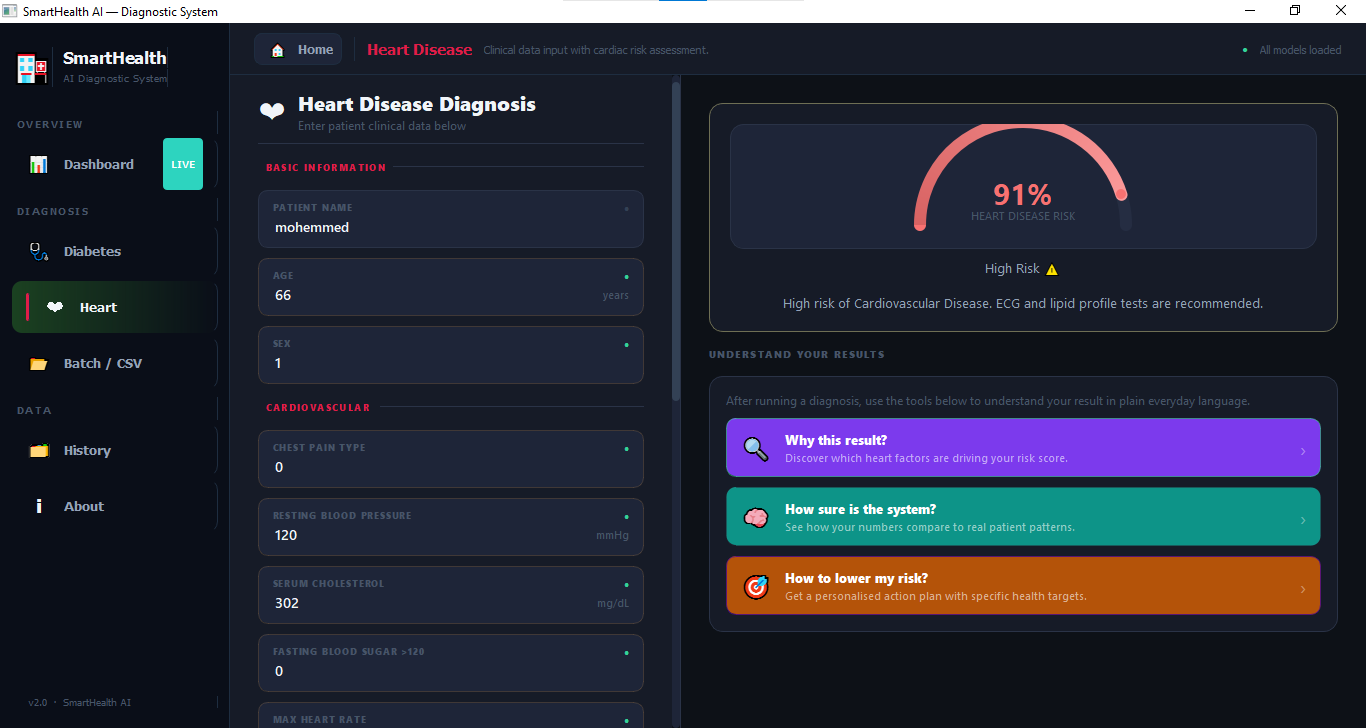
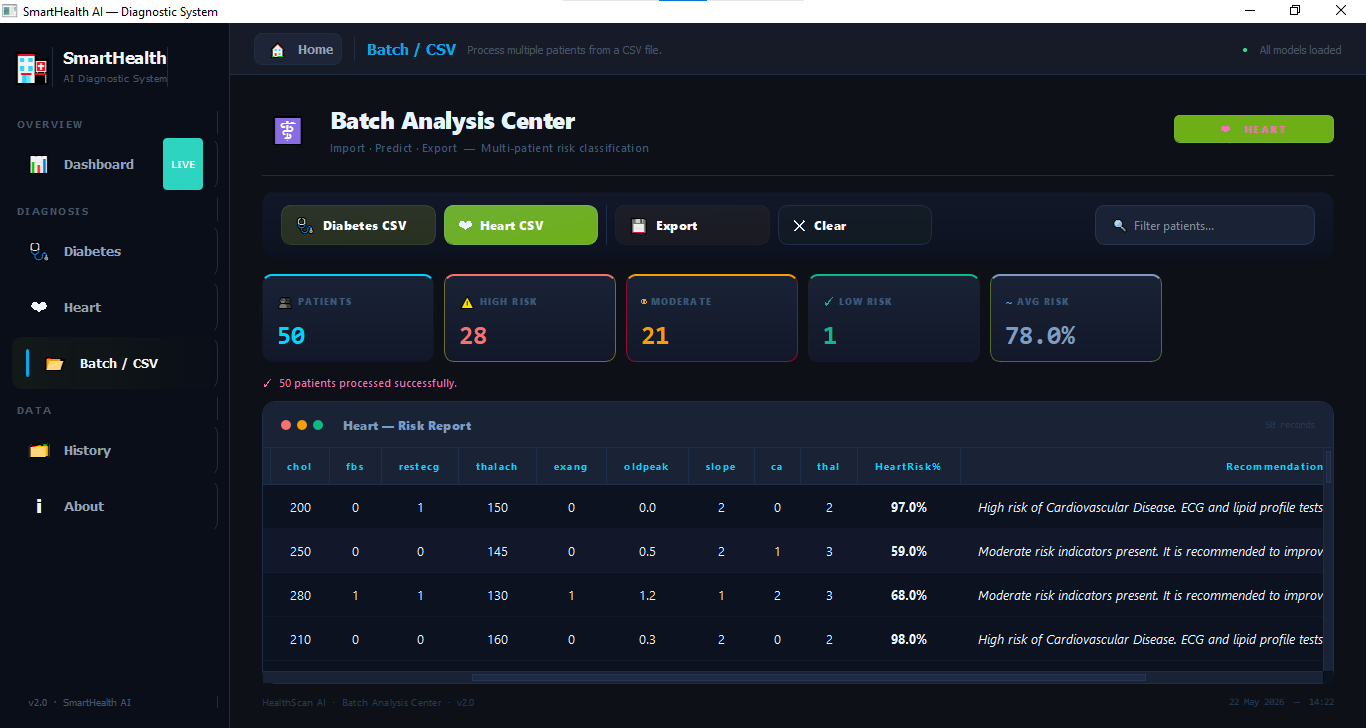
Predictive System for Diabetes and Heart Diseases Using Explainable AI (XAI) Project Description The Predictive System for Diabetes and Heart Diseases Using Explainable AI (XAI) is an intelligent healthcare solution that leverages Machine Learning and Explainable Artificial Intelligence to support early disease prediction and clinical decision-making. The platform analyzes patient medical data to estimate the probability of Diabetes and Heart Diseases using trained predictive models. In addition to generating diagnostic predictions, the system integrates Explainable AI techniques to provide transparent and interpretable results, enabling healthcare professionals to better understand the reasoning behind each prediction. The project aims to improve healthcare efficiency, enhance diagnostic accuracy, and support early disease detection through intelligent and trustworthy medical analysis. Project Idea The main idea of the project is to develop a smart medical prediction platform capable of automatically analyzing patient clinical information and estimating disease risk levels using Artificial Intelligence algorithms. Unlike conventional predictive systems, this project focuses on transparency and interpretability through the integration of advanced Explainable AI techniques, including: 1. SHAP (SHapley Additive Explanations) 2. LIME (Local Interpretable Model-agnostic Explanations) 3. DiCE Counterfactual Explanations These technologies allow healthcare professionals to identify the medical factors that most influence prediction outcomes and improve confidence in AI-assisted diagnosis. Working Mechanism 1. Patient medical data is entered into the system. 2. The trained Machine Learning models analyze the clinical data. 3. The platform predicts the probability of disease occurrence. 4. Explainable AI methods clarify the factors influencing the prediction results. 5. The diagnostic results are stored for future monitoring and analysis. Technologies Used 1. Python 2. Machine Learning 3. Scikit-learn 4. PyQt5 5. Pandas 6. NumPy 7. SHAP 8. LIME 9. DiCE Expected Results The project is expected to provide: 1. Early detection of chronic diseases 2. Faster medical data analysis 3. Improved diagnostic accuracy 4. Enhanced clinical decision support 5. Transparent AI-driven predictions 6. Efficient patient data management 7. Scalable healthcare system architecture Project Features 1. Intelligent disease prediction platform 2. Explainable AI integration 3. Professional graphical user interface 4. Real-time diagnostic analysis 5. Batch patient processing 6. Interactive dashboard and medical statistics 7. Patient history management 8. Scalable and expandable system architecture Project Objectives The primary objective of the project is to develop an intelligent and explainable healthcare platform capable of assisting healthcare professionals in the early detection of Diabetes and Heart Diseases through advanced Machine Learning technologies while improving transparency, diagnostic reliability, and healthcare efficiency.

صورة مشروع Smart Bracelet for Predicting Epilepsy Cases Integrated with Artificial Intelligence
المسار الطبي

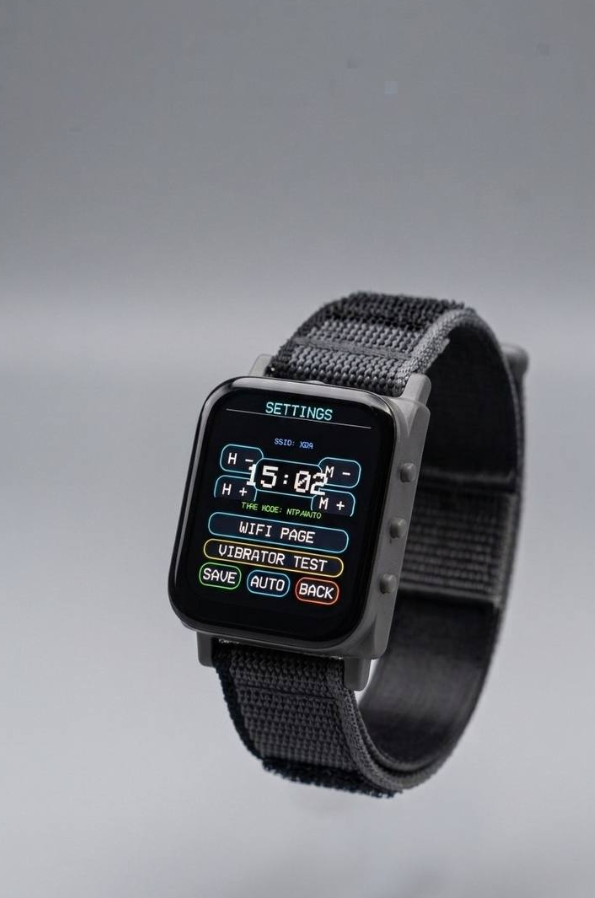
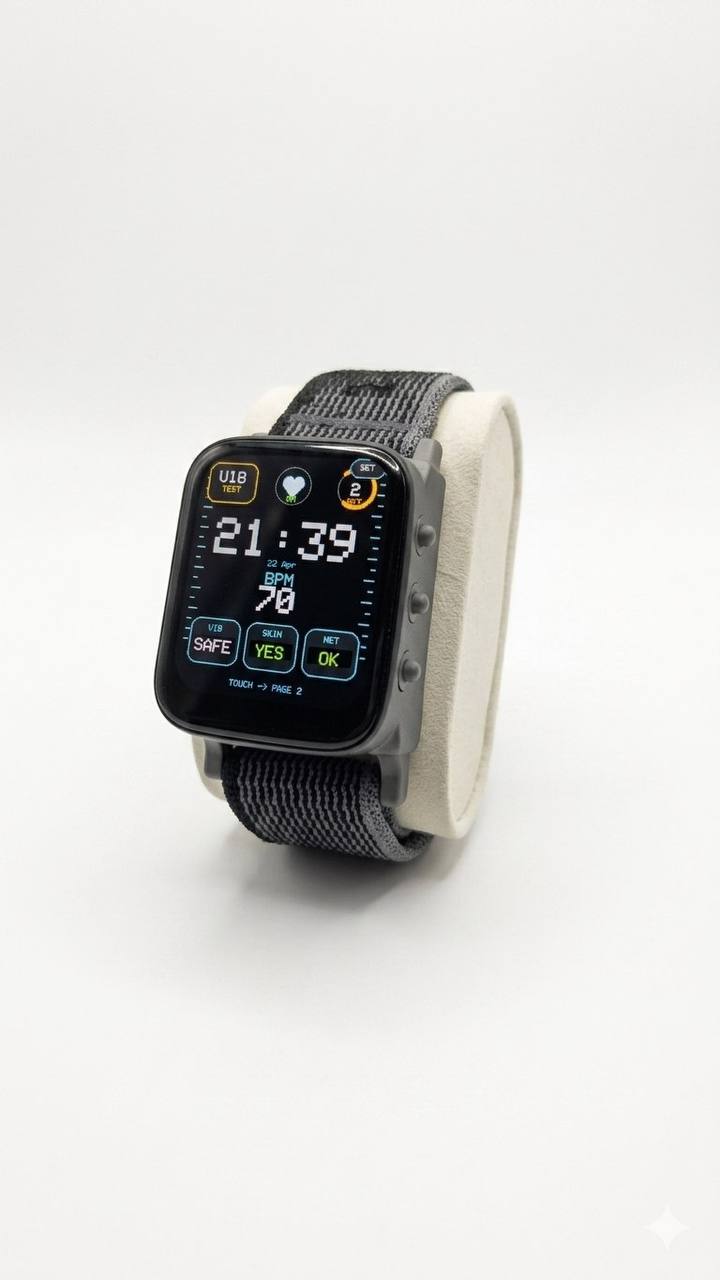
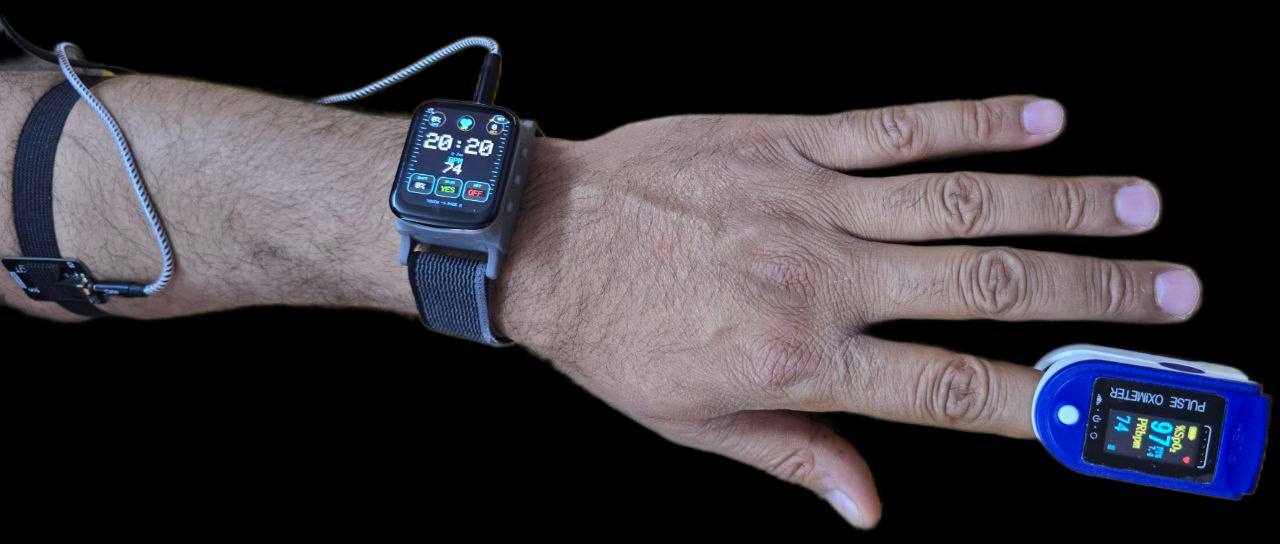
Smart Bracelet for Predicting Epilepsy Cases Integrated with Artificial Intelligence

This project introduces a pioneering, end-to-end cyber-physical healthcare ecosystem engineered to mitigate the clinical risks and physical trauma associated with sudden, unprovoked epilepsy epis…

قراءة الوصف الكامل للمشروع

This project introduces a pioneering, end-to-end cyber-physical healthcare ecosystem engineered to mitigate the clinical risks and physical trauma associated with sudden, unprovoked epilepsy episodes. By seamlessly blending multi-sensor biomedical wearable technology, edge-to-cloud computing, high-performance asynchronous data pipeline frameworks, and advanced Artificial Intelligence (AI) predictive models, the system establishes a continuous, non-invasive, and real-time bio-telemetry paradigm. The architecture transforms the traditional reactive clinical response into an autonomous, data-driven, early-warning diagnostic mechanism, ensuring that clinicians, healthcare providers, and designated caregivers receive predictive insights well before the clinical onset of a seizure. Granular Architectural Architecture & Core Components: The Multi-Sensor Wearable Bio-Acquisition Node (Smart Bracelet): Designed for optimal patient compliance and uninterrupted ambulatory deployment, the wearable wristband operates as the continuous data harvesting foundation. It incorporates an optimized sensor fusion network capable of simultaneously capturing multi-dimensional physiological and kinematic streams. This includes high-fidelity cardiovascular tracking (Heart Rate/Pulse Dynamics), raw surface Electromyography (EMG) to measure neuromuscular electrical microvolt spikes, and a six-axis Inertial Measurement Unit (IMU) featuring high-precision Accelerometers and Gyroscopes to map spatial acceleration and angular velocity vectors. The node executes continuous edge-level data sampling without necessitating any manual patient intervention. The High-Performance Cloud Analytics Core (FastAPI Server): The continuous data stream ingested from the wearable node is securely transmitted via serialized JSON payloads over encrypted network protocols to a centralized, asynchronous FastAPI cloud backend. This layer serves as the computational intelligence engine of the ecosystem. Upon ingestion, the server orchestrates real-time data logging, data preprocessing, and artifact filtering. Crucially, the server runs sophisticated machine learning and deep learning pattern-recognition algorithms that execute multi-sensor data fusion. By dynamically correlating acute cardiovascular fluctuations with violent kinematic orientation vectors and neuromuscular surges, the AI evaluates physiological deviations against normal baselines to compute a unified, quantitative Risk Score and define an objective, multi-tiered Risk Level. The Reactive State-Managed Clinical Dashboard (Flutter Application): The synthesized clinical indicators and alert statuses are broadcasted instantly to a robust, cross-platform mobile application compiled natively via the Flutter SDK. Engineered with a strict separation of concerns, the frontend utilizes the BLoC (Business Logic Component) architecture for predictable state management, paired with the advanced Dio networking client for low-latency HTTP communication and long-polling synchronization. The application presents healthcare professionals with an intuitive, real-time medical dashboard displaying active physiological trend graphs, sensory stability metrics, and battery diagnostics. In the event that the computed risk threshold transitions into a critical state, the application overrides passive background modes to dispatch high-priority, real-time audio-visual alerts and automated, actionable medical recommendations. Clinical Significance and Socio-Economic Impact: The core innovation of this framework lies in its unique multi-modal approach, which drastically minimizes the high false-alarm rates frequently caused by standard single-metric (heart-rate only) monitors during normal physical exertion. By establishing an automated, secure, and remote patient supervision environment, this solution significantly reduces the clinical strain on emergency medical infrastructure, supports neurologists with granular longitudinal datasets for retrospective therapeutic optimization, reduces the risk of secondary injuries from unexpected falls, and ultimately restores autonomy and safety to individuals living with epilepsy.