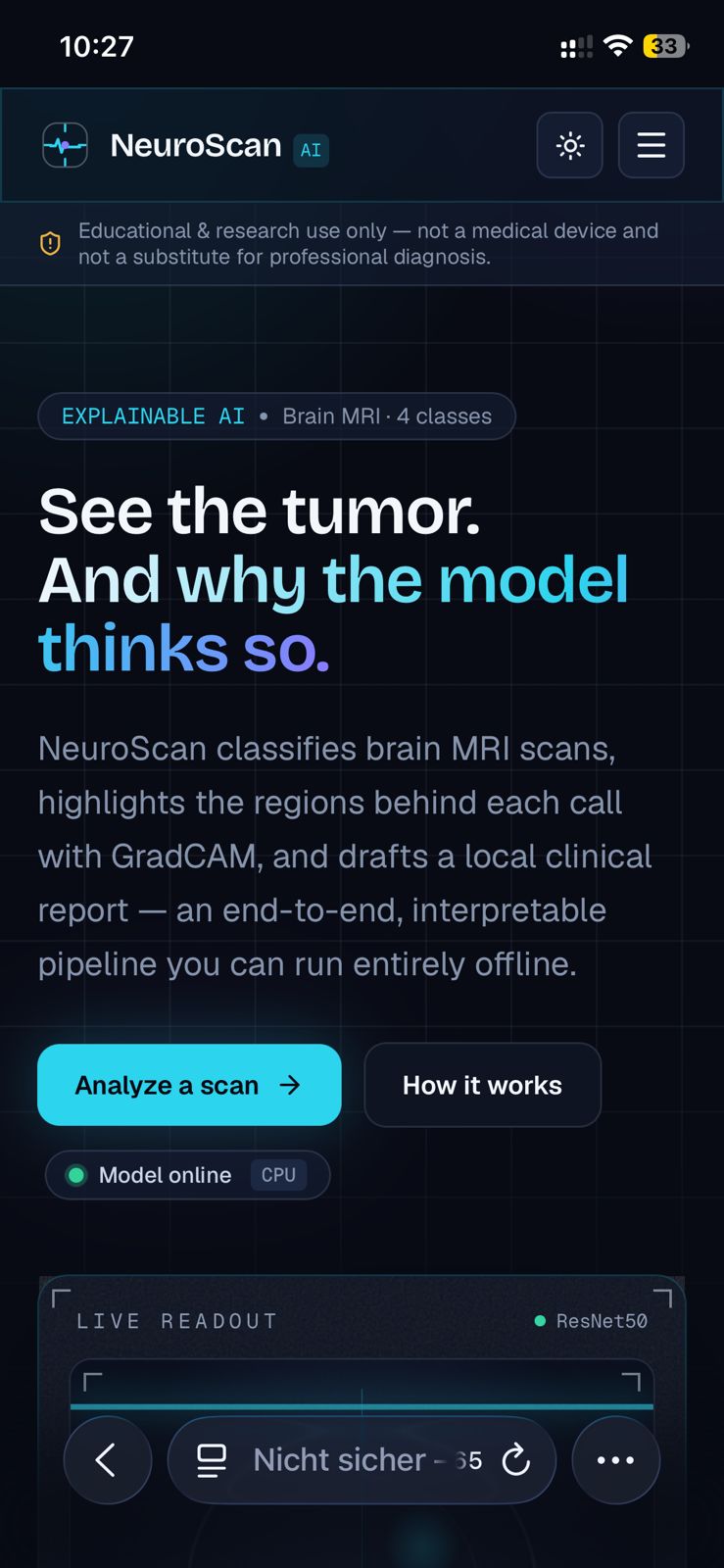
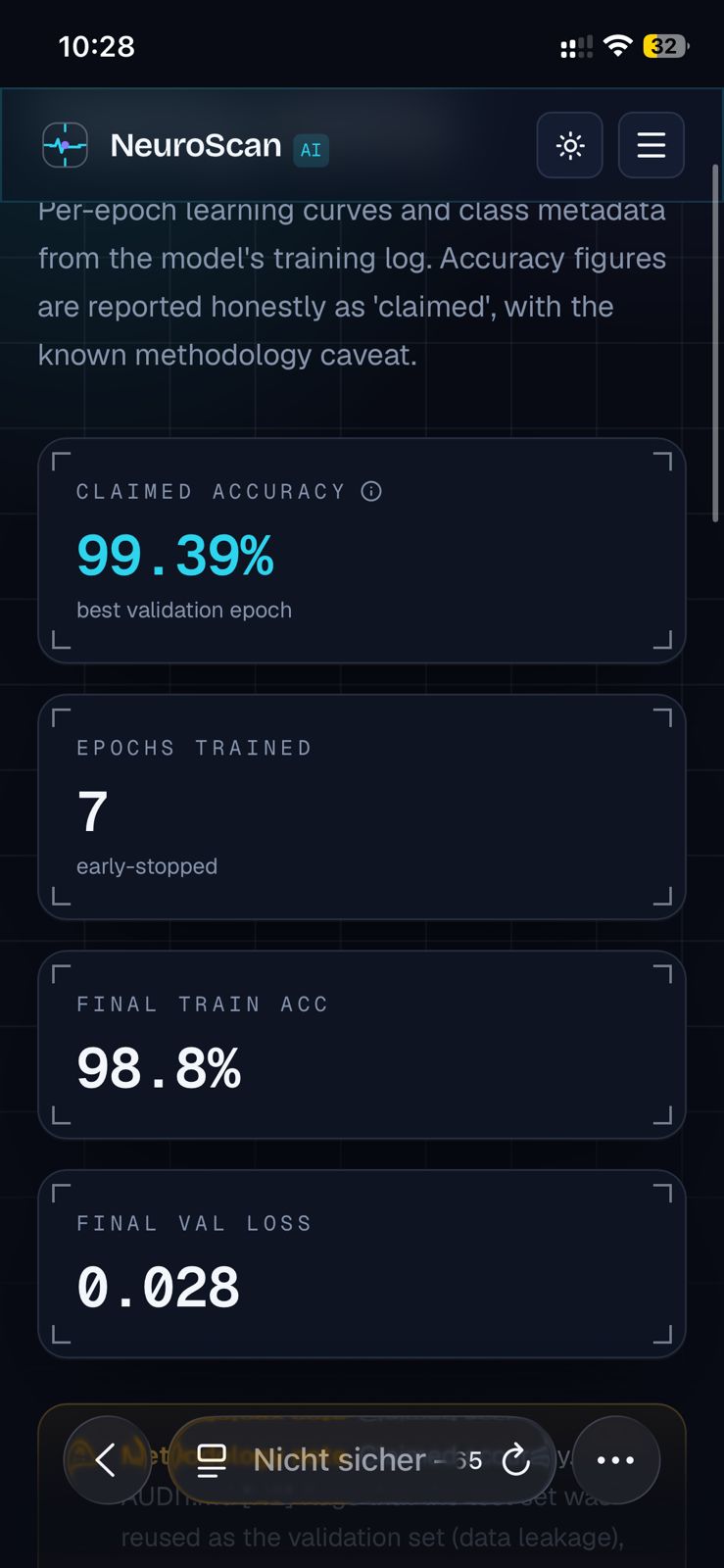
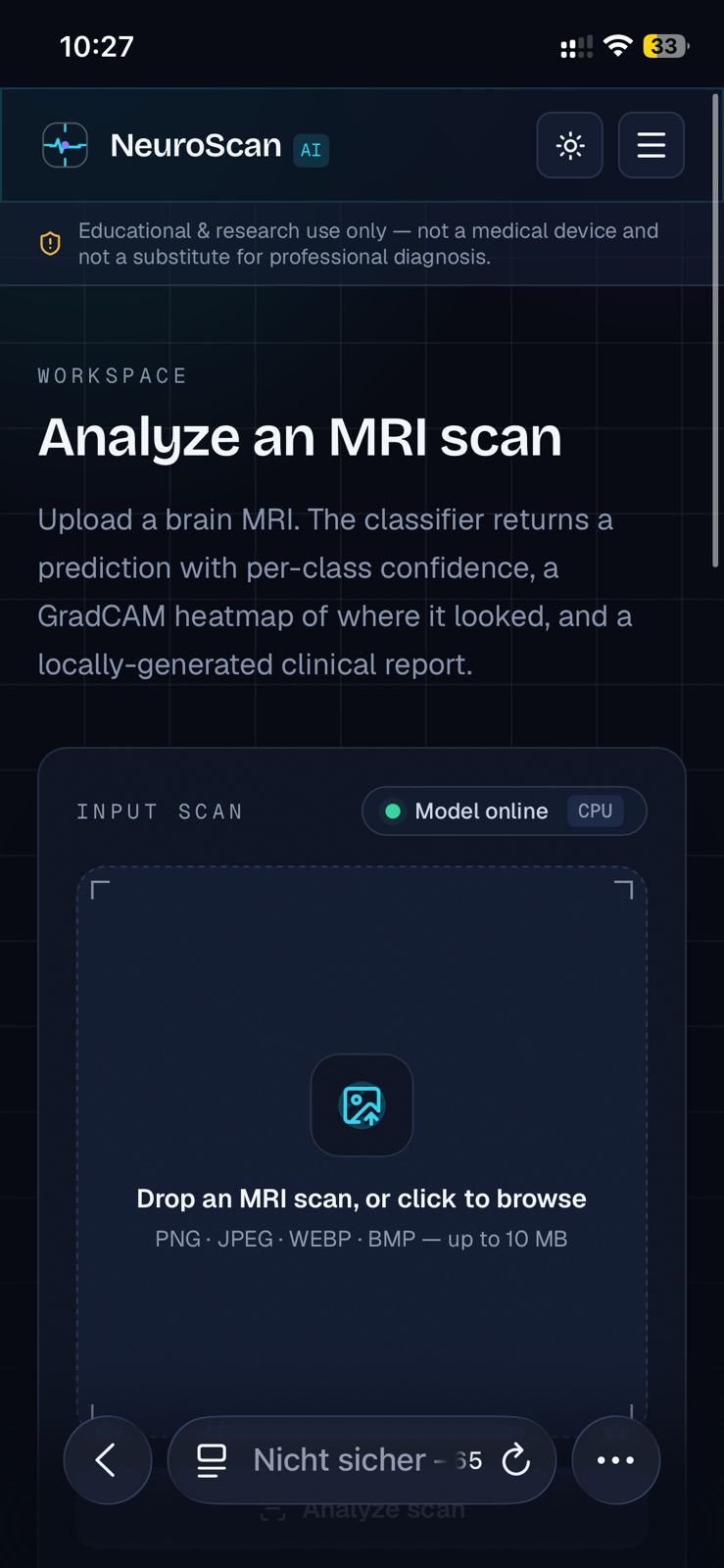
Brain Tumor Detection and Classification Using Deep Learning
Problem Statement: Brain tumor diagnosis from MRI scans relies on manual interpretation by specialist radiologists, which is time-consuming (hours to weeks), subjective (inter-observer variabilit…
الفريق
فرسان الفارابي
رمز الفريق
NURAI2026-0050
المشرف
م.م نور نصير مهدي
قراءة الوصف الكامل للمشروع
Problem Statement:
Brain tumor diagnosis from MRI scans relies on manual interpretation by specialist radiologists, which is time-consuming (hours to weeks), subjective (inter-observer variability), and inaccessible in regions lacking trained neuroradiologists. Existing automated approaches use heavy deep learning models requiring expensive GPU infrastructure, making them impractical for standard clinical settings.
Proposed Solution/Innovation:
A lightweight brain tumor classification system using MobileNetV2 with transfer learning that classifies MRI scans into four categories (glioma, meningioma, pituitary tumor, no tumor). The innovation is achieving near state-of-the-art accuracy (96.4%) with a model 8x smaller than ResNet-50 (only 14MB), enabling deployment on standard hospital hardware and mobile devices. Grad-CAM visualization provides clinical transparency.
Method/Implementation:
Two-stage fine-tuning approach: Stage 1 trains only the custom classification head (GAP + Dense 256 + Dropout 0.3 + Softmax 4) for 10 epochs at lr=1e-3. Stage 2 unfreezes the last 30 MobileNetV2 layers and fine-tunes for 20 epochs at lr=1e-5 with cosine annealing. Data augmentation includes rotation, flipping, zoom, and brightness variation on 7,023 MRI images split 80/10/10.
Key Components (HW/SW/AI):
SW: Python, PyTorch, torchvision, OpenCV, scikit-learn, FastAPI, Docker, Streamlit. AI: MobileNetV2 pre-trained on ImageNet, transfer learning, Grad-CAM interpretability. HW: Google Colab GPU (T4/A100) for training, CPU-capable inference for deployment.
Results/Impact:
96.4% overall accuracy. Per-class F1: Glioma 0.95, Meningioma 0.94, Pituitary 0.98, No Tumor 0.97. Inference: 85ms on CPU, 12ms on GPU. Model size: 14MB. Reduces diagnosis time from hours to seconds, enables remote diagnosis in underserved areas, and serves as a reliable second-opinion tool for radiologists.
Demo Summary (what the 60s video shows):
The video demonstrates the complete workflow: a user uploads a brain MRI scan through the Streamlit web interface, the system processes it in under 2 seconds, displays the classification result with confidence percentage (e.g., “Glioma - 97.3% confidence”), and shows the Grad-CAM heatmap overlay highlighting the exact tumor region the model focused on. The demo concludes by showing batch processing of multiple scans and the FastAPI endpoint responding to API requests in real-time.
المسار البيئي
Green IQ: نظام ذكي لإدارة الطاقة الشمسية في المنازل العراقية Green IQ: An Intelligent Solar Energy Management System for Iraqi Residential Applications
Iraq's chronic electricity shortage — averaging 12 hours of national grid supply per day — compels households to operate diesel generators as the primary backup, incurring significant financial c…
الفريق
Green code
رمز الفريق
NURAI2026-0203
المشرف
د. علي حبيب كشمر
قراءة الوصف الكامل للمشروع
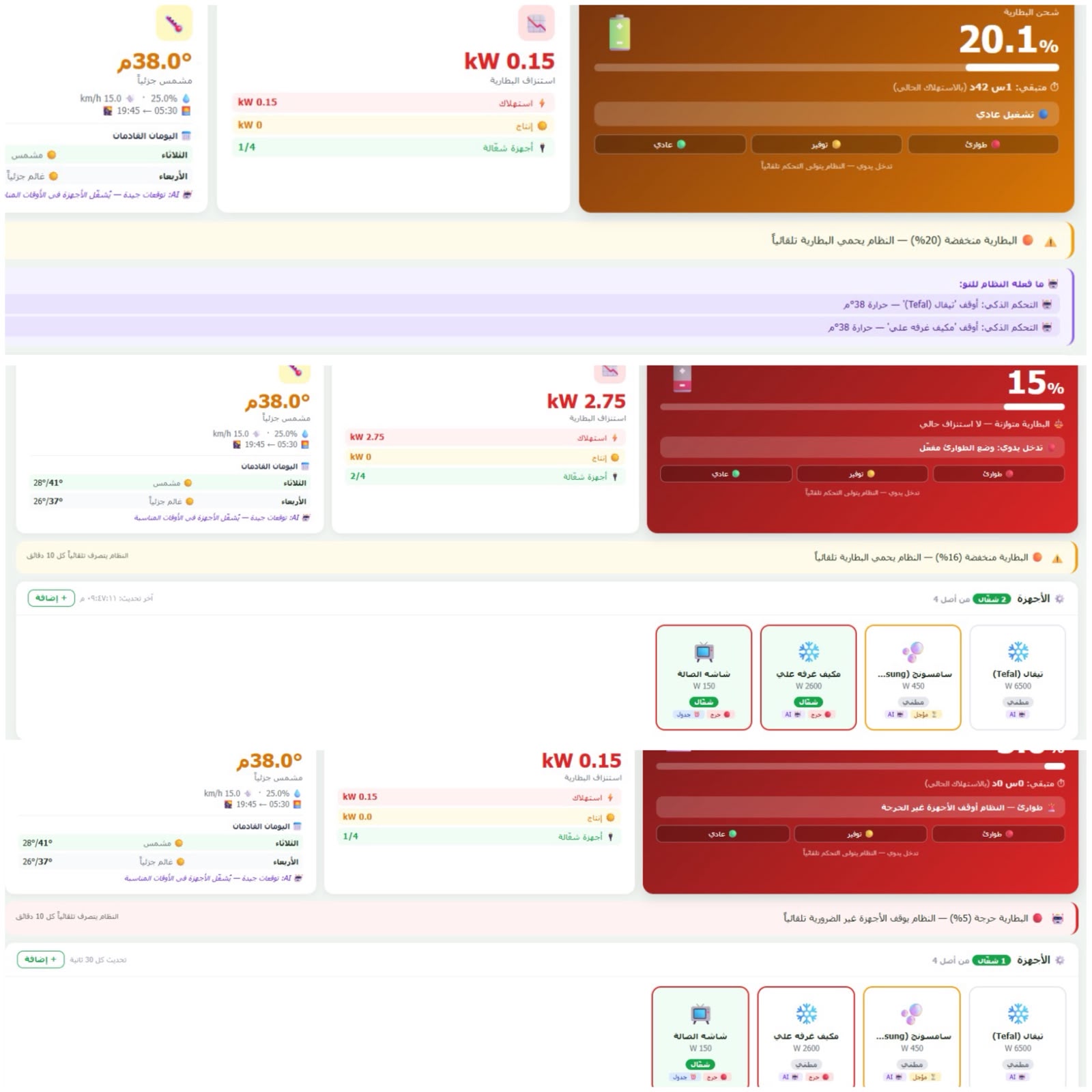
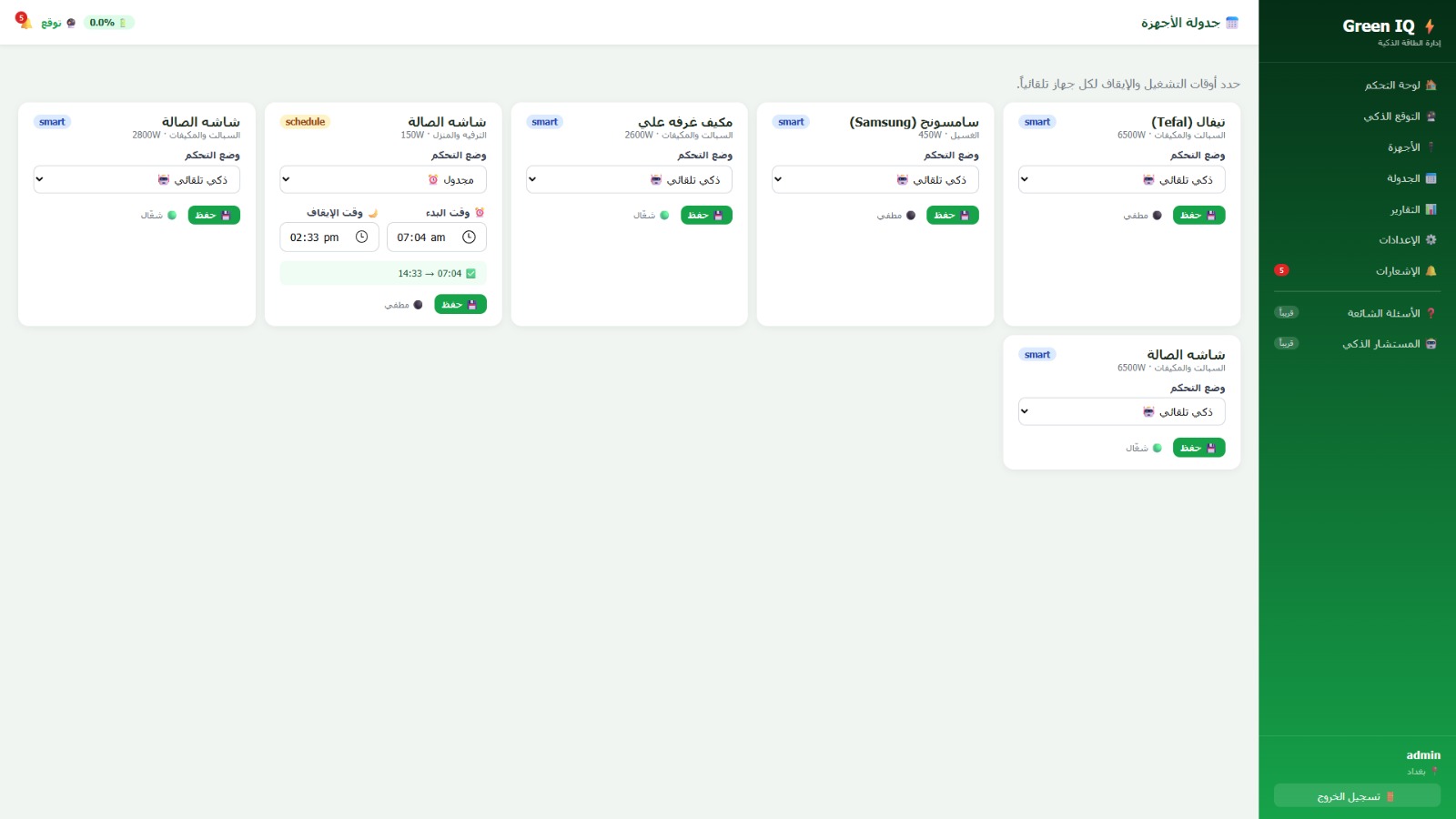
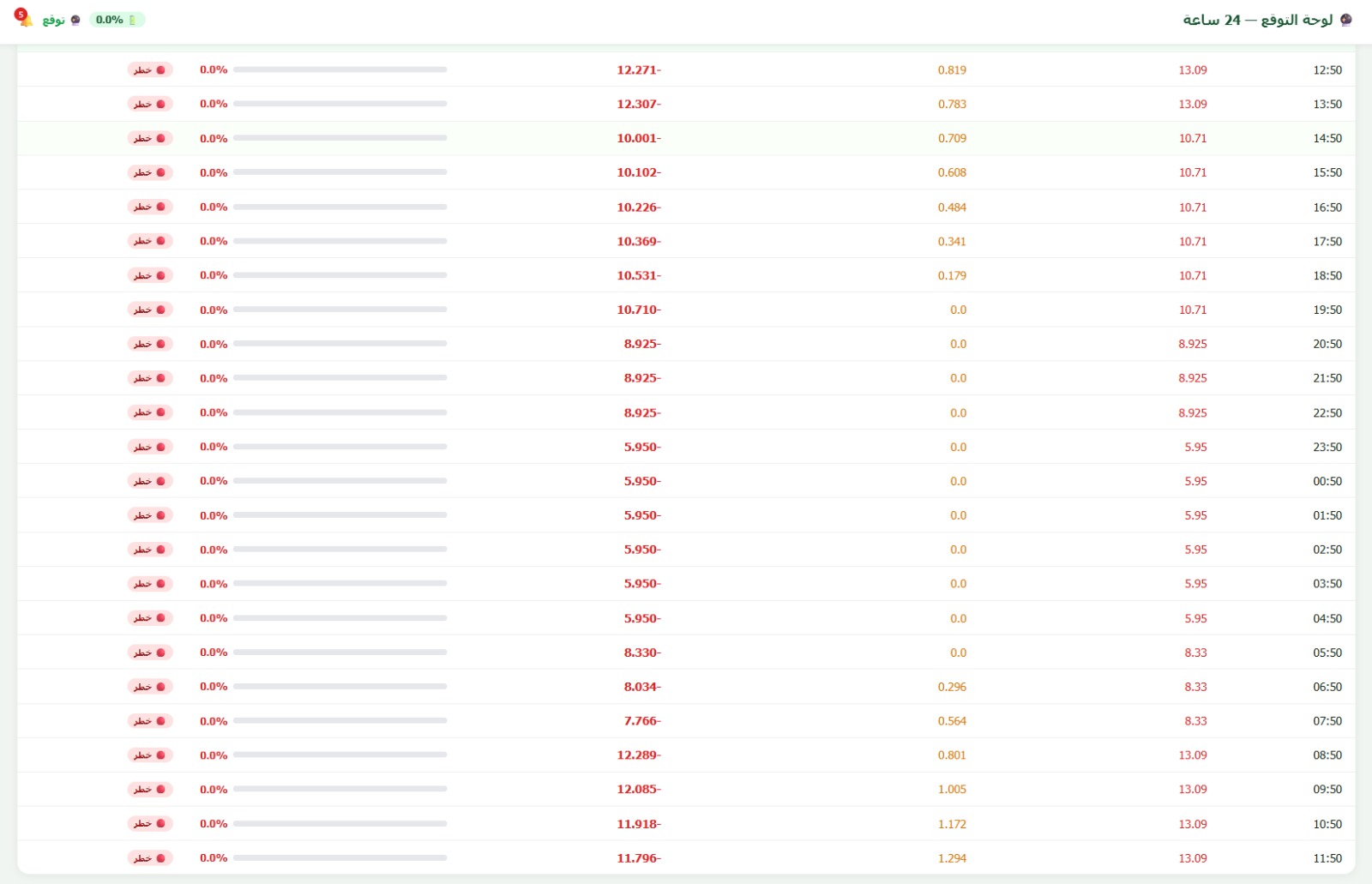
Iraq's chronic electricity shortage — averaging 12 hours of national grid supply per day — compels households to operate diesel generators as the primary backup, incurring significant financial costs and contributing to urban air pollution through CO₂ and particulate emissions. Although residential solar photovoltaic (PV) installations are increasingly prevalent, the absence of intelligent energy management software tailored to Iraqi conditions means that battery banks are frequently exhausted before grid restoration. This paper presents Green IQ, a web-based Smart Home Energy Management System (SHEMS) that addresses this gap through five integrated subsystems: (1) a 30-second real-time battery State-of-Charge (SoC) monitoring engine, (2) a multi-tier autonomous load-shedding engine that activates at SoC thresholds of 20%, 10%, and 5%, (3) a 24-hour predictive forecasting module incorporating an Iraqi-calibrated solar irradiance bell-curve model and a real-time panel efficiency degradation formula, (4) a self-learning hourly consumption pattern engine using Exponential Moving Average (EMA) updating, and (5) an Anthropic Claude AI integration for context-aware device scheduling informed by 2-day weather forecasts. The system draws from an appliance database of 2,424 Iraqi household devices across five product categories, enabling automated energy management without any manual power-rating input from users. Simulation results demonstrate SoC computation accuracy within 0.1% of theoretical values, correct three-tier protection activation in all test scenarios, forecast Mean Absolute Percentage Error (MAPE) of 11.3% after 7-day learning convergence. The solar efficiency estimates deviating by less than 2% from established degradation models and degradation model demonstrates physically consistent results across the full range of Iraqi summer climate conditions, with efficiency reductions of 9–43% from nameplate values depending on temperature, humidity, and cloud conditions. Outdoor lighting automation tied to astronomical sunrise/sunset times is fully operational. Green IQ is implemented with FastAPI, SQLite, APScheduler, and Jinja2, running on standard consumer hardware without cloud infrastructure dependency. Keywords: Smart Home Energy Management System (SHEMS); Solar Battery Optimization; Autonomous Load Shedding; Demand Response; Predictive Forecasting; Iraqi Residential Energy
Green IQ: نظام ذكي لإدارة الطاقة الشمسية في المنازل العراقية
الخلاصة
يعاني العراق من أزمة طاقة مزمنة تتجلى في شح الكهرباء الوطنية التي لا تتجاوز 12 ساعة يوميًا في أحسن الأحوال، مما يدفع الأسر إلى تشغيل مولدات الديزل المكلفة والمسببة للتلوث بيئيًا. رغم انتشار أنظمة الطاقة الشمسية المنزلية، فإن غياب برامج إدارة طاقة ذكية مناسبة للظروف العراقية يؤدي إلى استنزاف بطاريات التخزين قبل عودة التيار الكهربائي. يقدم هذا البحث نظام Green IQ، منصة ذكية لإدارة الطاقة المنزلية تدمج خمسة أنظمة فرعية: مراقبة فورية لشحن البطارية في الوقت الحقيقي (كل 30 ثانية) ، خفض الأحمال تلقائيًا عند انخفاض الشحن (يعمل عند مقاييس حالة شحن تبلغ 20% و10% و5%) ، نموذج تنبؤي لمدة 24 ساعة يتضمن نموذج منحنى الجرس للإشعاع الشمسي مُعايرًا وفقًا للظروف العراقية، ومعادلة لحساب تدهور كفاءة الألواح الشمسية في الوقت الفعلي يحاكي الإشعاع الشمسي ويحسب تدهور الألواح، نمط استهلاك ذكي يتعلم ذاتيًا باستخدام تحديث متوسط المتحرك الأسي ، وتكامل ذكاء اصطناعي لجدولة الأجهزة استنادًا إلى توقعات الطقس لمدة يومين. يعتمد النظام على قاعدة بيانات تضم 2424 جهازًا عراقيًا عبر خمس فئات ويعمل بشكل تلقائي ودون تدخل بشري لبيانات استهلاك الطاقة من المستخدمين. تُظهر نتائج المحاكاة دقةً عالية في تنبؤات حسابات شحن البطارية (SoC) ضمن نطاق 0.1% من القيم النظرية وفاعلية تامة في أنظمة الحماية التلقائية ثلاثي المستويات في جميع سيناريوهات الاختبار وكفاءة في إدارة وتقديرات الطاقة الشمسية التي تنحرف بنسبة أقل من 2% عن نماذج التدهور المعتمدة، متوسط الخطأ المطلق النسبي للتنبؤ (MAPE) بنسبة 11.3% بعد 7 أيام من التقارب في التعلم، وأتمتة إضاءة سلسة تعمل عند شروق الشمس وغروبها. يُظهر نموذج تدهور كفاءة الطاقة الشمسية نتائج متسقة فيزيائيًا عبر نطاق كامل من ظروف المناخ الصيفي في العراق، مع انخفاض في الكفاءة يتراوح بين 9% و43% عن القيم الاسمية، وذلك تبعًا لدرجة الحرارة والرطوبة وحالة السحب . يعمل النظام المقترح باستخدام أدوات برمجية محلية على أجهزة استهلاكية قياسية FastAPI, SQLite, APScheduler, Jinja2)) بنظام أتمتة الإضاءة الخارجية المرتبط بأوقات شروق الشمس وغروبها الفلكية بكفاءة تامة.
المسار الزراعي
PlantVision: An Integrated AI and IoT System for Plant Health Monitoring and Leaf Disease Detection
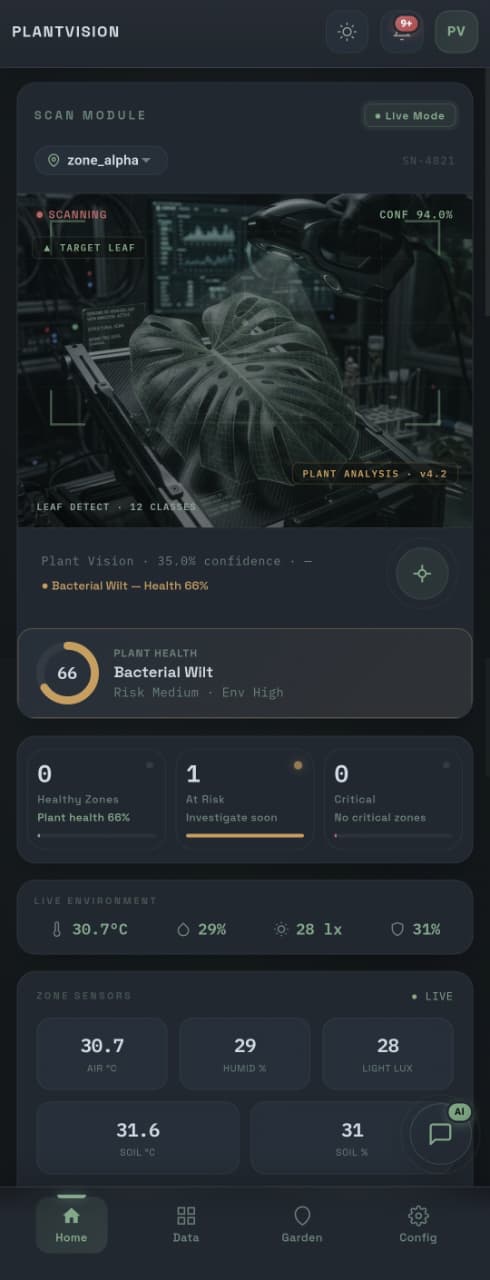
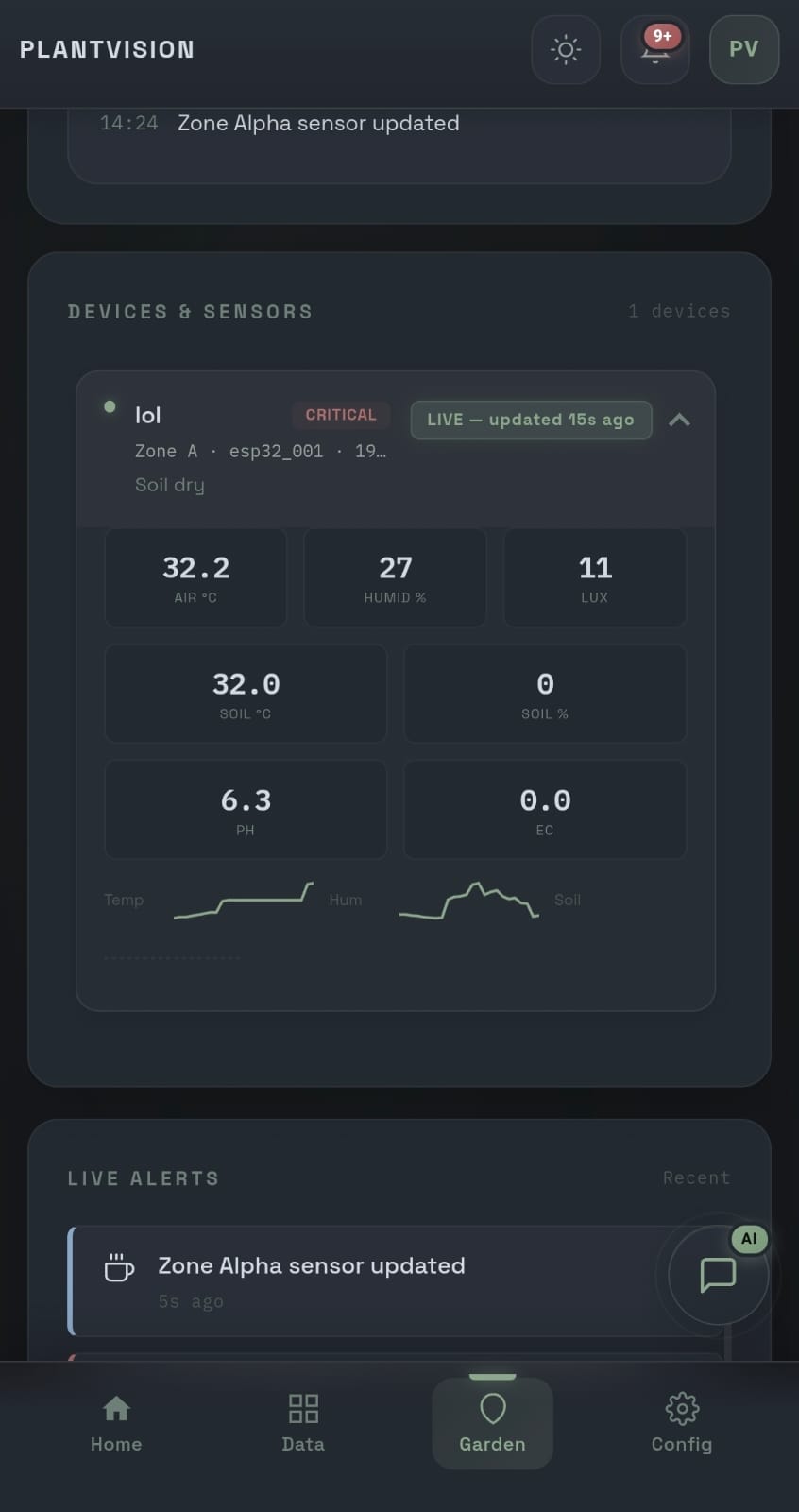
Plant disease is frequently detected only after visible damage has already affected crop yield, while environmental stress factors that drive disease onset are rarely measured continuously in sma…
الفريق
POTHOS
رمز الفريق
NURAI2026-0209
المشرف
سيناء غني قدوري احمد
قراءة الوصف الكامل للمشروع
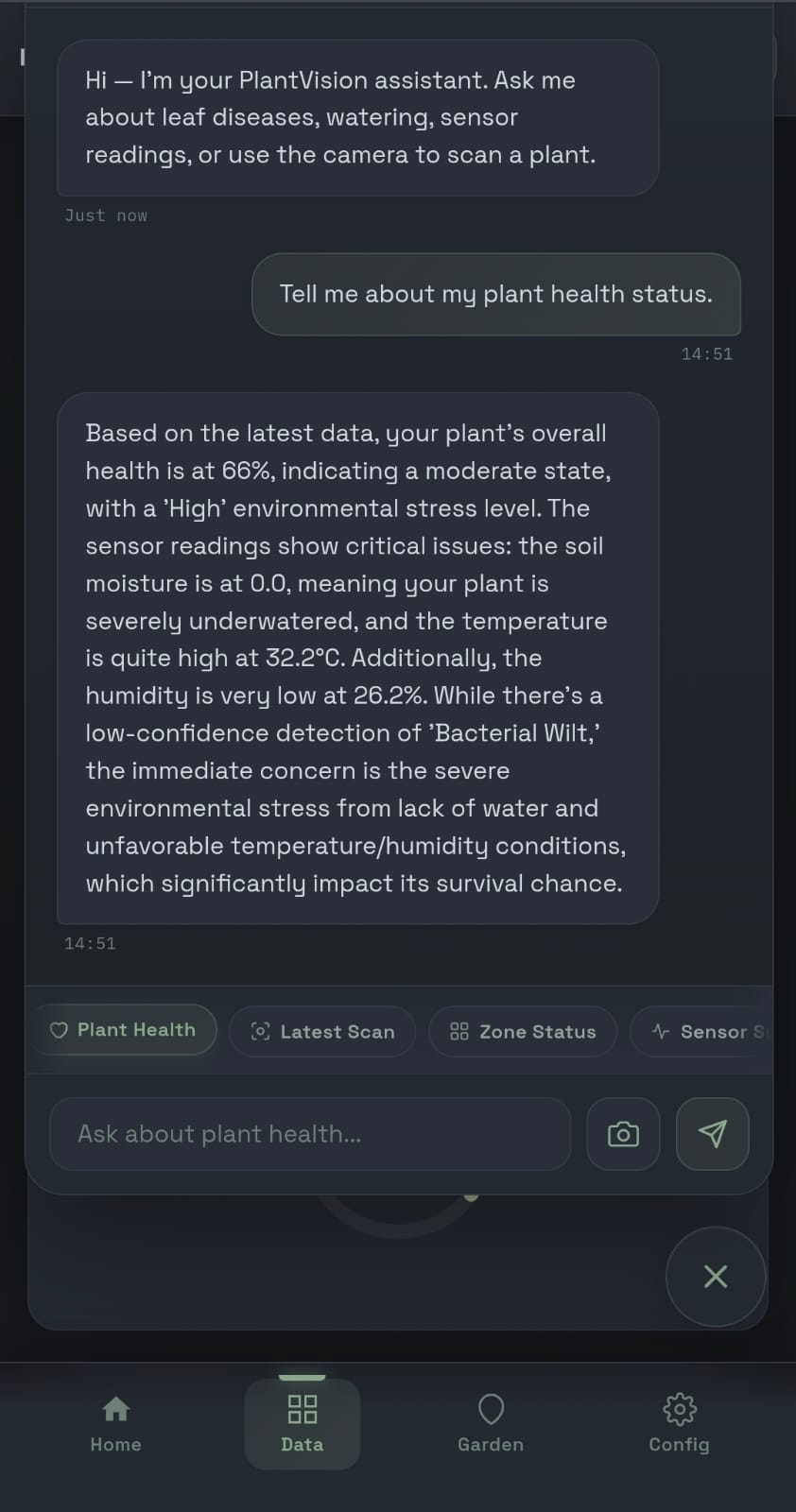
Plant disease is frequently detected only after visible damage has already affected crop yield, while environmental stress factors that drive disease onset are rarely measured continuously in small-scale farming or home-gardening settings. PlantVision addresses this gap as a graduation engineering project that unifies three independent data pathways — an ESP32-based environmental sensing node, a YOLOv8 computer-vision model for leaf-disease classification, and a deterministic, rule-based inference layer — into a single composite plant-health report. The system follows a layered architecture spanning an edge layer, a FastAPI backend service layer, a Supabase (PostgreSQL) data layer, and a mobile-first progressive web application, and was built through four incremental development phases plus a final delivery phase, with every layer engineered for graceful degradation so that the demo remains operational even if the database, the trained vision weights, or the Gemini-based assistant become unavailable. The deterministic inference layer computes a composite plant-health score and a weighted survival probability from disease risk and environmental stress, and recommends context-aware care actions, while generative AI (Gemini) is used exclusively for narrative explanation and conversational assistance, never for diagnostic classification. The implementation was validated by an automated test suite achieving 131 of 131 passing tests under continuous integration (GitHub Actions), supplemented by a short manual verification checklist. The resulting prototype demonstrates a working, transparently documented, end-to-end AI-and-IoT pipeline for plant-health monitoring, together with a realistic roadmap toward real-time data delivery, closed-loop actuation, and multi-tenant deployment.