
Academic Intelligence Engine
Academic Intelligence Engine (AIE) Project Overview The Academic Intelligence Engine (AIE) is an AI-driven web-based system designed to perform structured academic evaluation of research reports …
- الفريق
- Nisaba
- رمز الفريق
- NURAI2026-0005
- المشرف
- arwa sahib
قراءة الوصف الكامل للمشروع
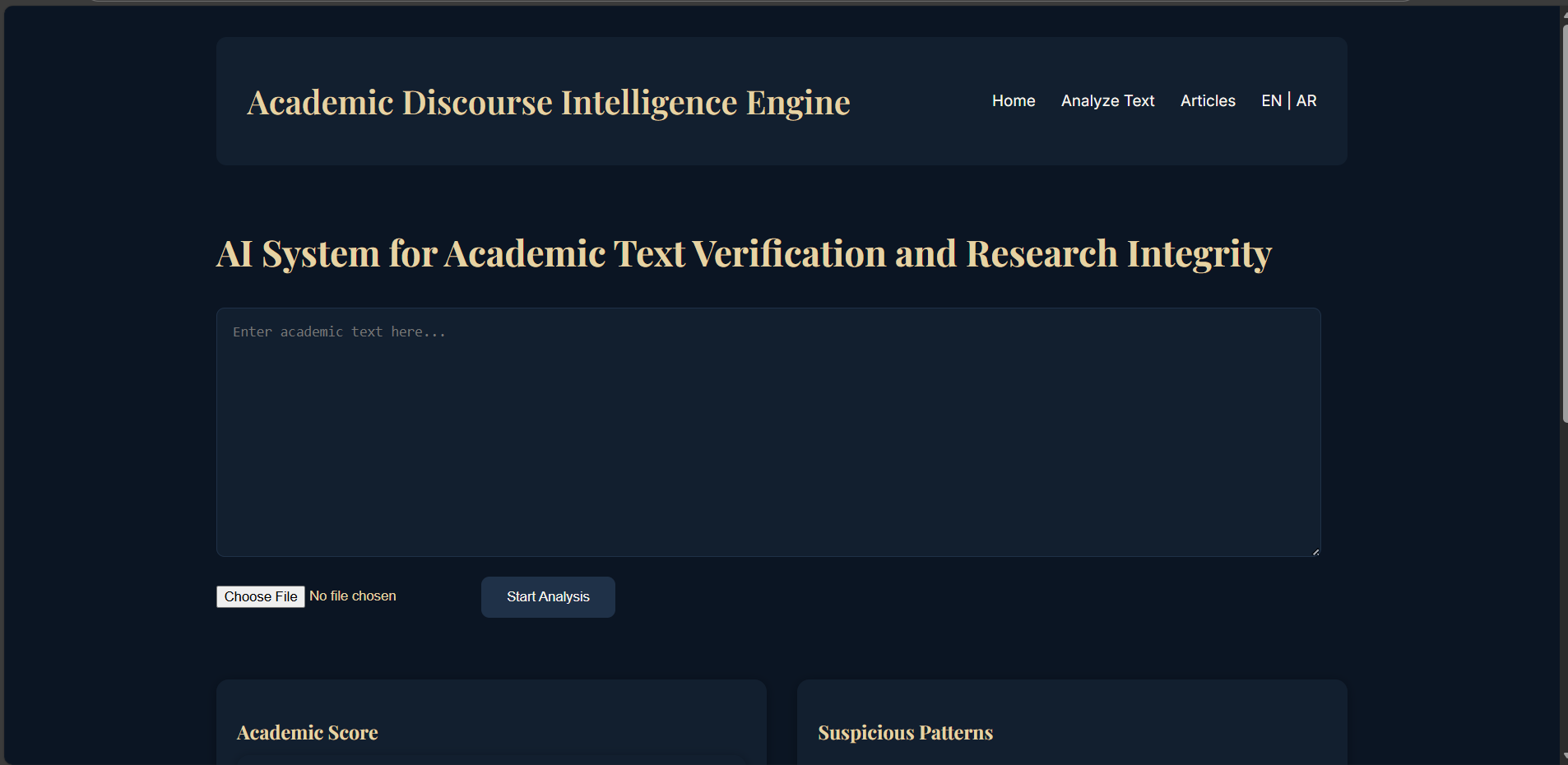
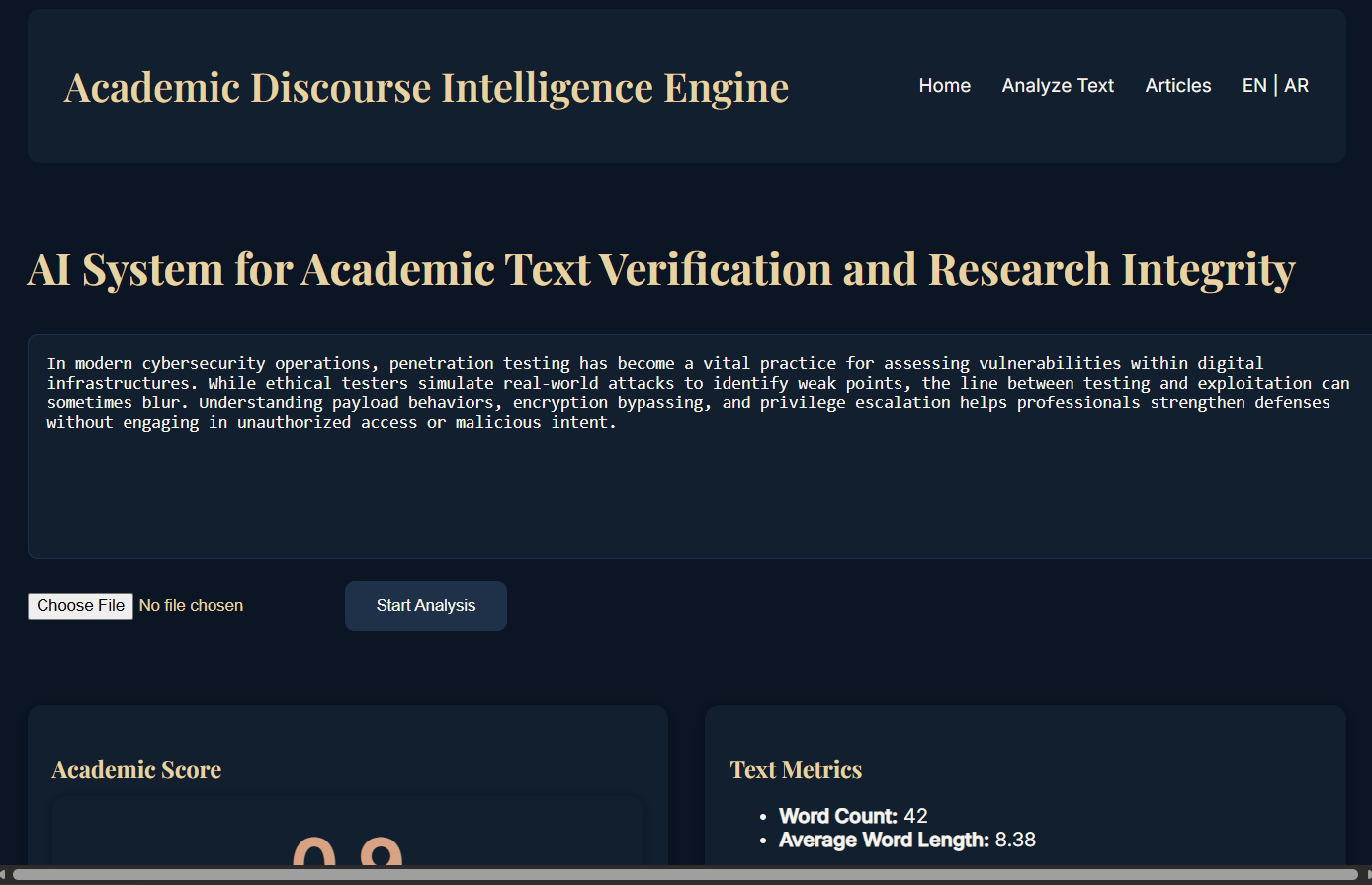
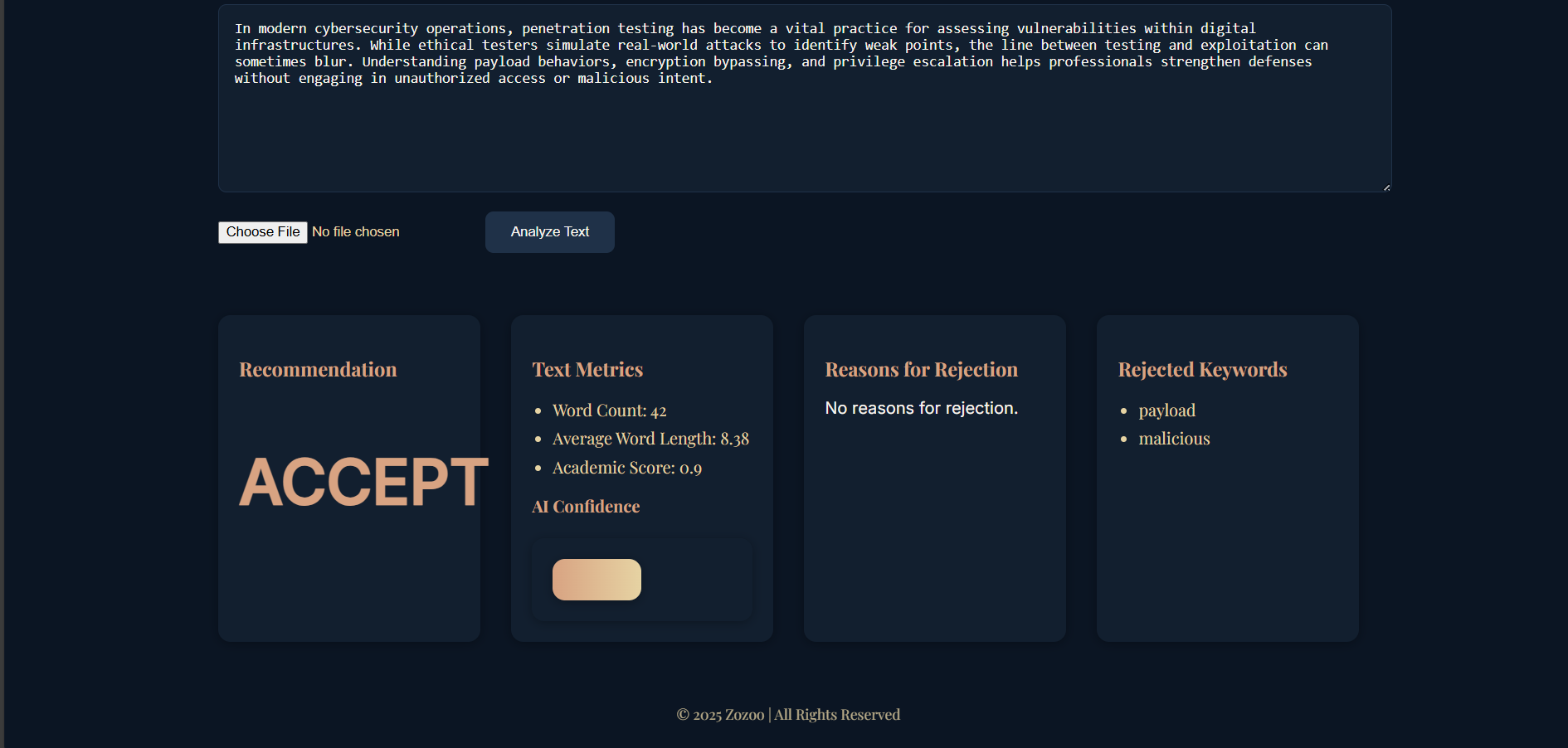
Academic Intelligence Engine (AIE) Project Overview The Academic Intelligence Engine (AIE) is an AI-driven web-based system designed to perform structured academic evaluation of research reports before formal submission. The system analyzes academic documents using Natural Language Processing (NLP) techniques to assess structural completeness, writing quality, readability, and similarity indicators. It generates automated classification decisions (Accept / Revise / Reject) along with actionable improvement recommendations and model guidance reports. AIE functions as a pre-evaluation intelligent layer that enhances research quality, reduces faculty workload, and standardizes academic assessment practices. 1. Problem Statement Higher education institutions face increasing challenges in maintaining consistent academic standards due to: Manual and time-consuming evaluation processes Lack of standardized assessment metrics Limited early-stage feedback for students Growing volume of research submissions Inconsistent structural and linguistic quality in reports As a result, academic committees experience workload pressure, and research quality assurance becomes inefficient and subjective. There is a need for a structured, measurable, and automated pre-assessment system to support academic decision-making. 2. Proposed Solution The Academic Intelligence Engine provides an automated academic evaluation framework that: Validates the presence of essential research sections Evaluates academic writing quality Detects informal or non-academic language Estimates similarity indicators Measures readability level Generates structured improvement suggestions Classifies reports into decision categories The system acts as a decision-support tool rather than replacing human review, ensuring academic integrity while increasing efficiency. 3. Methodology The system follows a structured processing pipeline: Step 1: Input Processing The uploaded academic text is cleaned and preprocessed (tokenization, normalization, segmentation). Step 2: Structural Analysis The system detects key academic components such as: Abstract Introduction Methodology Results Conclusion Step 3: Linguistic Evaluation Using NLP techniques: Academic vocabulary density is calculated Informal terms are detected Sentence complexity is analyzed Step 4: Readability Scoring Readability algorithms estimate the academic level of the text. Step 5: Similarity Estimation Pattern-based similarity indicators are calculated to approximate originality risk. Step 6: Decision Classification Based on weighted scoring, the system classifies the report into: Accept Revise Reject Step 7: Recommendation Generation Targeted improvement suggestions are generated based on weaknesses detected in the analysis. 4. Key Components The system consists of the following core components: 1. Web Interface A structured front-end that allows users to: Upload text View analysis results Access model reports Review recommendations 2. NLP Engine Built using Python and NLP libraries to perform linguistic analysis. 3. Structural Validator Checks completeness of required academic sections. 4. Scoring Engine Applies weighted evaluation metrics to produce a final classification. 5. Recommendation Generator Provides structured feedback tailored to detected issues. 6. Model Report Module Provides reference academic report samples to guide improvement. 5. Technical Architecture Backend: Python with Flask framework NLP Processing: Tokenization, keyword detection, rule-based scoring Evaluation Logic: Modular scoring system Interface: HTML/CSS web application Local deployment (expandable to institutional server integration) The architecture is modular and scalable for future AI model integration. The 60-second demonstration video focuses on presenting the system workflow and user interface. 1. Homepage Overview The video begins by showing the main interface of the Academic Intelligence Engine, highlighting the clean layout and navigation structure. 2. Report Submission A sample academic report is uploaded or pasted into the input field to demonstrate how users interact with the system.