: Smart Robotic Waste Bin with IoT-Based Predictive Fill-Level Monitoring
The project, titled Smart Robotic Waste Bin with IoT-Based Predictive Fill-Level Monitoring, aims to design a smart robotic waste bin that improves waste management and reduces the need for manua…
الفريق
خوارزمية النقاء
رمز الفريق
NURAI2026-0466
المشرف
م.م. كرم عنان عبدالغني
قراءة الوصف الكامل للمشروع
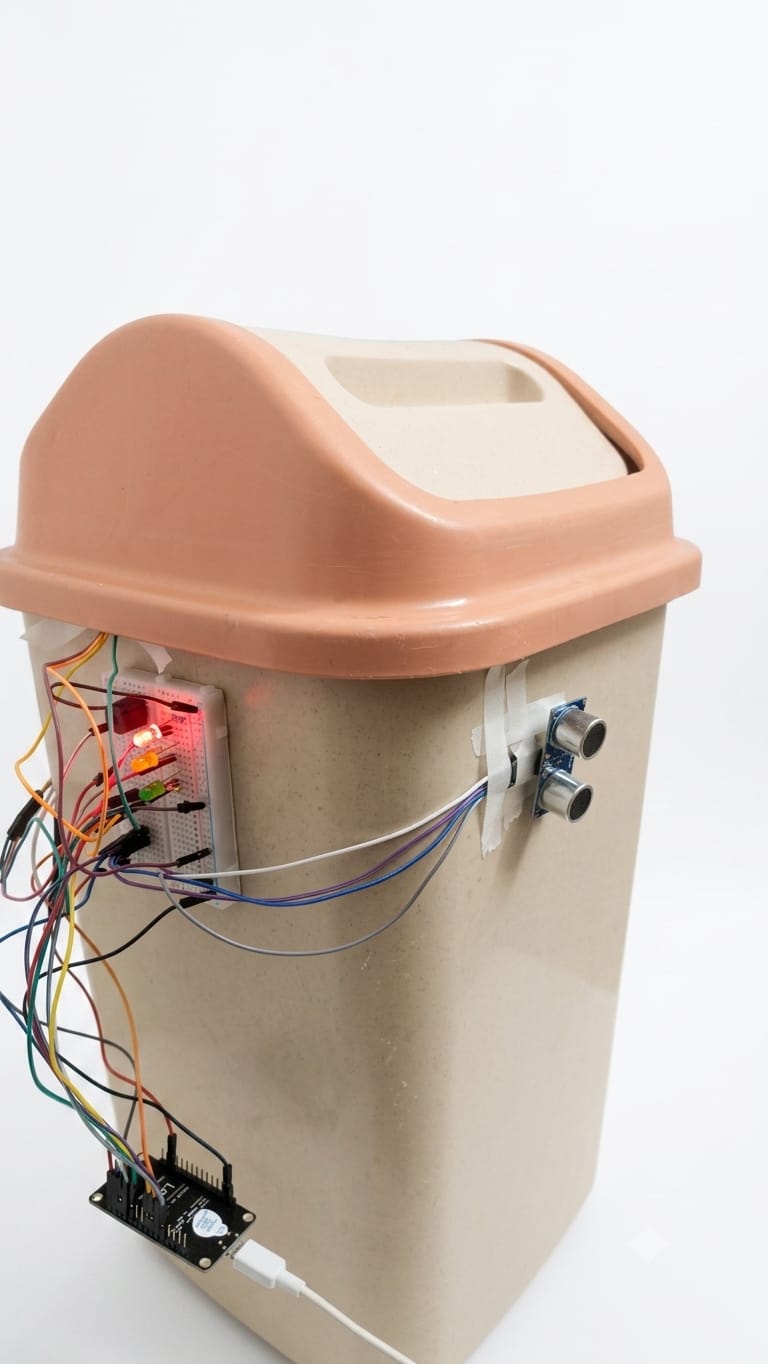
The project, titled Smart Robotic Waste Bin with IoT-Based Predictive Fill-Level Monitoring, aims to design a smart robotic waste bin that improves waste management and reduces the need for manual inspection. The idea addresses the problem of traditional waste collection systems, which usually depend on fixed schedules without knowing the actual filling level of each bin. This may lead to wasted time, fuel, and higher operating costs.
Working Mechanism
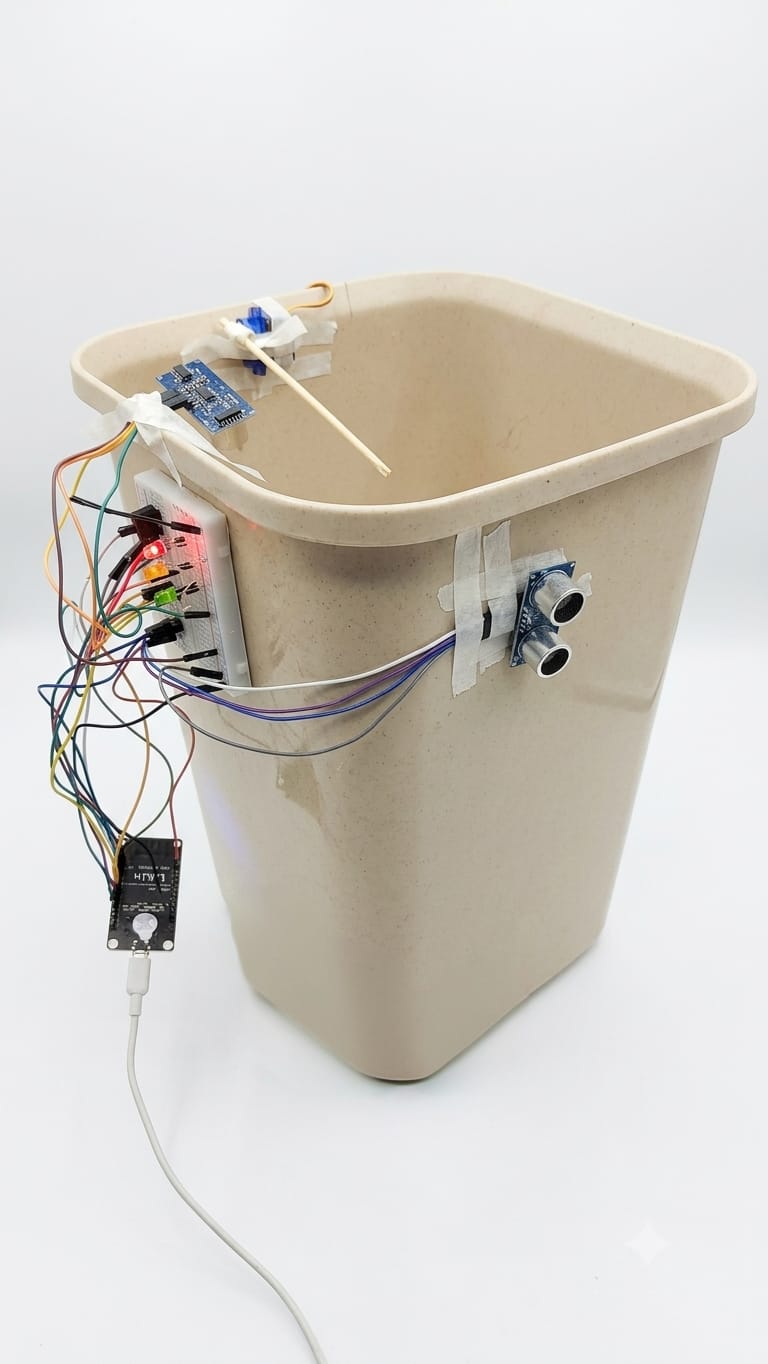
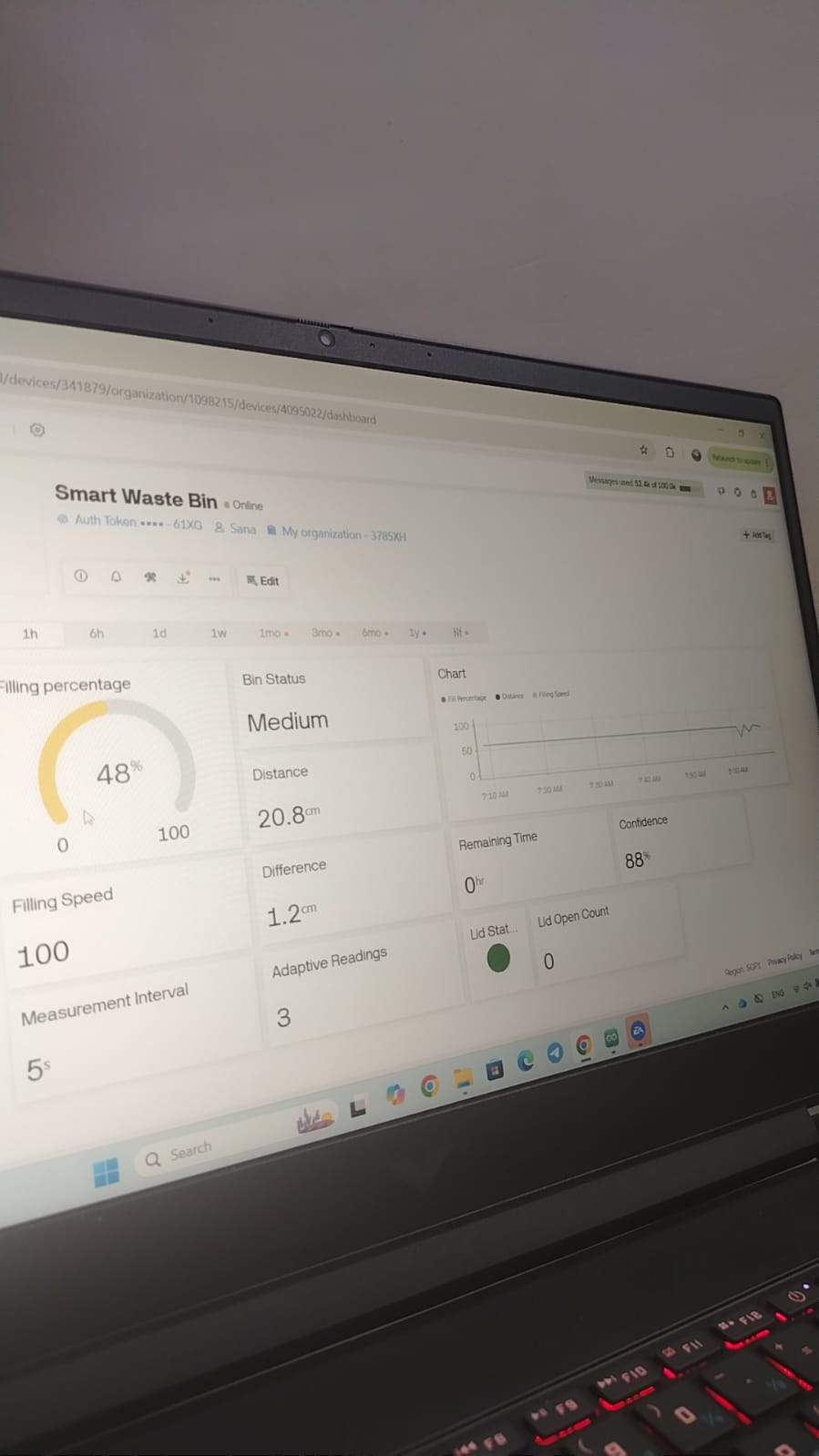
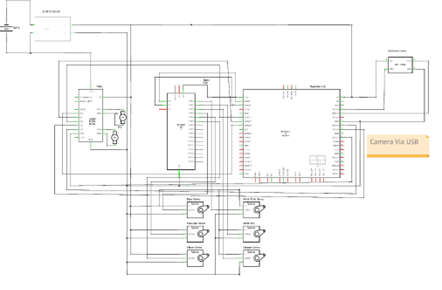
The system is based on an ESP8266 NodeMCU microcontroller and two Ultrasonic HC-SR04 sensors. The first sensor detects the presence of a nearby user, allowing the lid to open automatically using a servo motor without physical contact. The second sensor measures the waste level inside the bin. The microcontroller processes the sensor readings, filters unstable values, calculates the filling percentage, and classifies the bin status as low, medium, nearly full, or full. The system also sends data and alerts through Wi-Fi to the Blynk application for real-time monitoring.
Expected Results
The project is expected to improve waste collection efficiency, reduce unnecessary collection trips, and lower fuel consumption and operating costs. It also provides real-time alerts when the bin becomes full and estimates the filling speed and remaining time before full capacity. Overall, the project offers a low-cost practical solution that combines robotics, Internet of Things, and intelligent data processing, with the potential for future development within smart city systems.
NURAI · 2026
المسار الطبي
A Non-Invasive Breath-Based Early Detection System for Lung Cancer Using MOS Sensor Array and Machine Learning
يهدف هذا المشروع إلى تطوير نظام أولي منخفض التكلفة للكشف المبكر عن سرطان الرئة بطريقة غير جراحية، من خلال تحليل هواء الزفير باستخدام مصفوفة من حساسات الغازات من نوع MOS (Metal Oxide Semiconductor…
الفريق
اوميكاترون
رمز الفريق
NURAI2026-0543
المشرف
د. سيف عبد الحميد مجيد
قراءة الوصف الكامل للمشروع
يهدف هذا المشروع إلى تطوير نظام أولي منخفض التكلفة للكشف المبكر عن سرطان الرئة بطريقة غير جراحية، من خلال تحليل هواء الزفير باستخدام مصفوفة من حساسات الغازات من نوع MOS (Metal Oxide Semiconductor) وتقنيات الذكاء الاصطناعي. تعتمد فكرة المشروع على أن الخلايا السرطانية تُنتج مركبات عضوية متطايرة (VOCs) تختلف عن تلك الموجودة في الأشخاص الأصحاء، ويمكن الاستفادة منها كمؤشرات حيوية للكشف المبكر عن المرض.
تعمل آلية النظام على التقاط استجابة الحساسات عند تعرضها لهذه المركبات، ثم إرسال البيانات إلى متحكم Arduino لمعالجتها مبدئيًا، قبل تحليلها باستخدام خوارزميات التعلم الآلي في بيئة Python، والتي تتضمن معالجة الإشارة، وتحليل المكونات الرئيسية (PCA)، وتصنيف الأنماط باستخدام خوارزمية SVM. ويتيح ذلك التمييز بين الأنماط المختلفة للمركبات العضوية المتطايرة وإظهار نتائج الفحص بصورة سريعة وغير جراحية.
أثبت النموذج الأولي إمكانية استخدام الحساسات منخفضة الكلفة مع تقنيات التعلم الآلي في تحليل أنماط المركبات العضوية المتطايرة، مما يمثل خطوة واعدة نحو تطوير أنظمة ذكية وسريعة للكشف المبكر عن سرطان الرئة. وتتمثل المرحلة المستقبلية للمشروع في التحقق من أداء النظام باستخدام عينات زفير حقيقية من المرضى لتقييم دقته في التطبيقات السريرية.
المسار الزراعي
A Semi-Autonomous Laser-Based Robotic System for Weed Control in Wheat Fields
Weeds pose a persistent threat to wheat production worldwide, with reported yield losses as high rate, costing billions of dollars annually. Wheat is similarly central to Iraq's food security and…
الفريق
NextGen Aqua
رمز الفريق
NURAI2026-0494
المشرف
م . محمد طارق محمد
قراءة الوصف الكامل للمشروع
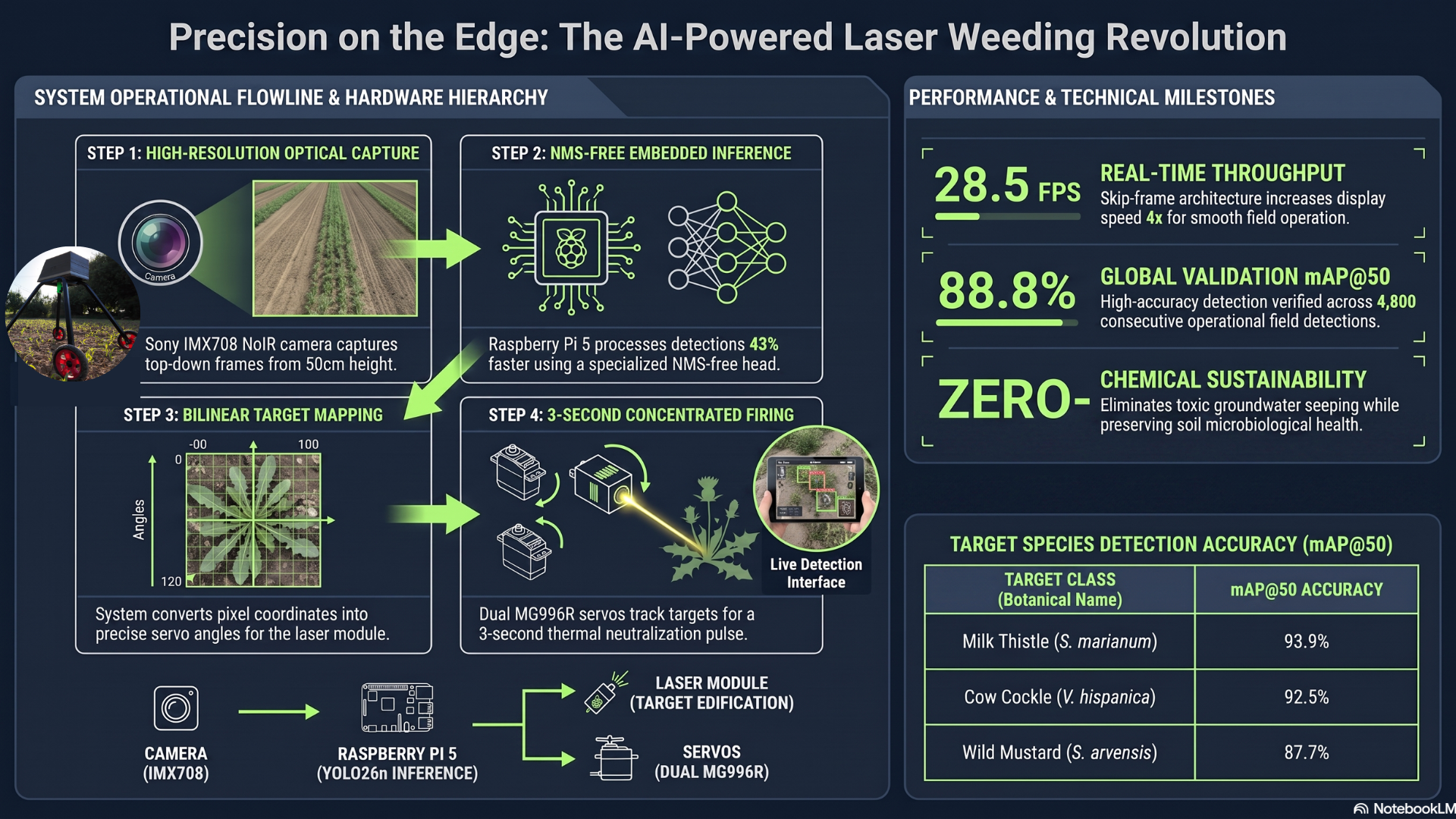
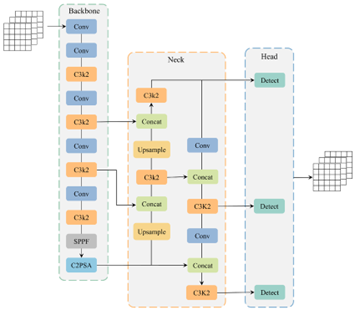
Weeds pose a persistent threat to wheat production worldwide, with reported yield losses as high rate, costing billions of dollars annually. Wheat is similarly central to Iraq's food security and economy, making affordable weed control a national priority. This project presents a semi-autonomous, laser-based robotic system that controls weeds in Iraqi wheat fields, replacing chemical herbicides with a precision laser that protects the environment, human health, and soil without disturbing the crop. The system pairs a YOLO26n deep learning model for real-time weed detection with a laser targeting mechanism, trained on a custom dataset of 2,181 images spanning five Iraqi wheat-field weed species. After training, the model reached 84.5% precision, 82.6% recall, and an mAP@50 of 88.8%, then was deployed on a Raspberry Pi 5 via NCNN at roughly 155 ms per frame and 28.5 FPS through a skip-frame strategy. This approach could cut laser-weeding costs well below commercial systems, strengthening farm income and food security in Iraq, and because its detection classes come from training data rather than a fixed crop, it could extend to other crops via a new weed dataset for that field
NURAI · 2026
المسار الطبي
A Smart Mobile Application for Insulin Dosage Calculation and Scheduling in Diabetic Patients
Accurate management of insulin dosages is a critical challenge for diabetic patients, where forgotten doses or arbitrary calculations often lead to severe glycemic fluctuations. This paper presen…
الفريق
Ai Watch
رمز الفريق
NURAI2026-0544
المشرف
د. صديق الخزرجي
قراءة الوصف الكامل للمشروع
Accurate management of insulin dosages is a critical challenge for diabetic patients, where forgotten doses or arbitrary calculations often lead to severe glycemic fluctuations. This paper presents an innovative solution through the development of a smart mobile application designed to schedule and manage insulin doses based on real-time user metrics. The system aims to eliminate human estimation errors using a precise calculation engine supported by intelligent models, alongside a robust reminder system to ensure medication adherence. The application features an inclusive, user-friendly interface with specialized accessibility modes for the elderly and visually impaired, as well as daily health task tracking. Results demonstrated the application's efficacy in providing precise clinical dosage guidance, thereby enhancing patients' ability to manage their condition independently and safely.
مسار التربية والتعليم
Design And Implementation Of An AI-Powered Interactive Learning Platform For Curriculum Analysis And AR/VR Content Generation
This project tackles the challenges in EdTech and immersive learning, where abstract concepts can prove hard to comprehend as traditional educational materials predominantly use static text and t…
الفريق
مبرمجون بلا حدود
رمز الفريق
NURAI2026-0552
المشرف
د. شيماء مصطفى محي الدين
قراءة الوصف الكامل للمشروع
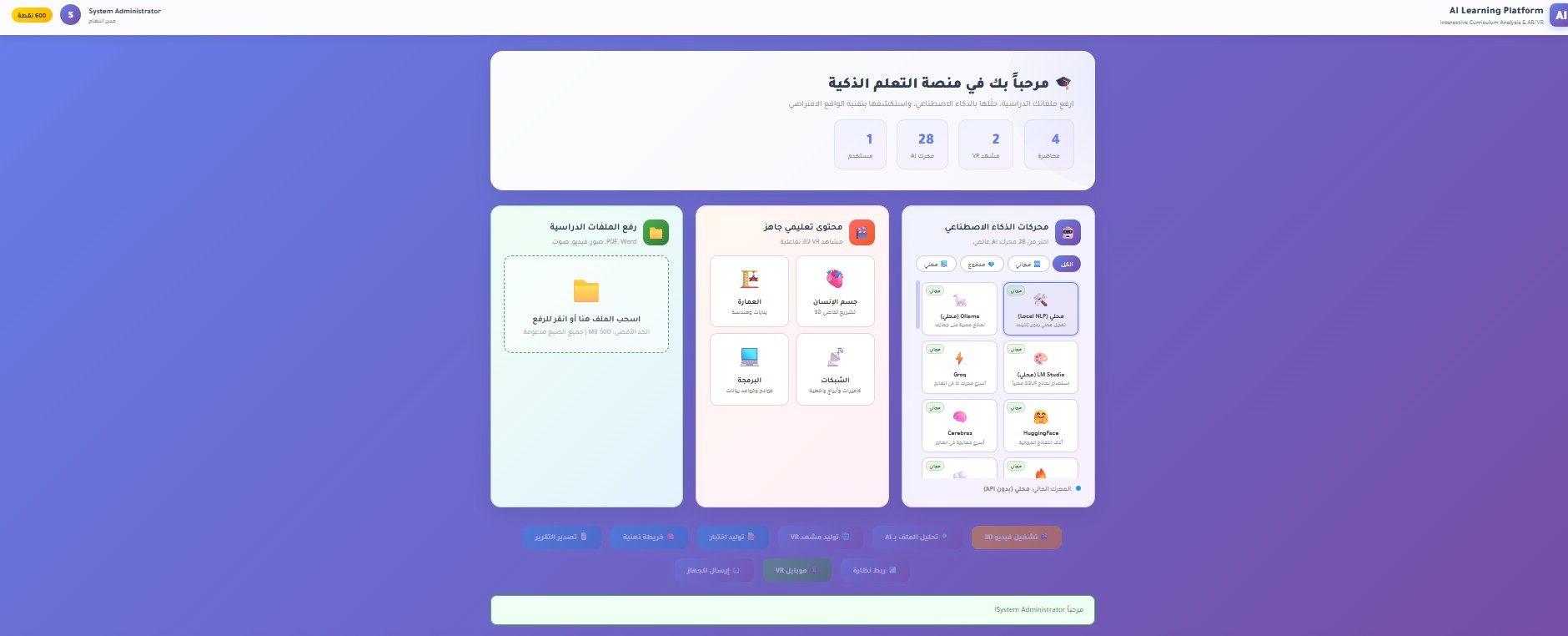
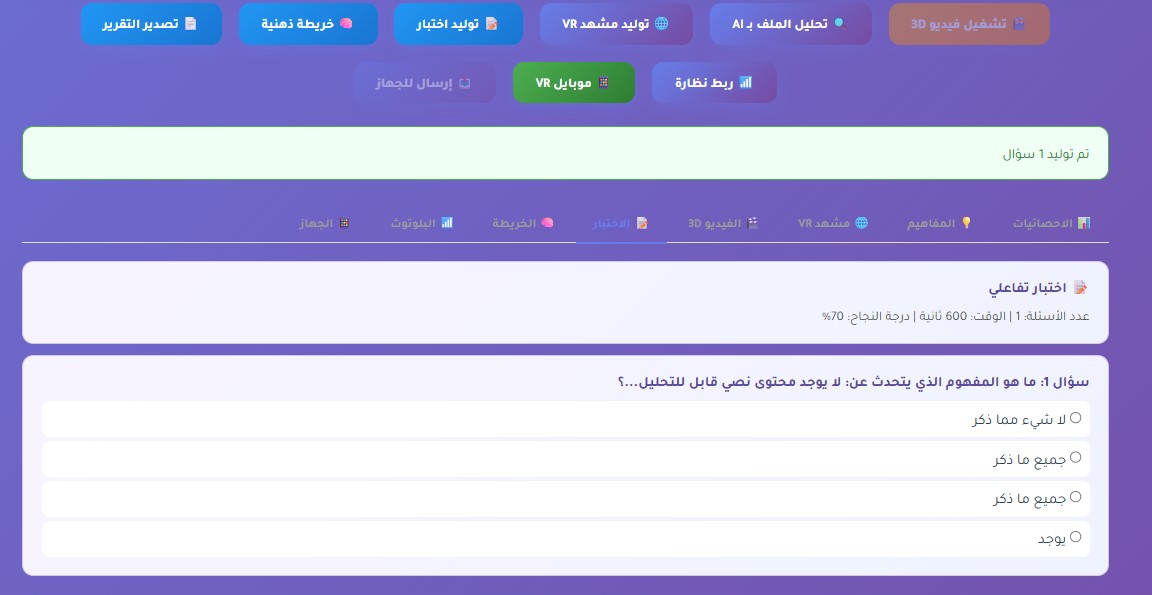
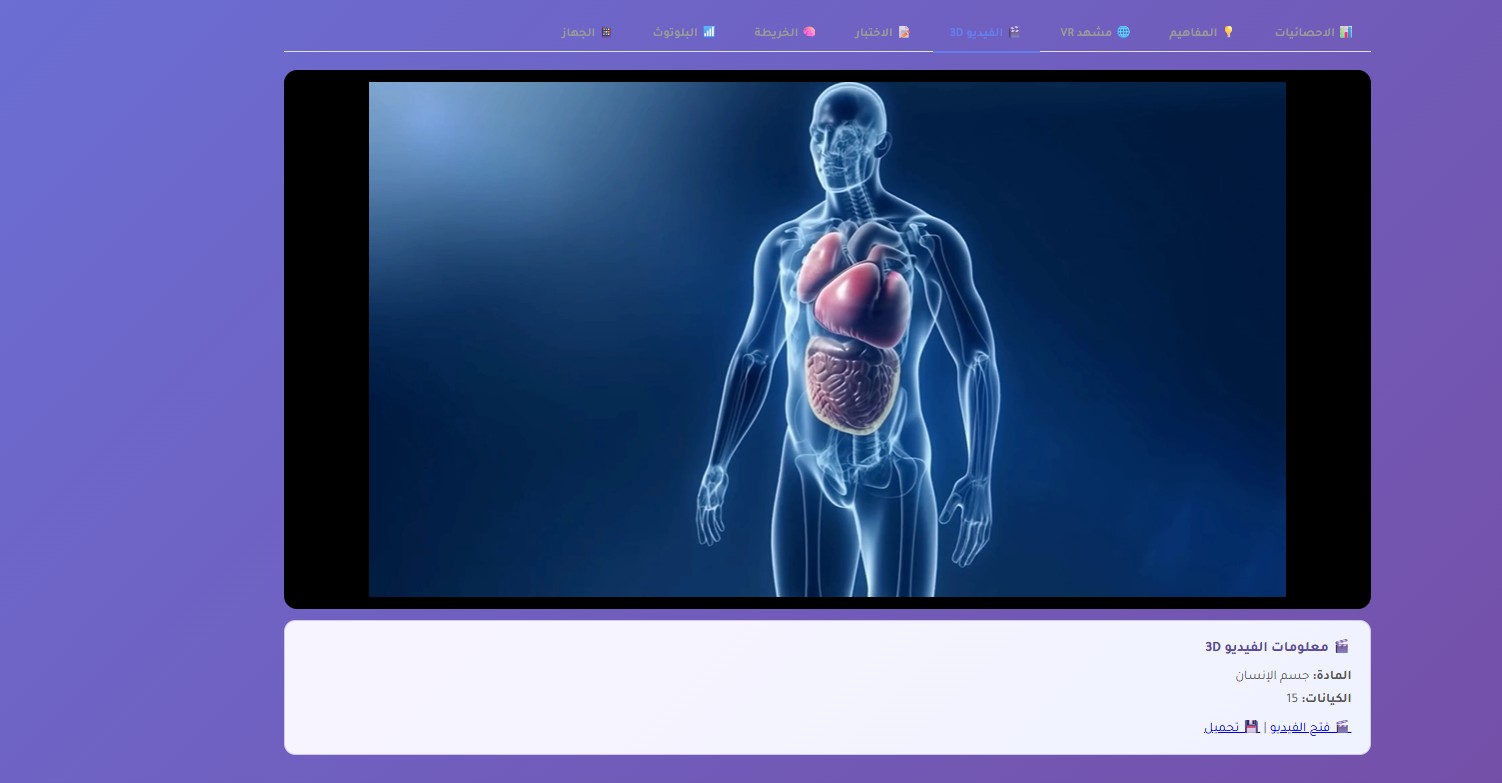
This project tackles the challenges in EdTech and immersive learning, where abstract concepts can prove hard to comprehend as traditional educational materials predominantly use static text and two-dimensional illustrations. The project designs and implements an AI-powered interactive learning platform that automatically converts traditional educational material into experiential learning experiences. It accepts a wide variety of input types, such as PDF, DOCX, PowerPoint presentations and images (which can be in file or image formats), videos and text documents. Mix AI$ and models include OpenAI GPT, Google Gemini, Anthropic Claude, DeepSeek (an engine that is built specifically for the curriculum context), local NPL china's framework to analyze content of each unit in the subjects as a learning bot which learns from your resources ($881.10 quarterly) These resources are split from formative multiple-choice questions (MCQs) to AI-generated mind maps and interactive learning environment through Augmented Reality, Web-based Virtual Reality (WebVR - A-Frame). The graceful degradation of the multi-engine AI architecture, which is proposed in this work, could improve reliability and privacy with installation method because integrated system may detect failure in cloud service usage capability and still also be operational for critical timely operation requirement. Experimental Implementation The proposed solution was successfully validated as an automated curriculum analysis, concept extraction and 3D learning content generation without manually generating the 3D content [7]. The platform also allows for shorter preparation time required of instructors, greater interaction and engagement as well as conceptual understanding through more immersive experiences when compared to traditional ways of teaching. Assimilation of Artificial intelligence with Augmented and Virtual Reality solutions provides a flexible and optimal answer for postmodern modern-day digital education & supports the inherent pressure to implement technology-enabled learning environments .
المسار البيئي
Design of a Mobile Robot for a Sustainable Environmental Monitoring System
This project introduces a cost-effective, modular autonomous search and rescue vehicle designed to assess disaster zones before deploying human responders. Built on a dual-ESP32 architecture, the…
الفريق
EcoBot
رمز الفريق
NURAI2026-0520
المشرف
عمر خالد محمد علي الهاشمي
قراءة الوصف الكامل للمشروع
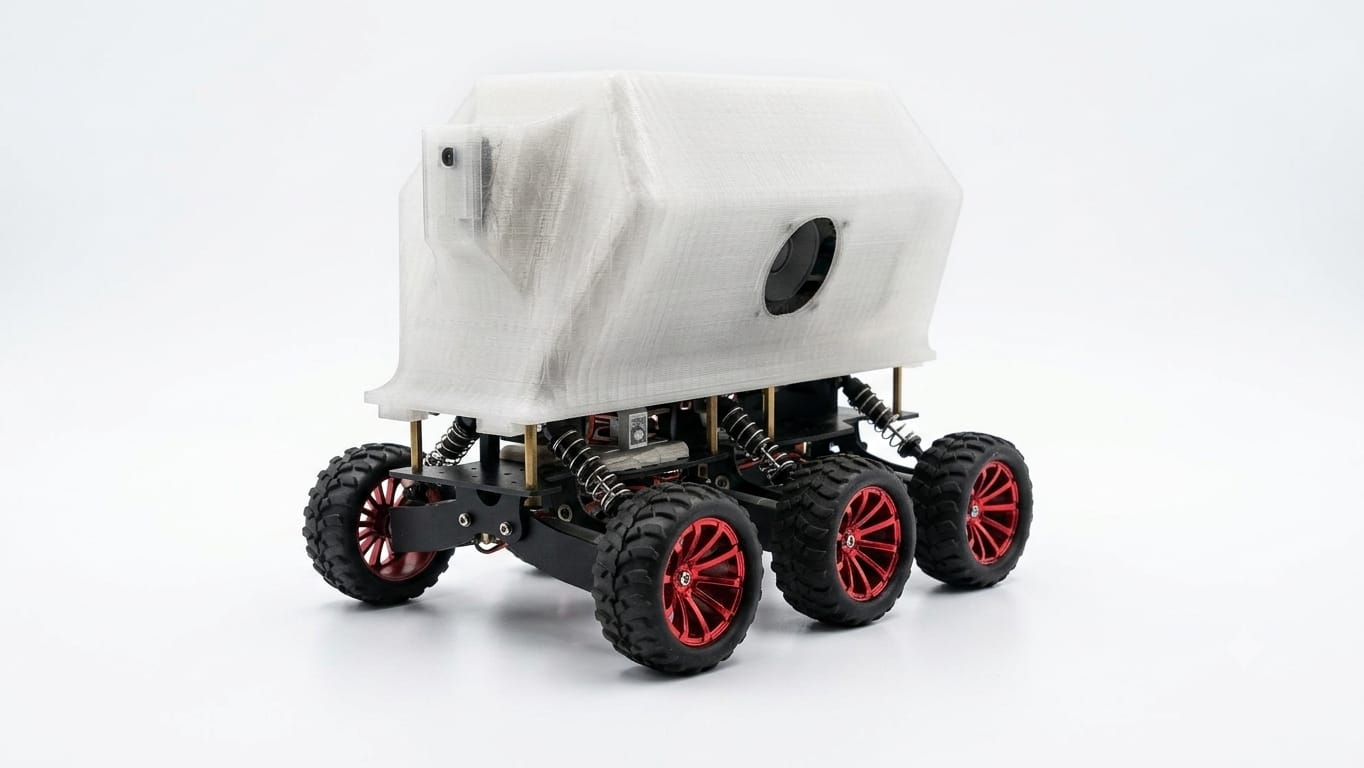
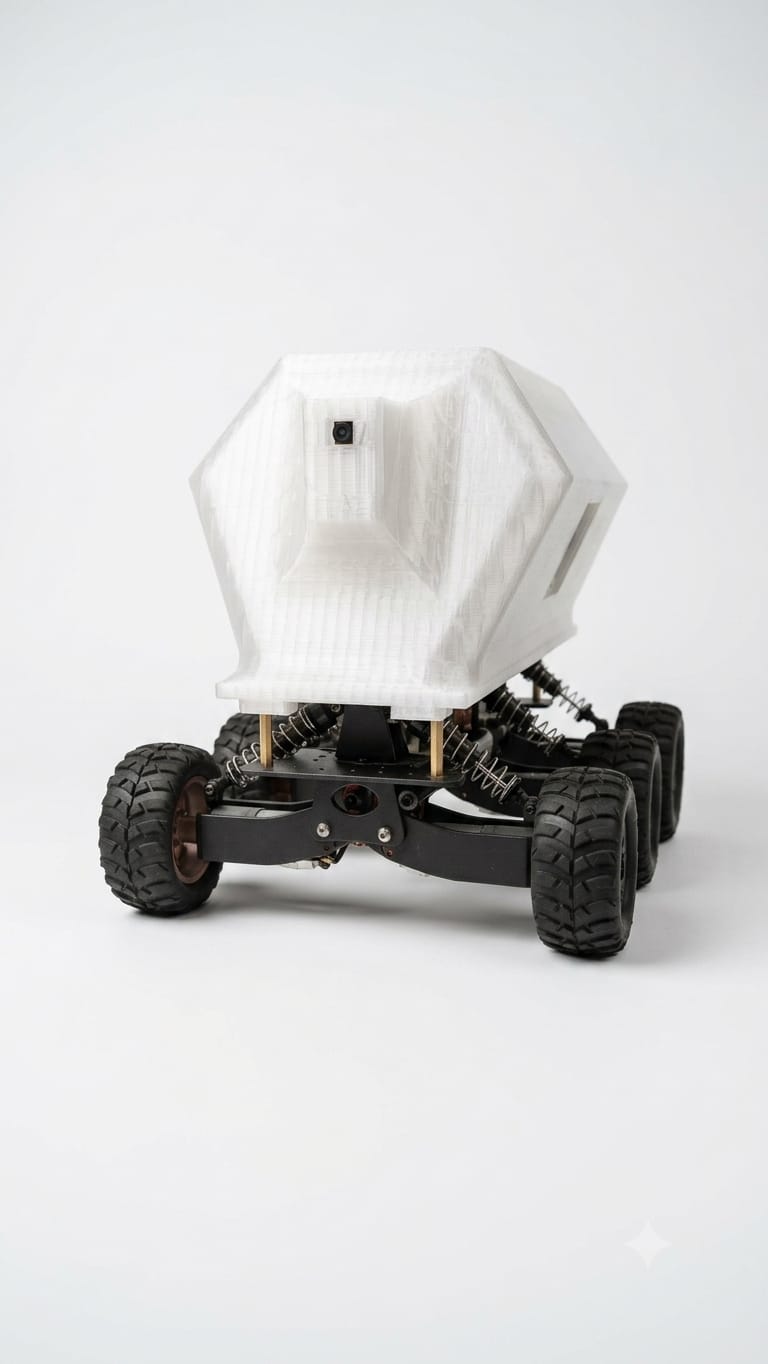
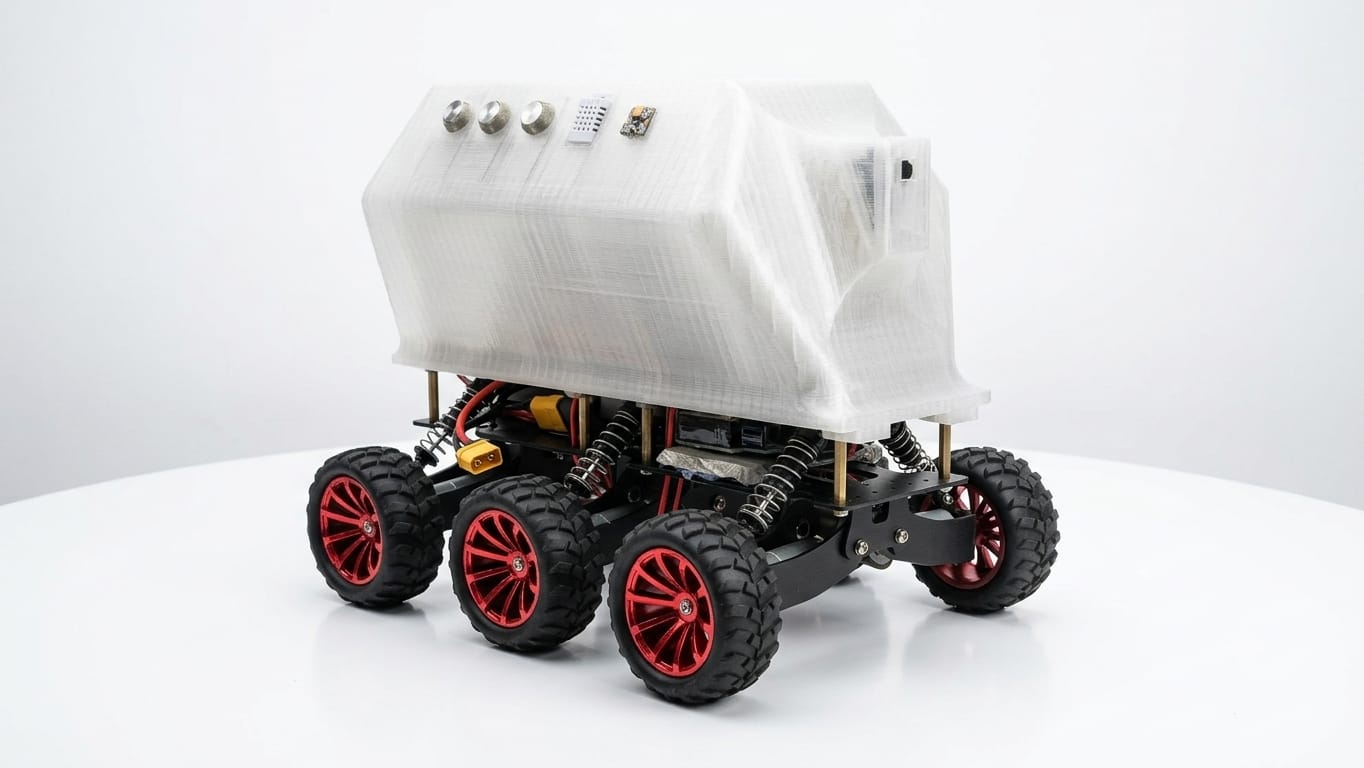
This project introduces a cost-effective, modular autonomous search and rescue vehicle designed to assess disaster zones before deploying human responders. Built on a dual-ESP32 architecture, the vehicle pairs an ESP32-CAM for low-latency (150–200ms) video streaming with a main controller managing high-current motors and a six-sensor environmental array. The system tracks up to five simultaneous objects using a browser-based motion detection algorithm, achieving 100% directional accuracy under 100 milliseconds. Capable of real-time monitoring for toxic gases (H2S, CO, O3, NO2), particulate matter, and climate conditions, the vehicle demonstrates over two hours of stable operation across a 15–20-meter WiFi range.
مسار خدمة المجتمع
Designing an intelligent traffic signal monitoring system using AI-powered cameras to reduce traffic congestion and detect emergencies
This study proposes a smart transportation framework based on computer vision, designed to evolve urban intersections from fixed, timed signal stages to fully autonomous, real-time decision-makin…
الفريق
فريق المبدعون الاليون
رمز الفريق
NURAI2026-0406
المشرف
امنة عبد المنعم فاضل
قراءة الوصف الكامل للمشروع
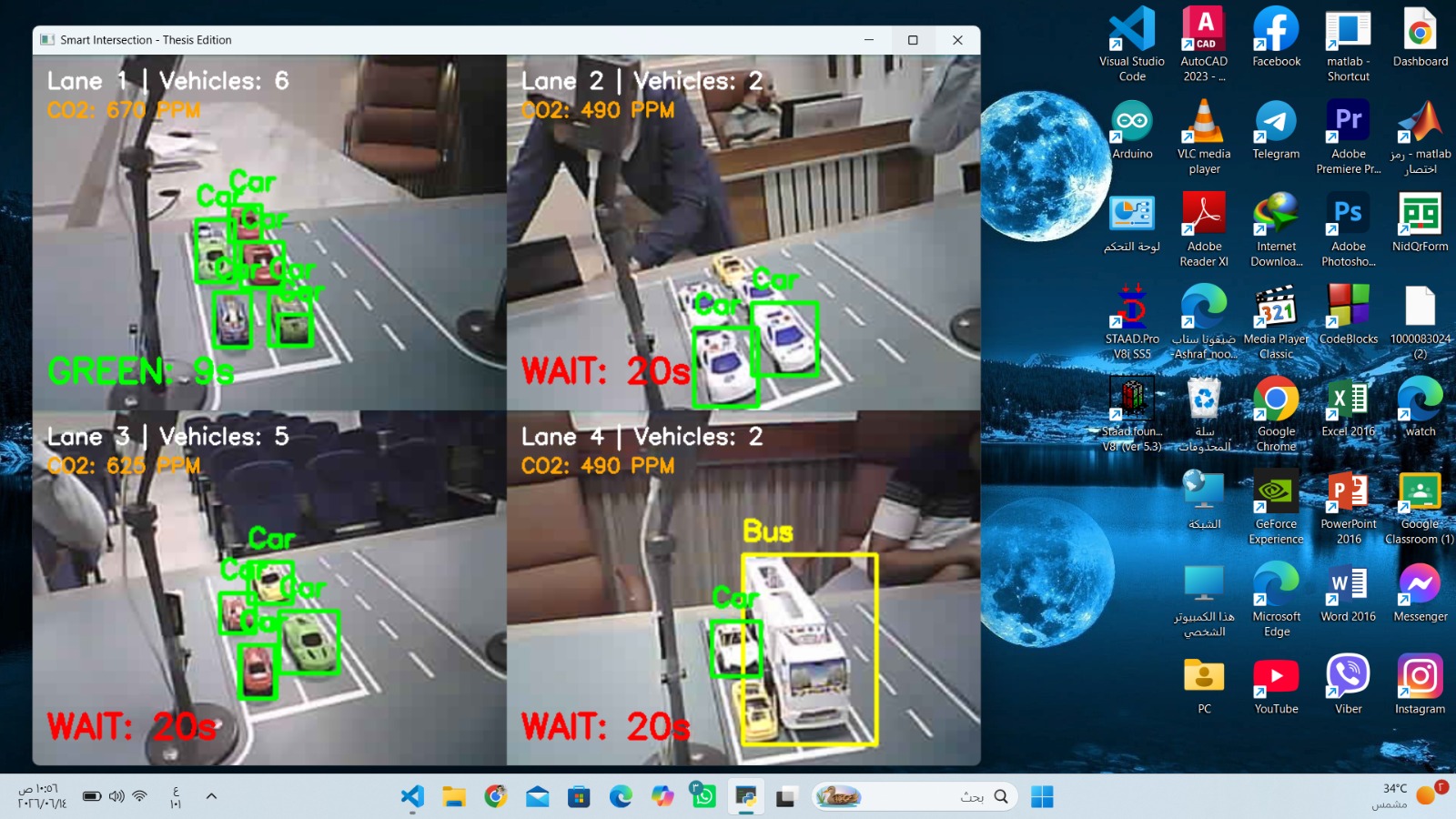
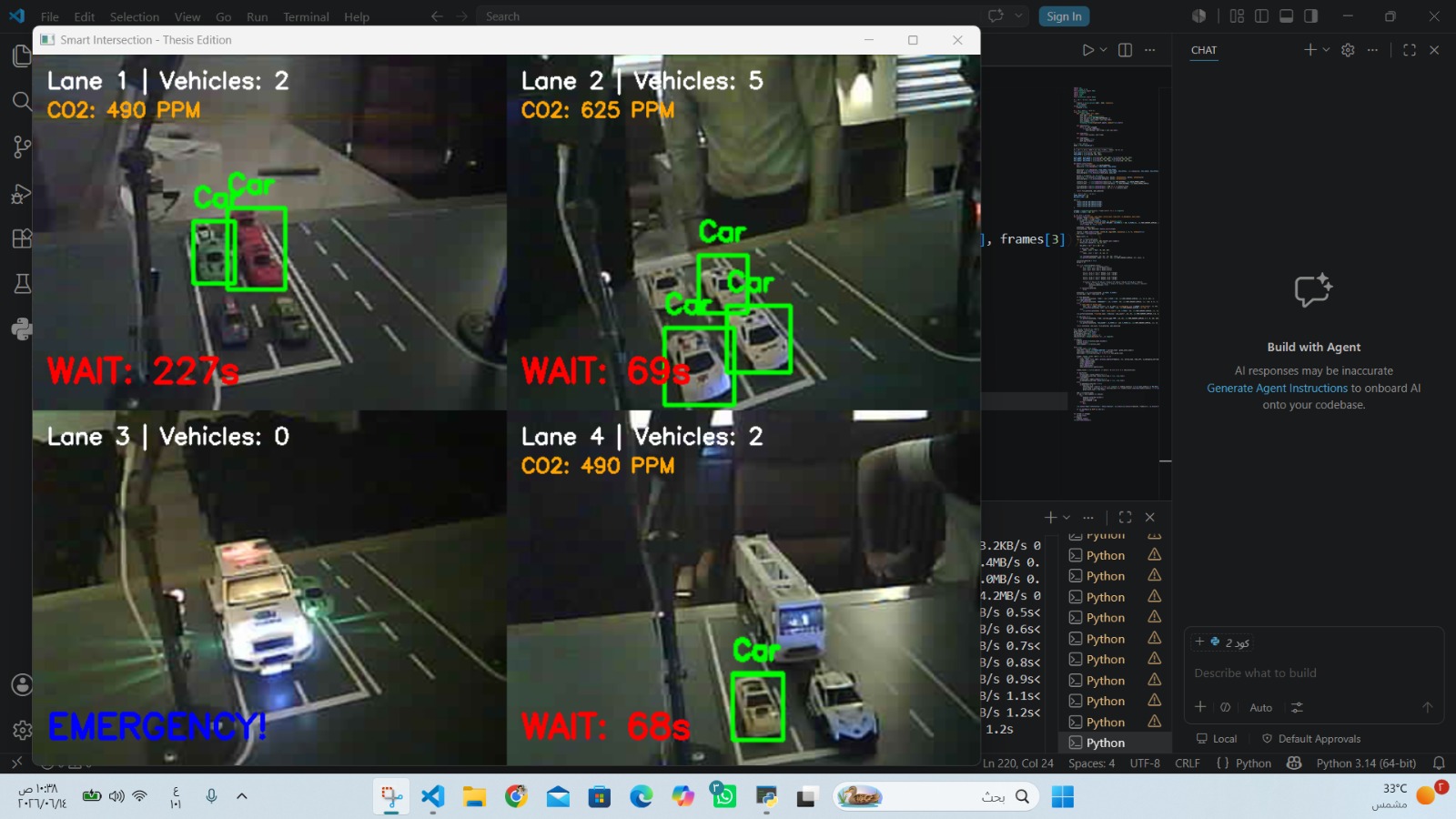
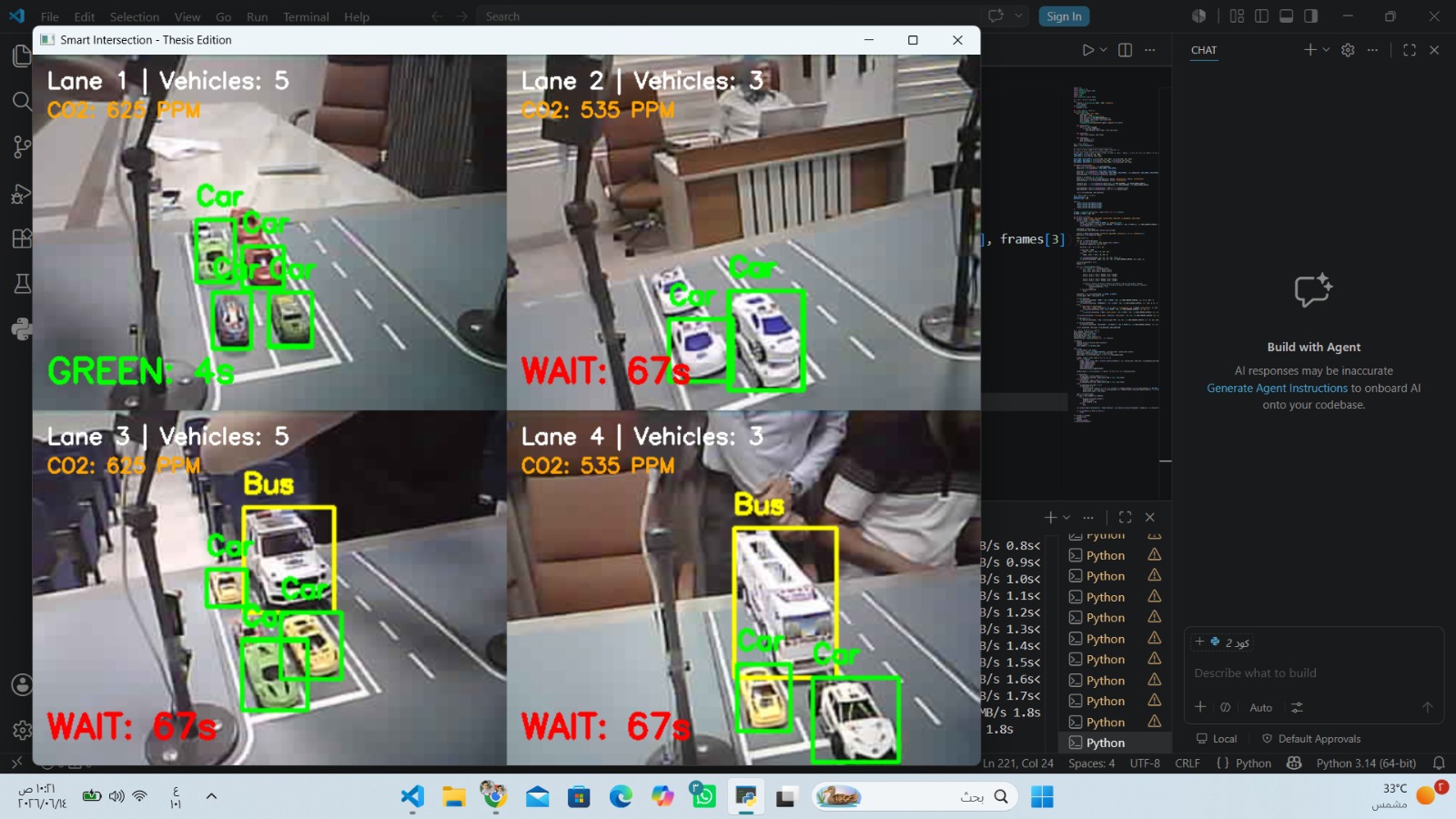
This study proposes a smart transportation framework based on computer vision, designed to evolve urban intersections from fixed, timed signal stages to fully autonomous, real-time decision-making loops. The computational architecture is based on YOLOv8, a convolutional neural network that detects multi-category vehicles and maps lane density using live monitoring data. The architecture design also includes a dedicated public safety lane to track first responder assets—such as ambulances and fire trucks—to immediately activate "green lanes," as well as parallel hazard detection layers that send low-latency incident alerts to civil defense and traffic departments during localized fires or collisions to enhance the safety of the municipal road network. Environmentally, predictive in-operational adjustment reduces the accumulation of greenhouse gases (CO2) in cities by minimizing engine downtime and using calculated vehicle occupancy time as a key performance indicator.
NURAI · 2026
مسار خدمة المجتمع
Ghostlayer security
1. Problem Statement Many local applications store sensitive user data (passwords, notes, personal records) in plaintext or with weak encryption. Traditional databases lack multi‑layer authentica…
الفريق
Security Ghosts
رمز الفريق
NURAI2026-0043
المشرف
د. إبراهيم محمد الحليمه
قراءة الوصف الكامل للمشروع
1. Problem Statement
Many local applications store sensitive user data (passwords, notes, personal records) in plaintext or with weak encryption. Traditional databases lack multi‑layer authentication and often use static encryption keys, making them vulnerable to offline attacks, key leakage, or insider threats. Users need a simple, AI‑enhanced solution that combines user authentication, dynamic encryption, and secondary verification before exposing decrypted data.
2. Proposed Solution / Innovation
GhostLayer Security introduces a three‑layer security architecture:
Login layer – username + password (PBKDF2‑hashed).
AI‑driven encryption layer – a small neural network generates a unique Fernet (AES‑128) key from the data itself.
Verification layer – a user‑defined security phrase required to decrypt and view any stored data.
Innovation: Using a neural network as a key derivation function (KDF) – the key is not stored anywhere, but recomputed on‑the‑fly from the user’s input text. This makes offline brute‑force much harder because the attacker would need to reverse the network’s non‑linear mapping.
3. Method / Implementation
Frontend: Python Tkinter with full‑screen GUI, custom background, logo, and animated glowing rings.
Backend: Two SQLite databases – users.db (hashed credentials + security phrases) and secure_data.db (encrypted entries only).
AI Model: A 3‑layer neural network (10→8→32 neurons, sigmoid activation). The input is a feature vector from the plaintext (character codes normalized). The 32 output bytes are converted to a base64 URL‑safe key for Fernet.
Encryption: Fernet (symmetric encryption, AES‑128 in CBC mode with HMAC authentication).
Hashing: PBKDF2‑HMAC‑SHA256 with 32‑byte random salt and 100,000 iterations.
Workflow:
Register → Login → Enter plaintext → AI generates key → Encrypt → Store → To view: re‑enter security phrase → Decrypt → Display.
4. Key Components
Type Component / Technology
Hardware Any standard PC (no special hardware required)
Software Python 3.7+, Tkinter, SQLite3, Pillow (images)
AI Custom feed‑forward neural network (NumPy) for dynamic key generation
Security Cryptography (Fernet), hashlib (PBKDF2), os.urandom
Packaging PyInstaller (standalone .exe with custom icon)
5. Result / Impact
Security: Data is never stored in plaintext; even if the database is stolen, the encryption key cannot be retrieved without the original input text and the neural network weights.
Usability: Simple graphical interface – no command‑line skills required.
Performance: Encryption/decryption takes <0.1 seconds for short texts (tested on a typical laptop).
Portability: The final .exe file (with icon) can run on any Windows machine without Python installed.
Potential impact: Suitable for journalists, researchers, or anyone needing a local, AI‑fortified vault for sensitive text snippets.
6. Demo Summary (60‑second video content)
The video will show:
Opening the application – full‑screen black interface with “GhostLayer Security” title.
User registration – entering username, password, and a security phrase (“mySecretPhrase123”). Success message.
Login – correct credentials → main interface appears (background, logo, green glowing rings).
Adding encrypted data – typing “My confidential password is Xyz789” → pressing “Encrypt & Save” → success popup.
Attempt to view data without phrase – pressing “View Decrypted Data” → dialog asks for security phrase → wrong phrase → “Access Denied”.
Correct phrase – entering the correct security phrase → new window opens showing decrypted entry (“ID: 1 – My confidential password is Xyz789”).
Logout – returns to login screen, demonstrating session isolation.
Exit – closing the application.
The video will be screen‑recorded with a voiceover explaining each layer of security. No sensitive real data will be shown.
المسار البيئي
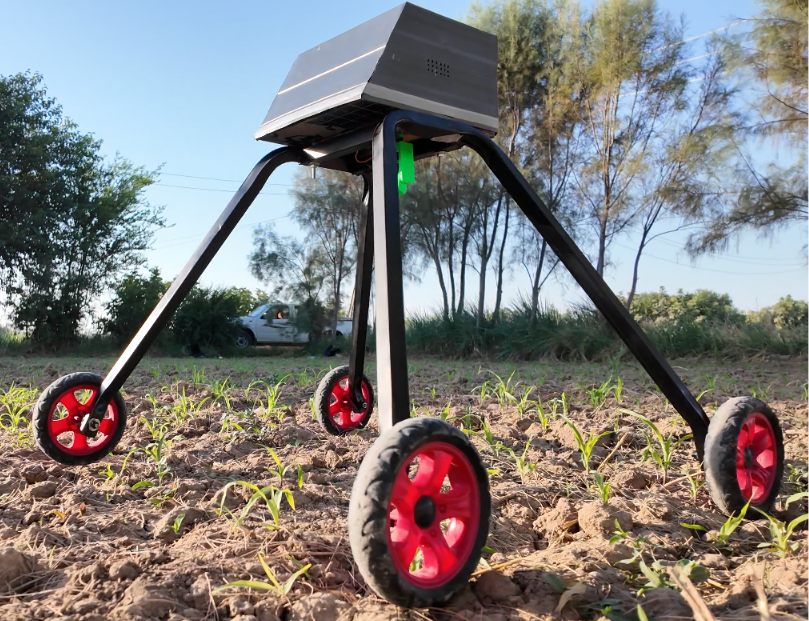
Implementation of a Sustainable Smart Robotic System for Outdoor Plastic Waste Collection
Global plastic production exceeds 400 million tons annually with under 9% recycled, making manual waste collection inefficient and hazardous. NatureCleanerBot is an autonomous mobile robot design…
الفريق
MSM
رمز الفريق
NURAI2026-0572
المشرف
د. زهراء طارق محمد
قراءة الوصف الكامل للمشروع
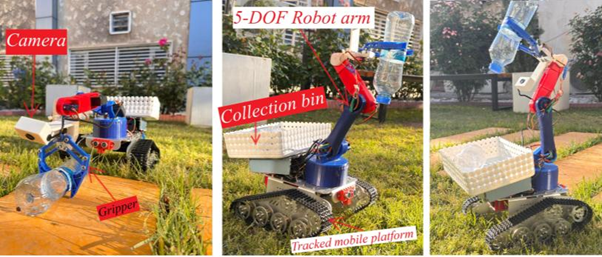
Global plastic production exceeds 400 million tons annually with under 9% recycled, making manual waste collection inefficient and hazardous. NatureCleanerBot is an autonomous mobile robot designed to detect and collect plastic bottles in semi-structured outdoor environments. Its mechatronic architecture integrates a tracked platform with a custom five-degree-of-freedom robotic arm and 3D-printed gripper. A Raspberry Pi 5 central controller fuses YOLO11n-OBB object detection with a dual ultrasonic sensor system facilitating both obstacle avoidance and precise depth measurement for “Scan-and-Verify” navigation and inverse-kinematics retrieval. Evaluations showed 85.1% precision, 89.5% recall, 91.3% mAP50, and 9.0 ms inference speed. Field testing validated stable operation, though detecting vertically oriented bottles remains a limitation. Results prove the feasibility of combining edge AI and robotics for sustainable waste management.
مسار التربية والتعليم
Intelligent Study Assistant
Higher education institutions are still struggling to offer secure, localized, and contextually aware academic support to students. Cloud-based intelligent assistants are powerful but they raise …
الفريق
فريق المستقبل
رمز الفريق
NURAI2026-0393
المشرف
د.آلاء ياسين طاقة
قراءة الوصف الكامل للمشروع
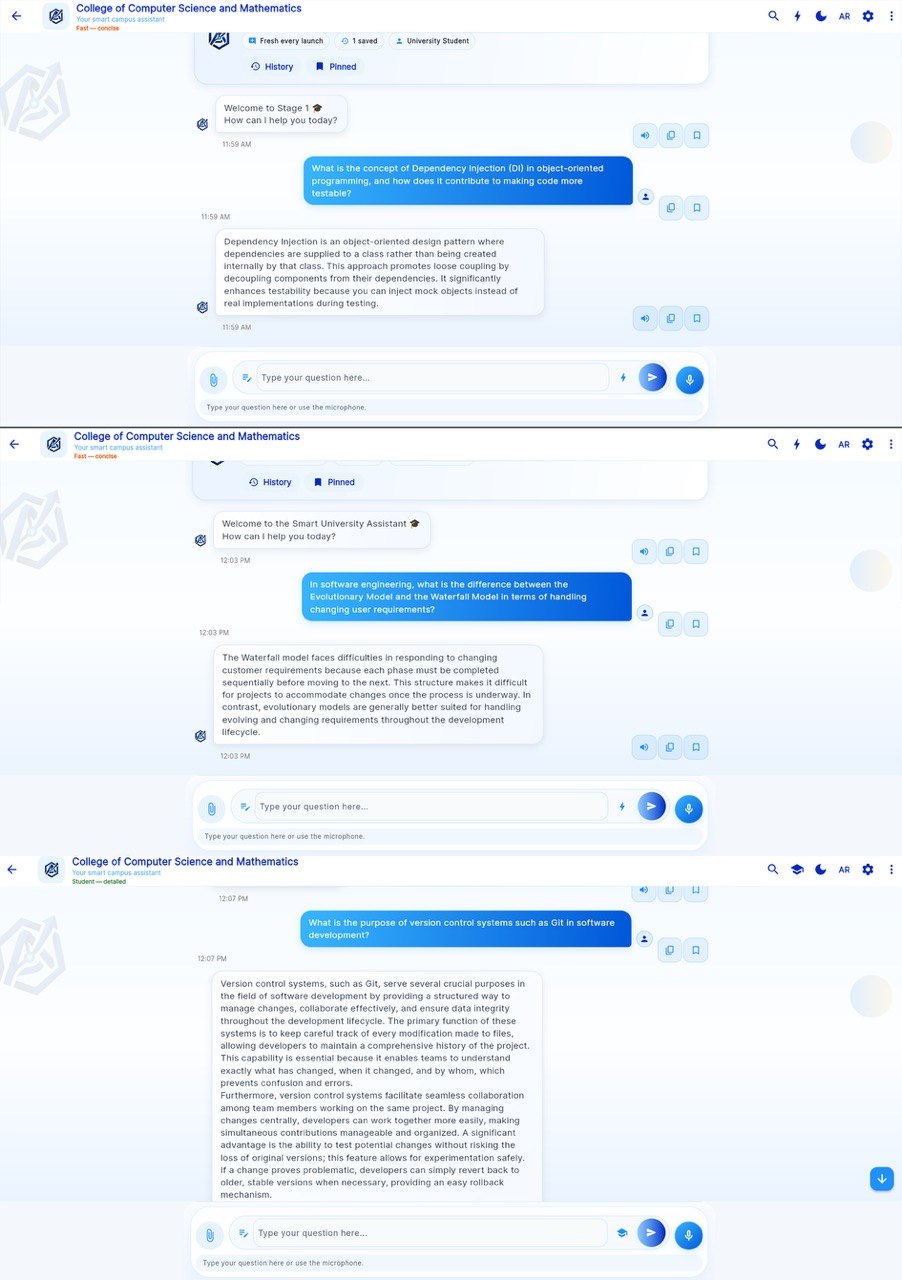
Higher education institutions are still struggling to offer secure, localized, and contextually aware academic support to students. Cloud-based intelligent assistants are powerful but they raise a lot of data privacy concerns and are often not specifically focused on a certain field. In this work we propose Intelligent Study Assistant (ISA), an on-device academic support system, which combines Retrieval-Augmented Generation (RAG) with the Gemma 4 E2B language model and is tuned through Low-Rank Adaptation (LoRA). The proposed architecture retrieves relevant educational content from a curated knowledge base before generating responses to reduce hallucination of factually incorrect information and aligns it with computer science education curricula. All processing is done locally which means there is no outside data transmission and the data will be safe at the institution level. We assessed the system's performance using 114 academic questions submitted by 50 students and faculty members. We found 88 fully correct answers and 15 partially correct answers, with only four out of the questions being inadequate because the subject matter was outside the curriculum set. The results illustrate that semantic retrieval and fine-tuning for parameter-efficient fine-tuning are effective to produce domain-specific, accurate, and privacy-oriented academic assistance while local application of such a system guarantees data privacy
مسار خدمة المجتمع
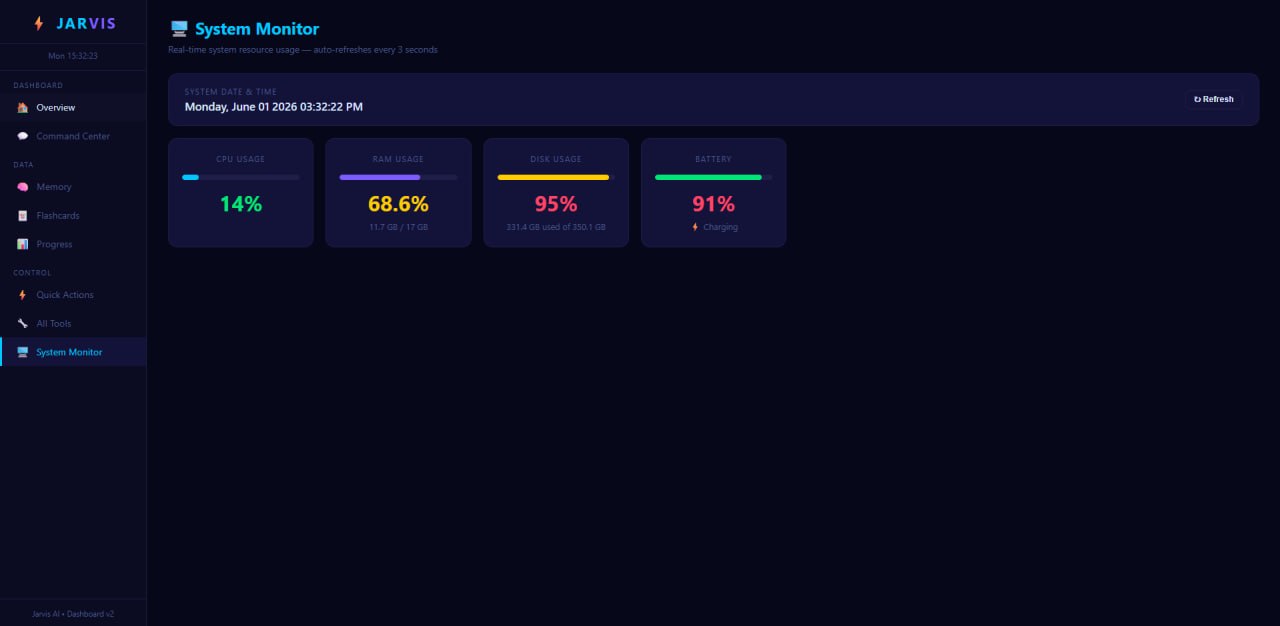
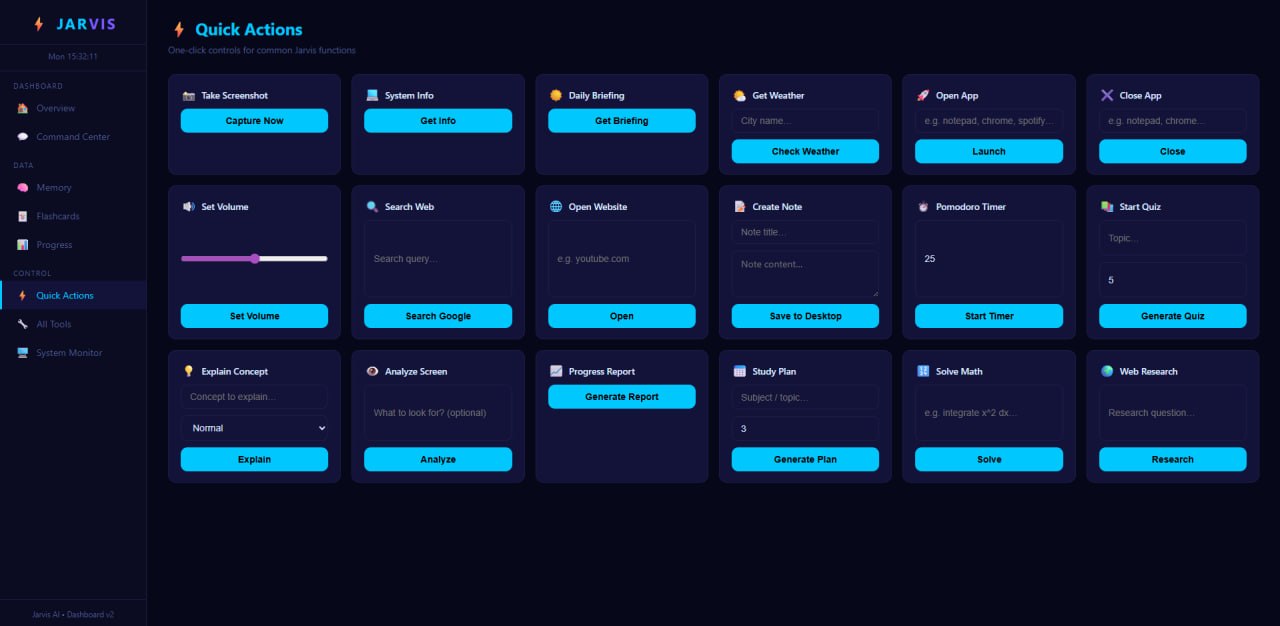
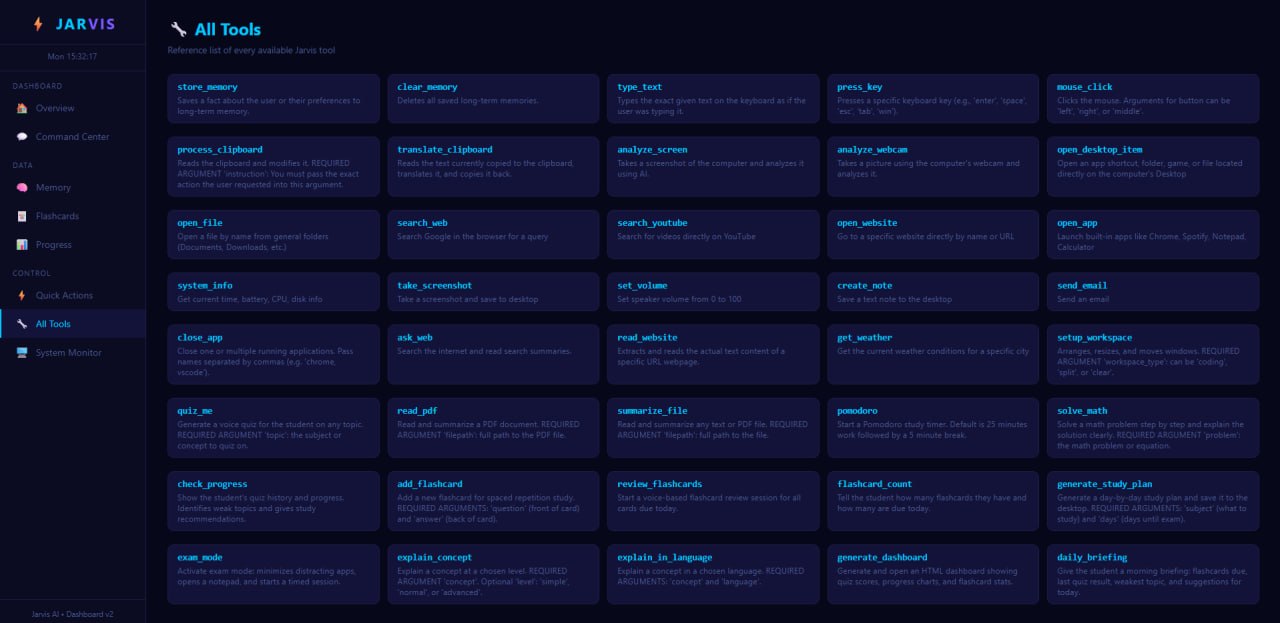
Jarvis: An AI-Powered Voice-Controlled Study Assistant for Self-Directed Student Learning
Voice-first interaction is increasingly recognized as a natural, low-friction modality for personalized education. This paper presents Jarvis, a fully voice-controlled AI study assistant that com…
الفريق
Alpha
رمز الفريق
NURAI2026-0558
المشرف
طرفة ياسين حامد
قراءة الوصف الكامل للمشروع
Voice-first interaction is increasingly recognized as a natural, low-friction modality for personalized education. This paper presents Jarvis, a fully voice-controlled AI study assistant that combines automatic speech recognition, a large language model (LLM) reasoning engine, and more than forty locally executed tools to support student learning. The system listens for a wake word, transcribes spoken commands through Whisper Large v3, and dispatches a JSON-structured tool-calling pipeline powered by LLaMA 3.3-70B served on Groq's Language Processing Unit (LPU) hardware for low-latency inference. Jarvis integrates a spaced-repetition flashcard engine, an adaptive voice quiz generator, a Pomodoro-based study-session manager, persistent long-term memory, and a web dashboard for progress analytics. A working prototype was implemented in Python on Windows and evaluated qualitatively against its design goals. The results indicate that the tool-calling architecture reliably routes natural-language commands to the correct function and that sub-second LLM inference is achievable, making continuous voice interaction practical for everyday study use.
NURAI · 2026
مسار خدمة المجتمع
Multi-Agent Mobile Robot System
In a service environment, before multi-agent coordination can be initiated, a single-robot platform must be validated. This work introduces Axon, a basic mobile robot that is the first operationa…
الفريق
Top-1
رمز الفريق
NURAI2026-0397
المشرف
د. علي عبد الجليل عبدالله
قراءة الوصف الكامل للمشروع
In a service environment, before multi-agent coordination can be initiated, a single-robot platform must be validated. This work introduces Axon, a basic mobile robot that is the first operational robot of a future Multi-Agent Robotic System (MARS). The platform features a humanoid-style 3D-printed body mounted on a differential-drive base, a distributed architecture comprising Raspberry Pi 5 (ROS2 hub), Arduino (PID motor control), and NVIDIA Jetson Nano Kit (vision and AI).
Axon's autonomous navigation is based on LiDAR SLAM, 3D obstacle detection with a ZED stereo depth camera, and YOLOv5 object recognition. A graphical robotic face interface allows for natural human–robot interaction in healthcare and service deployments.
The successful SLAM mapping, real-time path clearance analysis, accurate odometry, and multi-turn conversational HRI were verified by practical testing. These results provide a ROS2-native foundation that can be expanded to fleet-level coordination through the OpenRMF and VDA5050 standards.