AI-Integrated Interactive Virtual Chemistry Laboratory Using 3D Graphics Libraries
This project explores the development of an interactive virtual chemistry laboratory based on web-browser technologies using 3D graphics libraries (Three.js and GSAP) integrated with Artificial I…
الفريق
نخبة واسط
رمز الفريق
NURAI2026-0784
المشرف
د. أحمد رعد السوداني
قراءة الوصف الكامل للمشروع
This project explores the development of an interactive virtual chemistry laboratory based on web-browser technologies using 3D graphics libraries (Three.js and GSAP) integrated with Artificial Intelligence to enhance simulation accuracy and educational guidance. The research aims to address traditional laboratory constraints such as high costs, safety risks, and geographic accessibility. Results indicate that the system achieves significant educational efficiency by enhancing conceptual understanding and reducing operational costs, while ensuring the highest standards of scientific integrity and originality in software design.
المسار الطبي
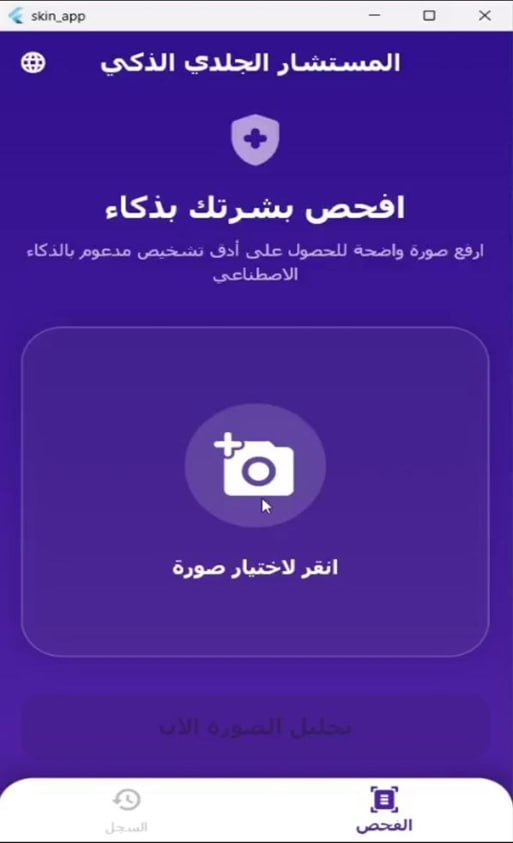
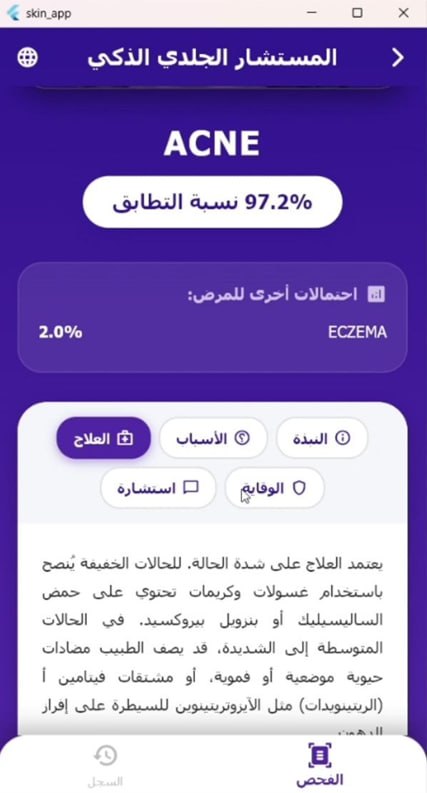
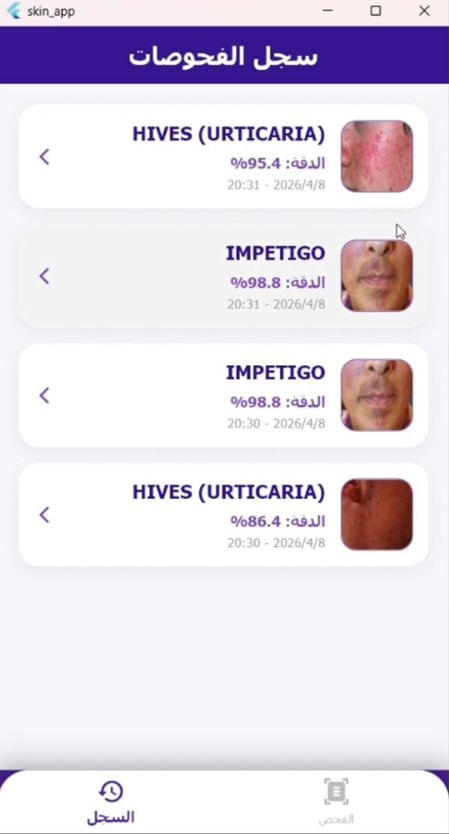
نظام ذكي للكشف عن الأمراض الجلدية وتشخيصها واقتراح العلاج المناسب
Skin diseases are among the most common health problems worldwide, yet access to specialized dermatologists remains limited in many regions. This paper presents an intelligent multi-platform syst…
الفريق
Blue Gene
رمز الفريق
NURAI2026-0791
المشرف
د.مريم جواد
قراءة الوصف الكامل للمشروع
Skin diseases are among the most common health problems worldwide, yet access to specialized dermatologists remains limited in many regions. This paper presents an intelligent multi-platform system for detecting and diagnosing fifteen common skin diseases such as eczema, psoriasis, acne, melanoma, and fungal infections using deep learning techniques. A convolutional neural network (CNN) based on EfficientNet‑B3 was trained on a balanced dataset of 3,750 images (250 per disease). The model achieved an overall accuracy of 94.8% and a macro‑average F1‑score of 94.0%, with melanoma detection reaching 97.7%. The trained model was converted to TensorFlow Lite and integrated into Android, desktop, and web applications. Real‑world testing on 50 new images yielded 92.0% accuracy, confirming good generalization. While not a substitute for professional diagnosis, the system provides a valuable assistive tool for patients in underserved areas, medical students, and primary care physicians.