Problem Statement: Traditional sleep monitoring is often expensive and intrusive, leaving many individuals unaware of poor sleep quality that leads to chronic health issues and low productivity. …
الفريق
الهندسه الطبيه
رمز الفريق
NURAI2026-0065
المشرف
أوس جبار مجيد
قراءة الوصف الكامل للمشروع
Problem Statement:
Traditional sleep monitoring is often expensive and intrusive, leaving many individuals unaware of poor sleep quality that leads to chronic health issues and low productivity.
• Proposed Solution/Innovation:
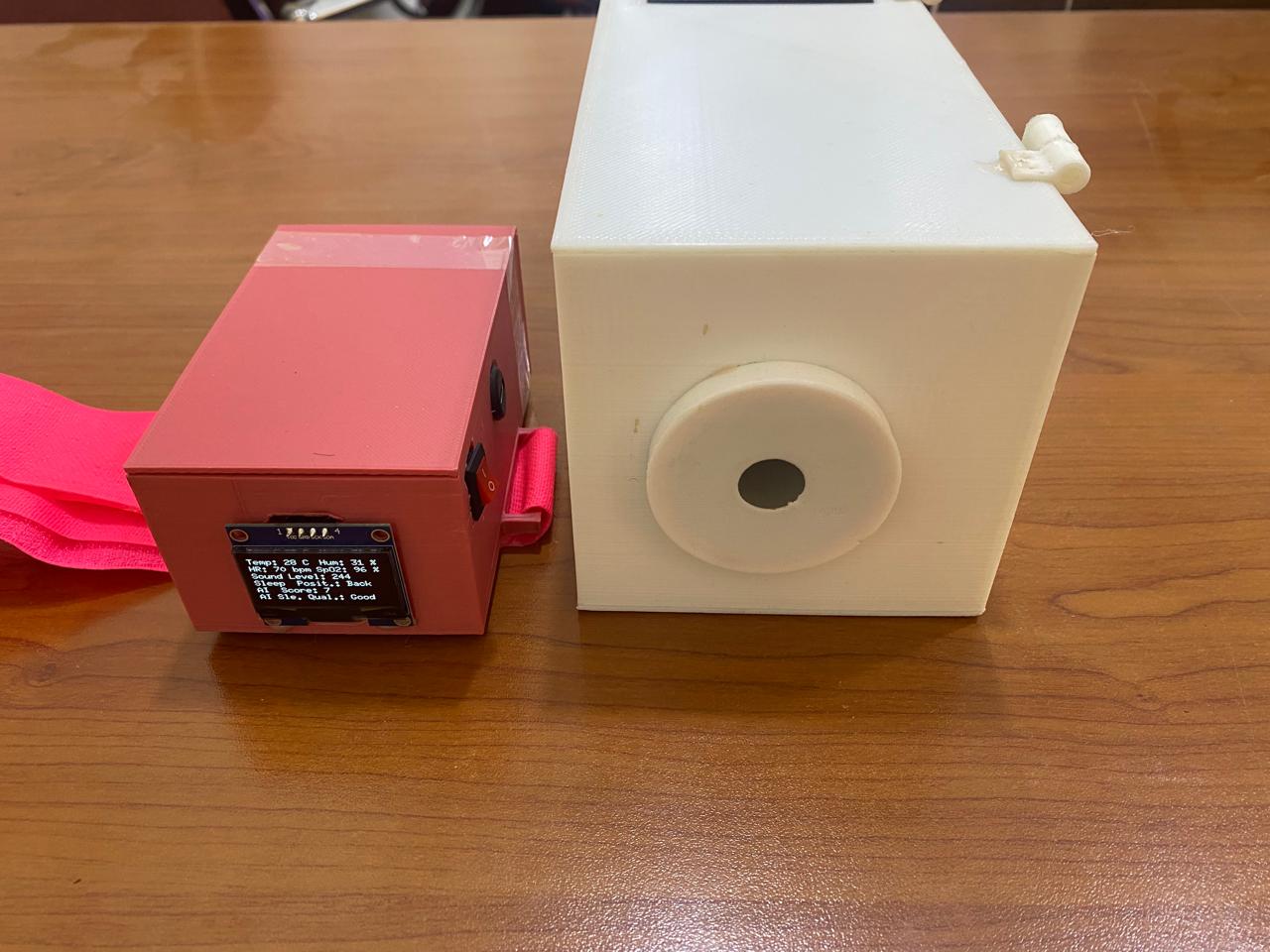
An AI-powered, non-invasive monitor that analyzes sleep cycles in real-time to provide high-accuracy insights and personalized health recommendations at home.
• Method/Implementation:
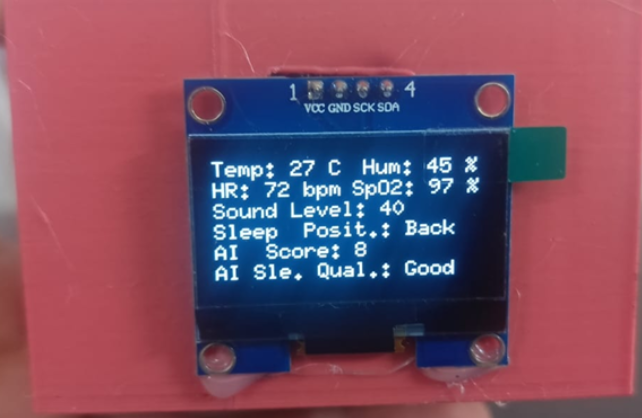
The system uses IoT sensors to track movement and vitals. A Machine Learning model classifies sleep stages (Deep, Light, REM) and identifies patterns or disturbances throughout the night.
• Key Components (HW/SW/AI):
• HW: IoT Biometric & Environment sensors.
• SW: Mobile dashboard for data visualization.
• AI: Deep Learning models for sleep stage classification.
• Results/Impact:
Empowers users to improve their recovery and mental health through actionable data, potentially detecting early signs of sleep disorders.
مسار التربية والتعليم
CyberGuard AI
Problem Statement: Students in the Cybersecurity Department often struggle to get immediate answers to course-related questions outside office hours. There is no dedicated support system availabl…
الفريق
فريق الأمن السيبراني
رمز الفريق
NURAI2026-0020
المشرف
حسن هادي خيون
قراءة الوصف الكامل للمشروع
Problem Statement:
Students in the Cybersecurity Department often struggle to get immediate answers to course-related questions outside office hours. There is no dedicated support system available at the department entrance, leading to delays in learning and reduced student engagement.
Proposed Solution/Innovation:
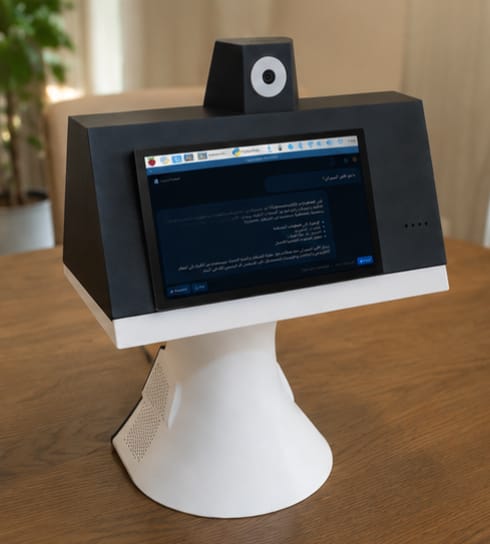
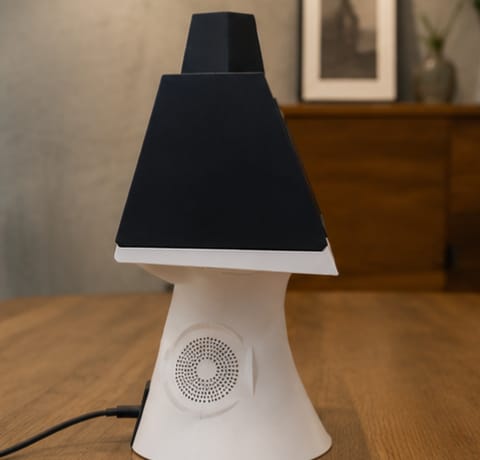
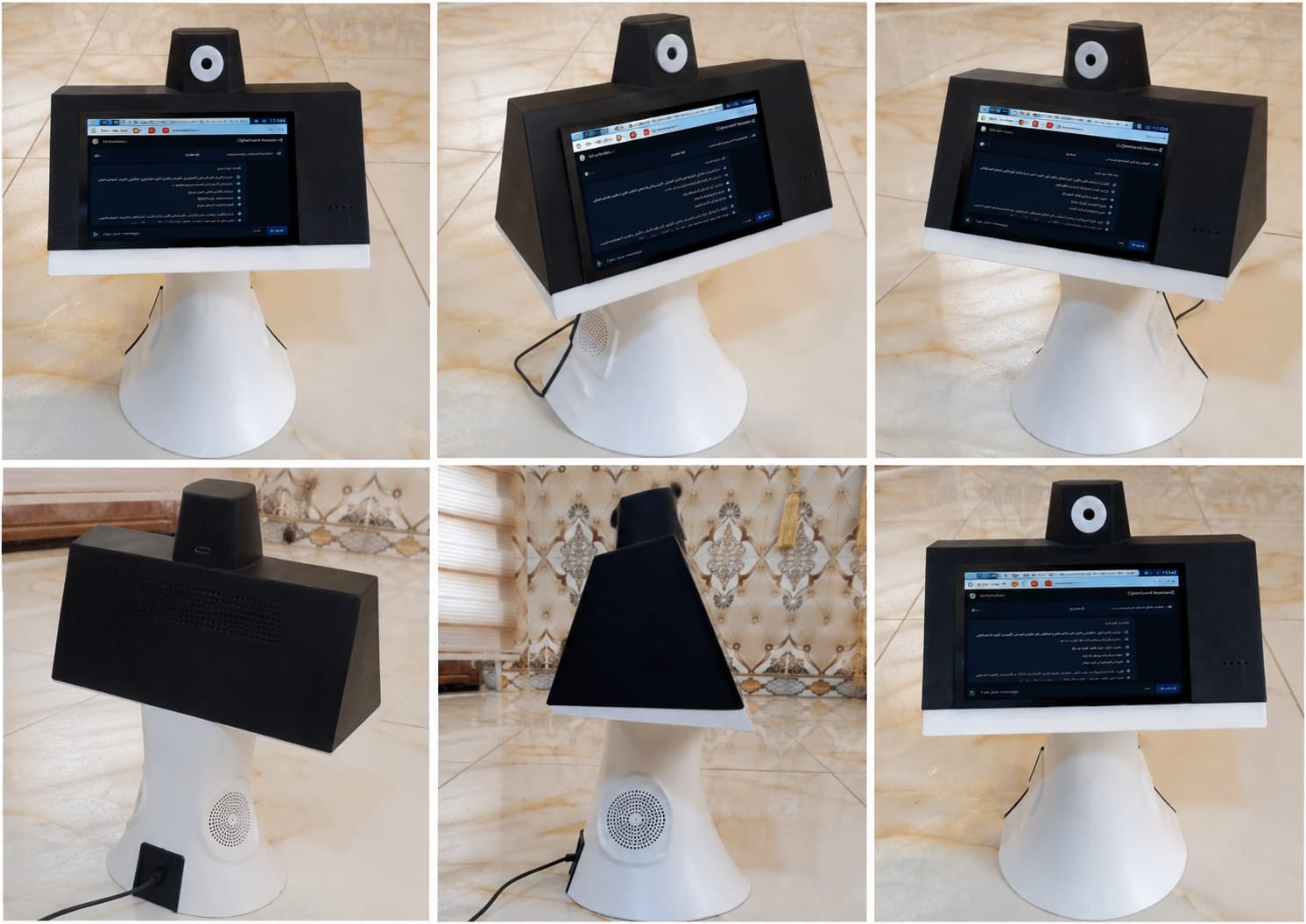
CyberGuard AI is an AI-powered kiosk robot placed at the department entrance. It provides instant, accurate answers to students' academic questions in both Arabic and English — by voice or text — 24/7, without requiring human intervention.
Method/Implementation:
The system uses Retrieval-Augmented Generation (RAG): course materials are ingested into a local ChromaDB vector database. When a student asks a question, the most relevant content is retrieved and passed to an LLM (Groq Cloud API with local fallback) to generate a grounded answer. The entire pipeline runs on a Raspberry Pi 5.
Key Components (HW/SW/AI):
Hardware: Raspberry Pi 5 (8GB), touchscreen, USB microphone, speaker, and Pi camera. Software: PySide6 UI, LangChain + ChromaDB (RAG), Groq API (Llama 3.3 70B online), LlamaCpp (Llama 1B offline), Face-ID authentication, and a full security layer against injection attacks.
Results/Impact:
The robot successfully answers cybersecurity course questions in real time, recognizes registered students via Face-ID, operates in kiosk mode preventing unauthorized system access, and continues functioning during internet outages using the local AI model.
Demo Summary:
The 60-second demo shows a student approaching the kiosk, logging in via Face-ID, asking a cybersecurity question in Arabic by voice, and receiving a spoken answer — then switching to English text input to demonstrate bilingual capability.
المسار الزراعي
Development of an Agricultural Drone for Seed Spreading and Local AI-Based Plant Health Screening
This project presents the hardware and software architecture of a low-cost agricultural quadrotor for controlled seed spreading, first-person-view (FPV) monitoring, and local image-based plant-he…
الفريق
Quadfire Eng Team
رمز الفريق
NURAI2026-0921
المشرف
علي سلمان كرجي
قراءة الوصف الكامل للمشروع
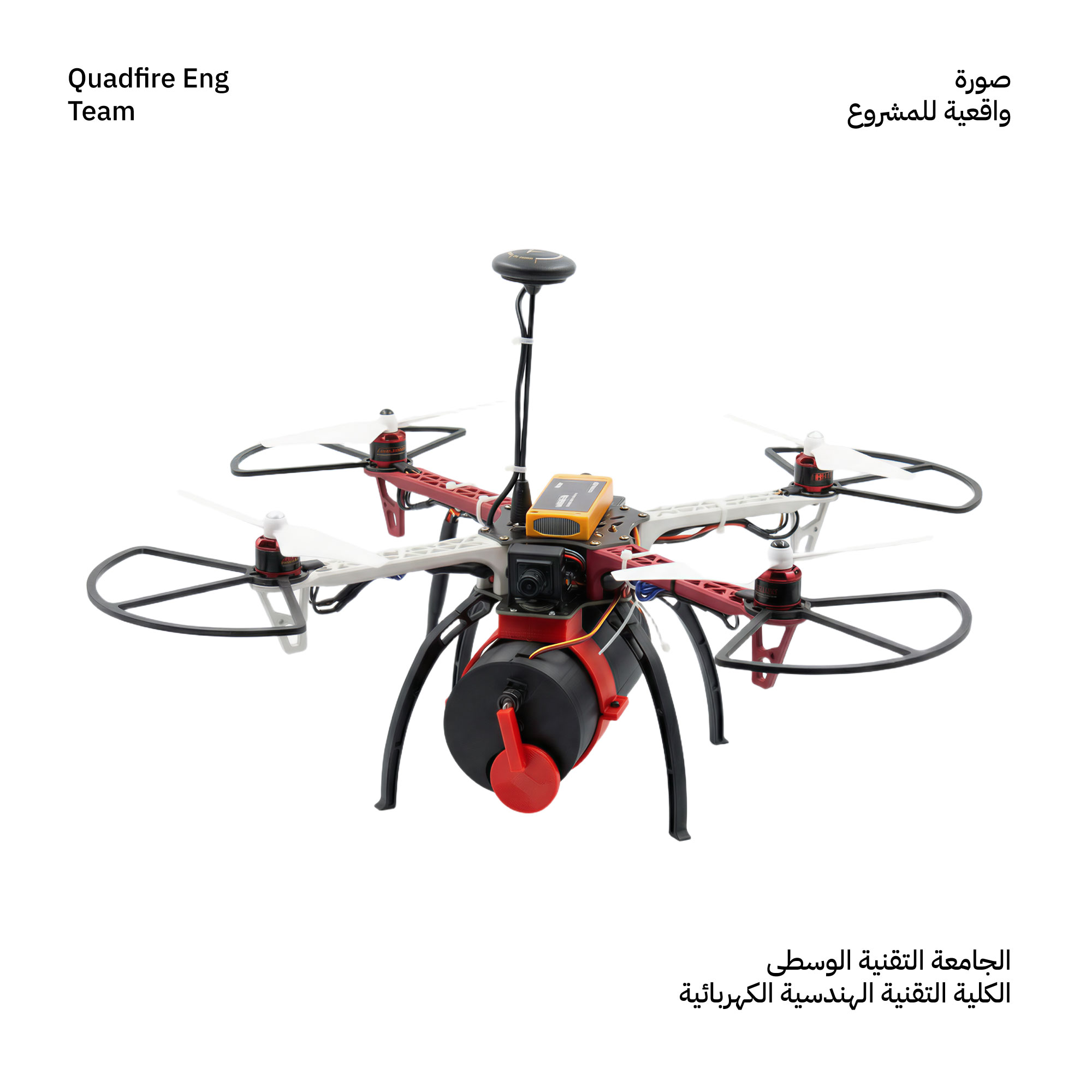
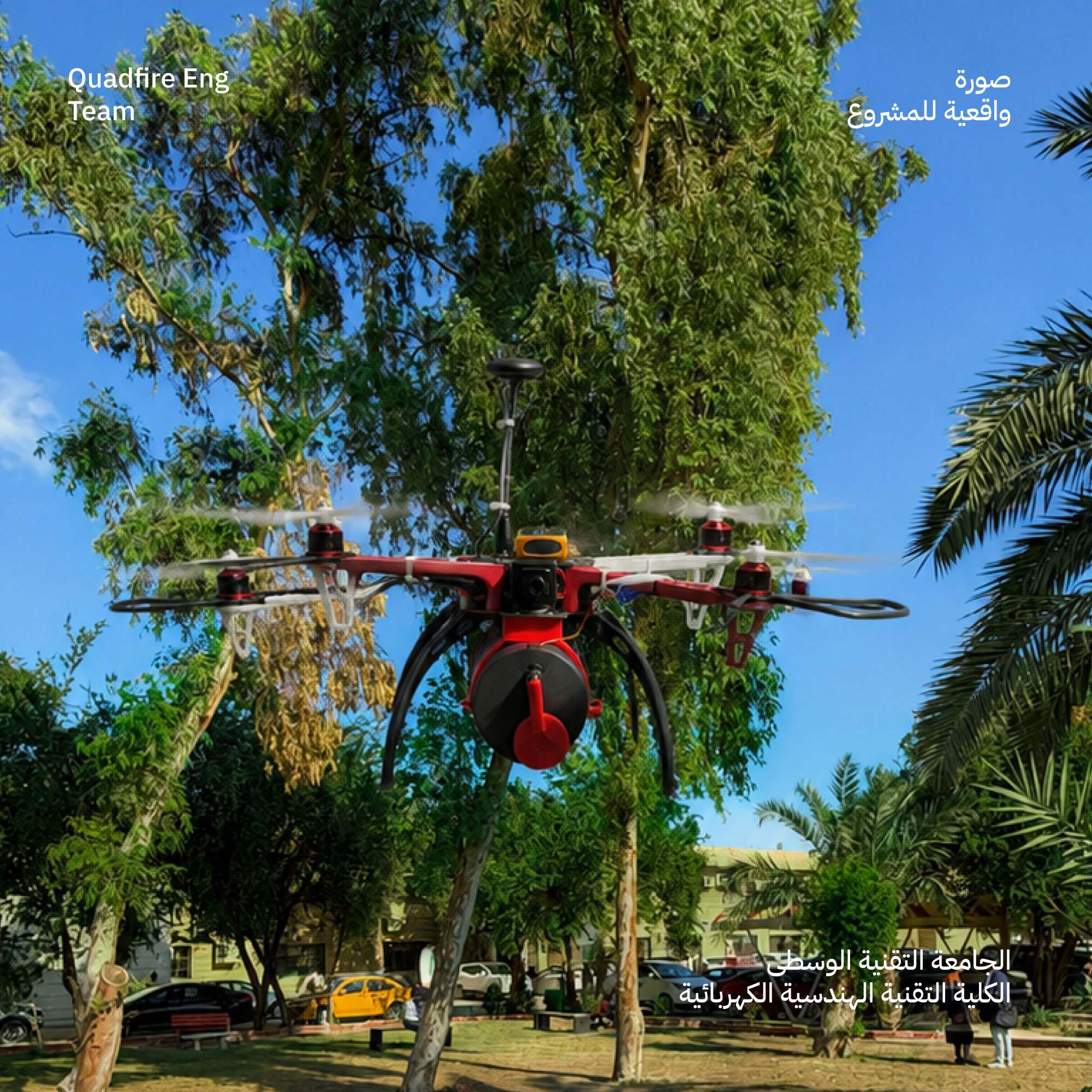
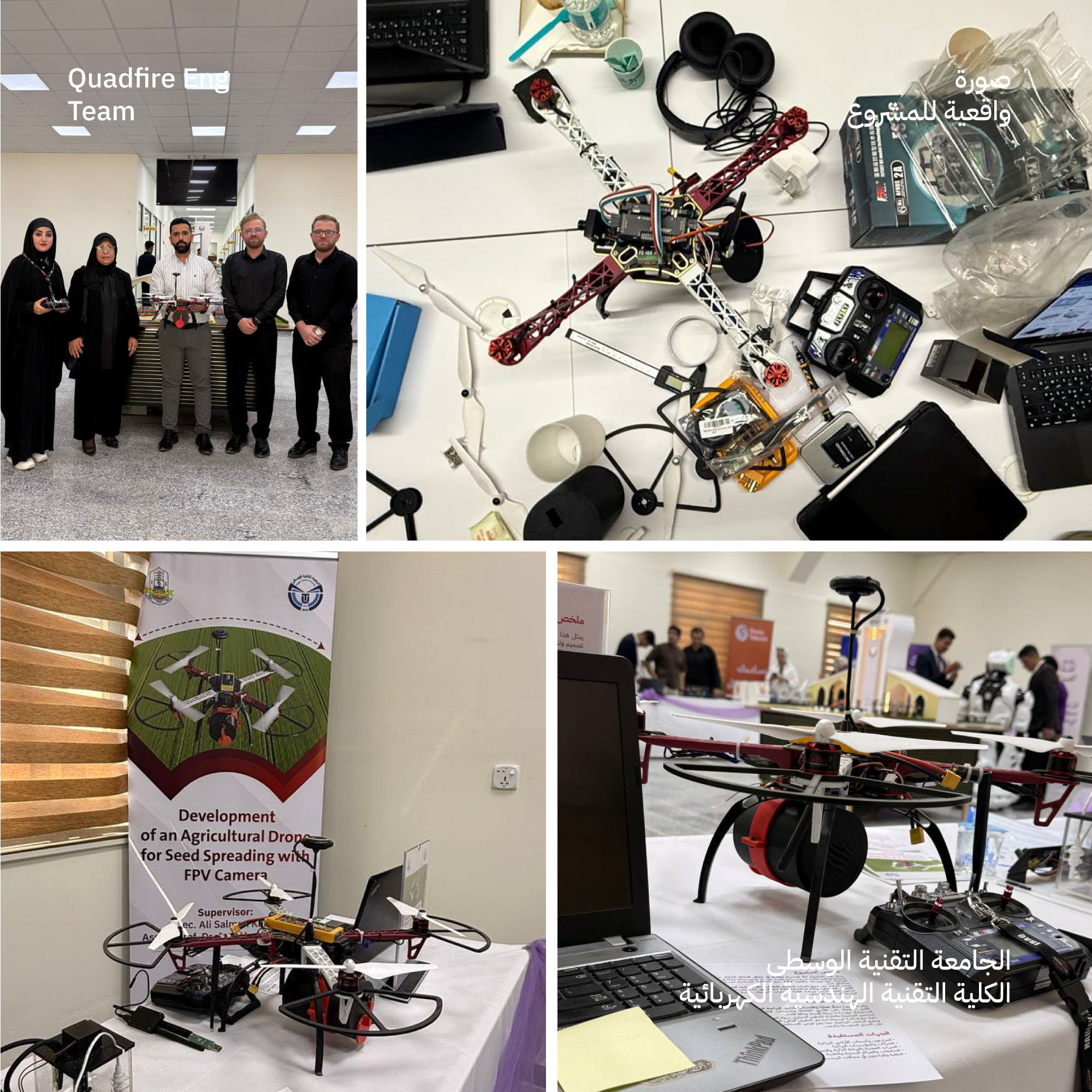
This project presents the hardware and software architecture of a low-cost agricultural quadrotor for controlled seed spreading, first-person-view (FPV) monitoring, and local image-based plant-health screening. The prototype design uses a 1 kg servo-controlled hopper, GPS waypoint navigation, telemetry, and a ground computer for local image processing. A real controlled-image pilot test was executed locally using 40 colour potato-leaf images from PlantVillage: 20 healthy and 20 early-blight images. With a fixed stratified 70/30 split, 28 source images were used for training and 12 original images were held out for testing. A lightweight HOG-HSV feature extractor and RBF support-vector machine achieved 83.33% accuracy on the held-out set; early-blight recall was 100.00% and healthy-leaf recall was 66.67%. These results demonstrate the feasibility of local screening on controlled images only and do not establish field performance, FPV-camera performance, or automatic pest diagnosis.
مسار خدمة المجتمع
Intelligent Babylonian Robot for Detecting Emergency Humanitarian Situations
This project addresses a significant problem in urban search and rescue (USAR) operations within highly lethal post-disaster environments. The proposed solution is based on the Rescue Robot V3, a…
الفريق
فريق الهدف
رمز الفريق
NURAI2026-0925
المشرف
م.م هاني سعيد حسن
قراءة الوصف الكامل للمشروع
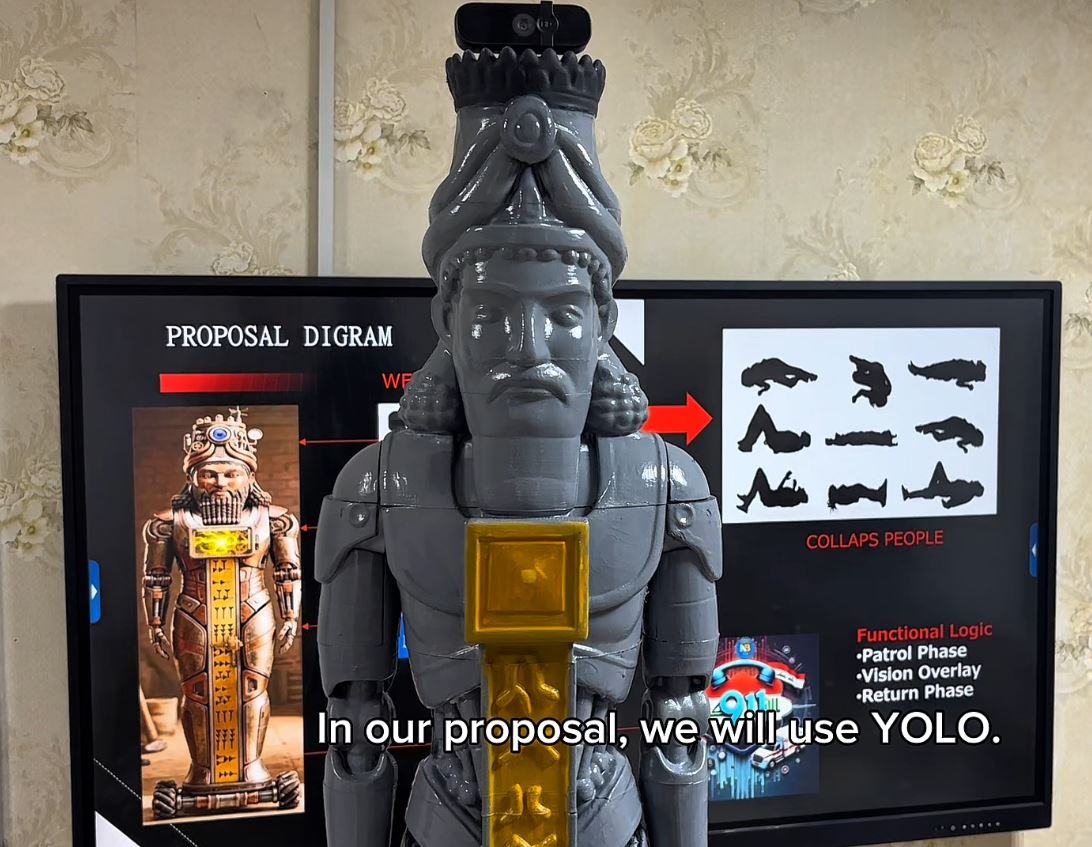
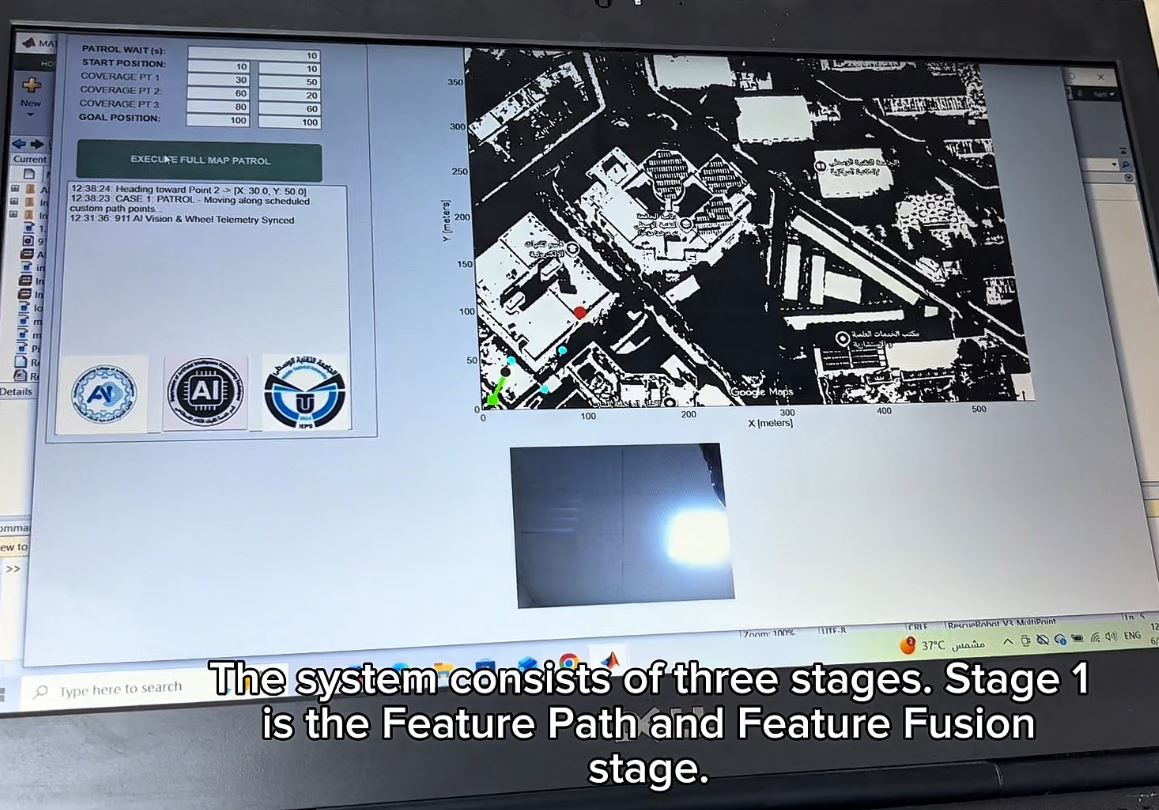
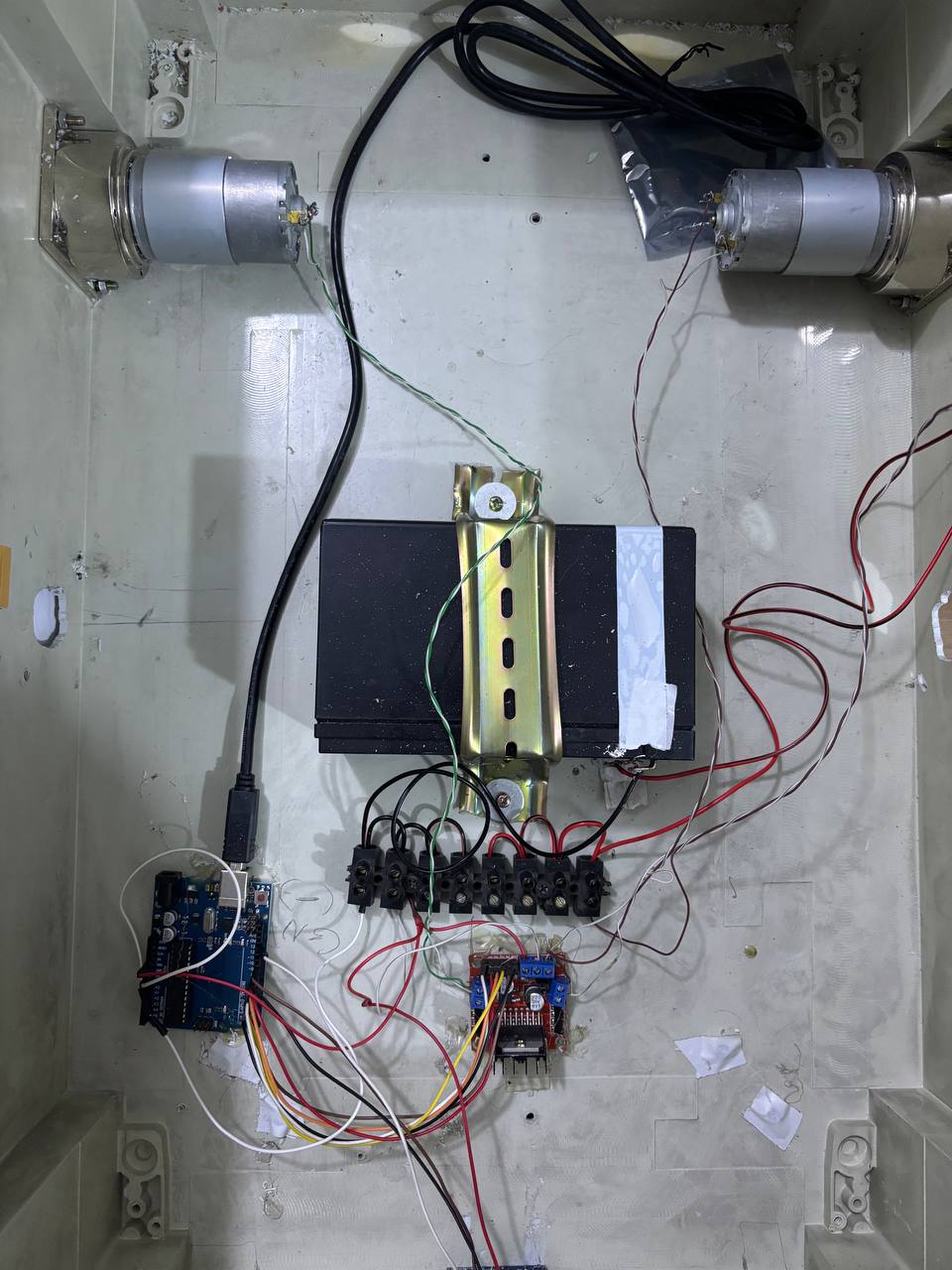
This project addresses a significant problem in urban search and rescue (USAR) operations within highly lethal post-disaster environments. The proposed solution is based on the Rescue Robot V3, an autonomous, 1.7-meter tall biomimetic platform featuring a Mesopotamian-inspired aesthetic design aimed at providing psychological comfort to victims. With the aim of mitigating the risks faced by human responders during the "Golden Hour" of recovery, the system integrates a 2WD differential chassis, ultrasonic obstacle avoidance, and a YOLOv4-powered artificial intelligence module for real-time detection of collapsed individuals (aspect ratio > 1.4). The expected outcomes include the deployment of a robust 5-point patrol-and-return navigation cycle, managed via MATLAB 2024a, that safely explores hazardous terrain, autonomously identifies emergency humanitarian situations, and maps the environment using a synchronized 3-color state tracking interface.
مسار خدمة المجتمع
Sign Language Translator for Speech Impaired Using AI Techniques
This project aims to tackle the lack of communication skills among deaf and speech impaired individuals who are socially and professionally cut off from the mainstream due to the lack of understa…
الفريق
فريق أصدقاء الهمم
رمز الفريق
NURAI2026-0920
المشرف
د. امال غازي حمد
قراءة الوصف الكامل للمشروع
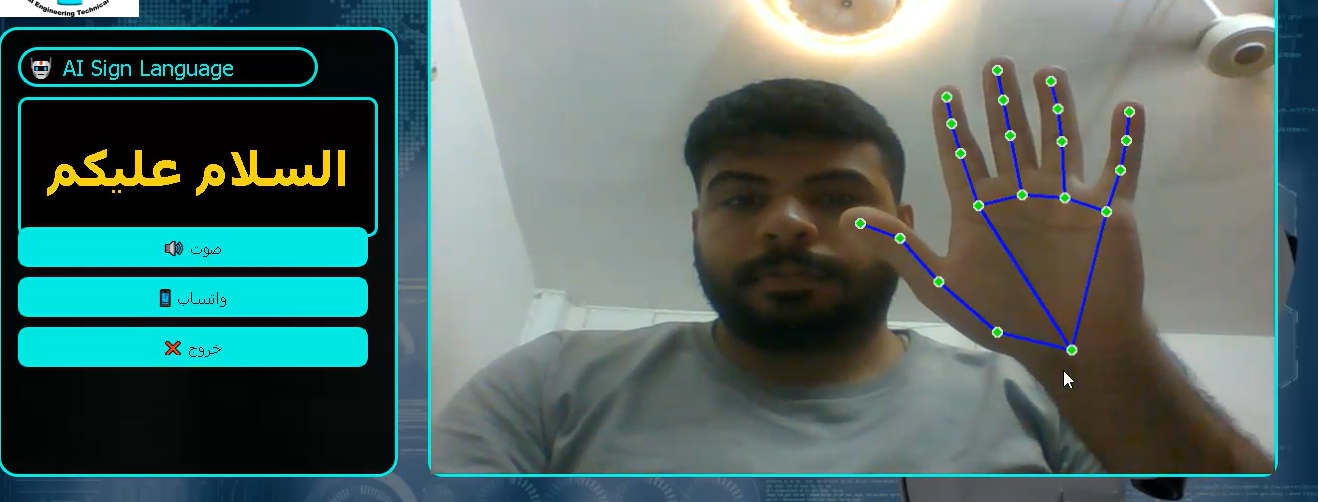
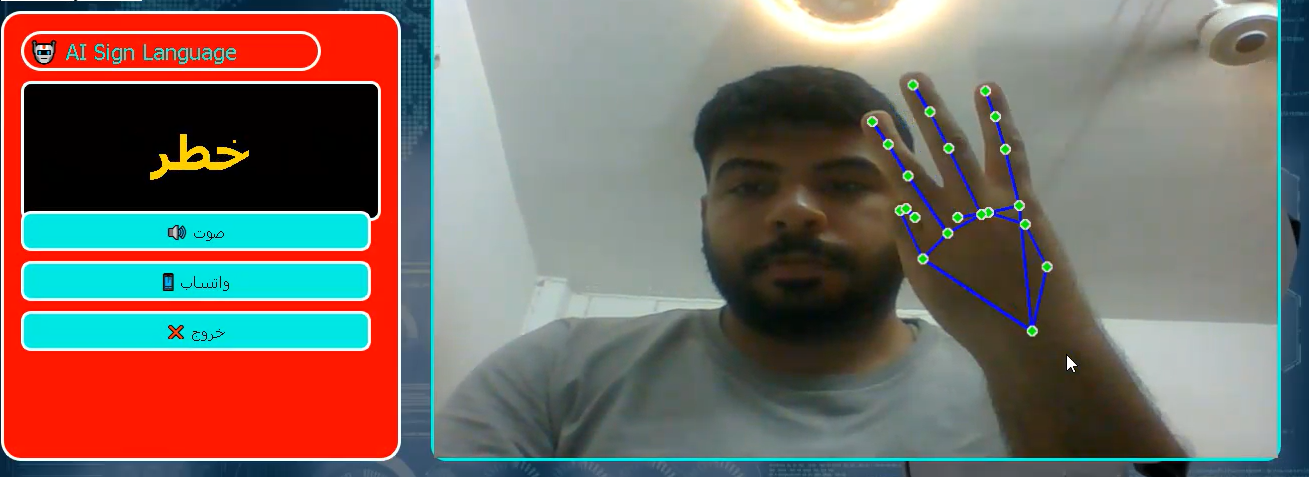
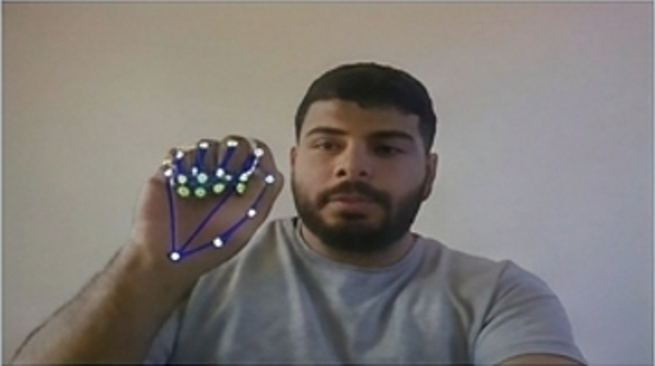
This project aims to tackle the lack of communication skills among deaf and speech impaired individuals who are socially and professionally cut off from the mainstream due to the lack of understanding of sign language among the mainstream. The proposed solution is developing a real-time Arabic Sign Language (ArSL) translator that translates hand gestures captured by a standard computer webcam, extracts hand landmarks using Kinetic mesh tracking and classifies extracted landmarks (hand feature vector) with a Random Forest classifier to provide recognized ASL signs in on-screen Arabic text and audible speech. The system is based on an efficient feature extraction pipeline that processes all the computations on commodity hardware, rather than on special purpose GPUs which have been the staple of heavy deep-learning models. It is able to recognize 35 ArSL gesture classes and has an overall recognition accuracy of 88.6%, maintaining 25-30 fps with sub-0.1 s latency. Built-in emergency feature detects a specific “ Danger” gesture and sends a distress message via the WhatsApp API. The outcomes are expected to be a dependable real-time recognition system, better social integration for hearing-impaired users, and a cost-effective assistive device that can be used in classrooms, workplaces and in the public sphere.
المسار الطبي
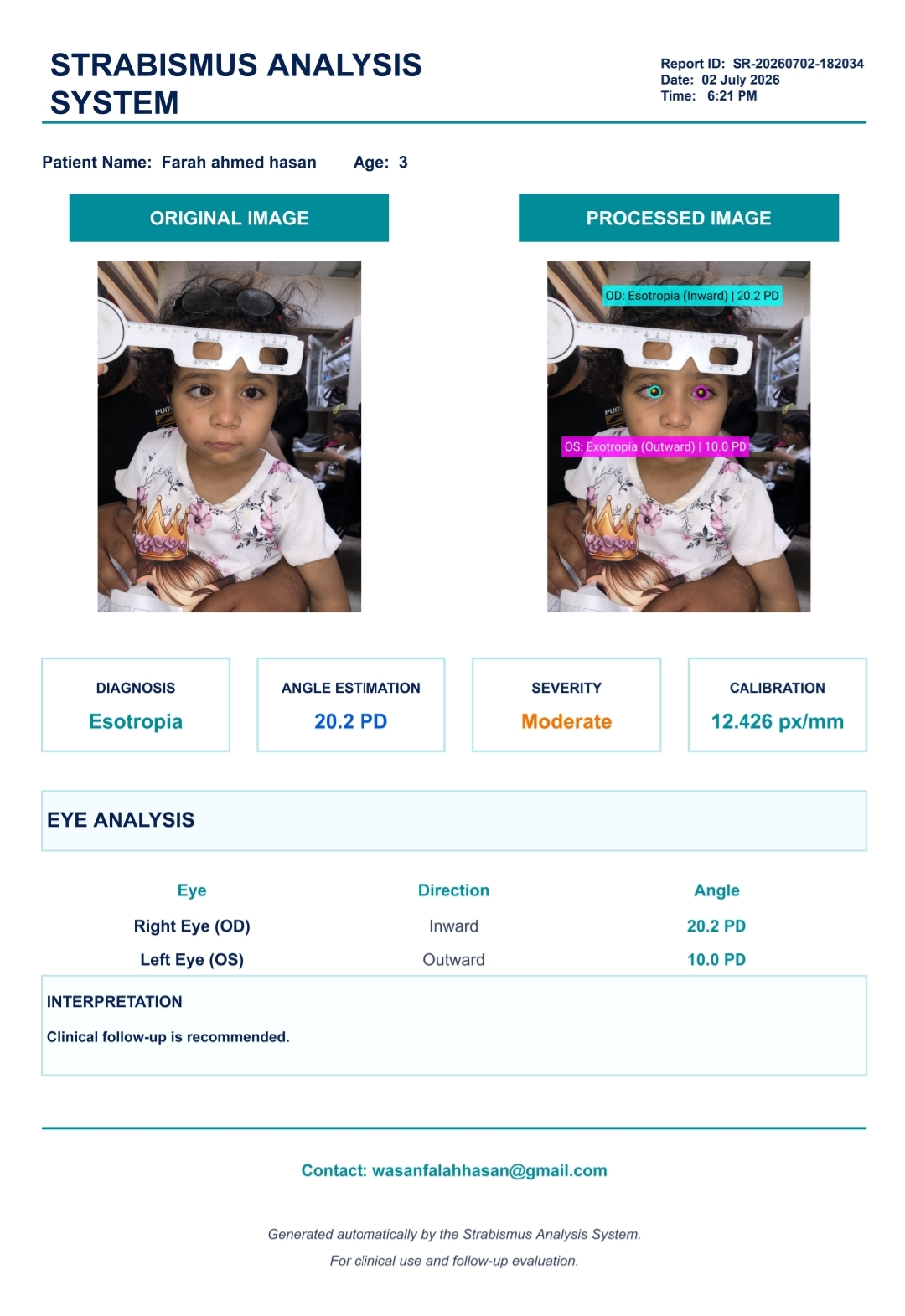
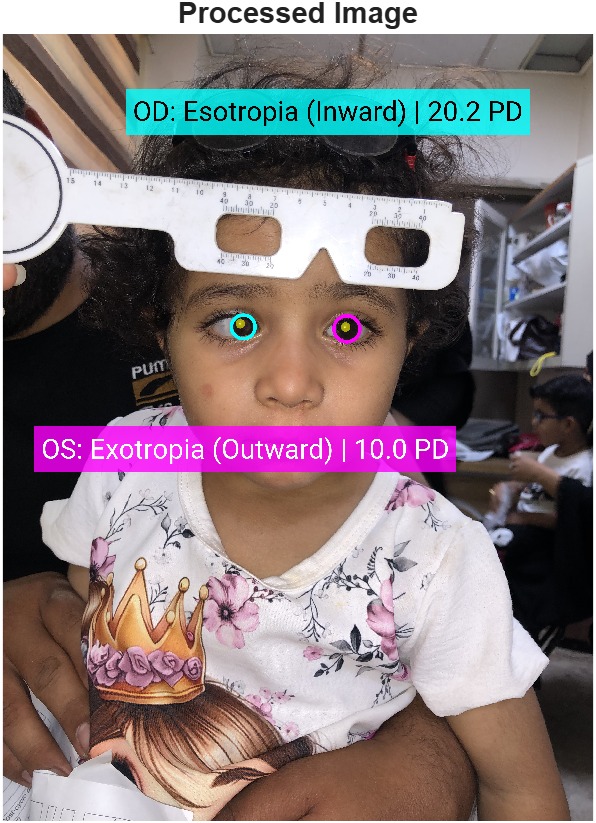
تطوير نموذج ذكي للتقييم الآلي للحول الأفقي وتقدير مقدار انحراف العين
يتناول هذا المشروع مشكلة مهمة تتمثل في التشخيص الدقيق والتقييم الكمي للحول الأفقي. يعتمد الحل المقترح على نظام ذكي لمعالجة الصور باستخدام برنامج MATLAB ، يوظف كشف المعالم العينية وتحليل هيرشبرغ ب…
الفريق
صنّاع الرؤية الذكية
رمز الفريق
NURAI2026-0927
المشرف
م.م عثمان وليد خالد
قراءة الوصف الكامل للمشروع
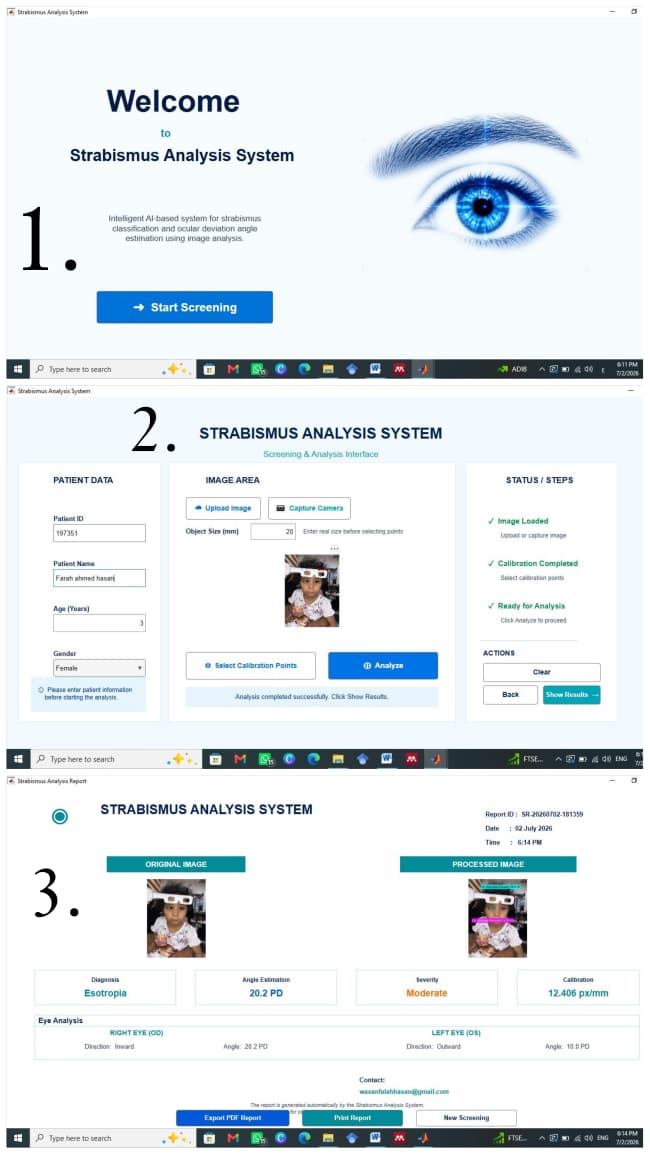
يتناول هذا المشروع مشكلة مهمة تتمثل في التشخيص الدقيق والتقييم الكمي للحول الأفقي. يعتمد الحل المقترح على نظام ذكي لمعالجة الصور باستخدام برنامج MATLAB ، يوظف كشف المعالم العينية وتحليل هيرشبرغ بهدف التصنيف التلقائي لنوع الحول وتقدير زاوية انحراف العين من صور الوجه الملتقطة في وضعية النظر الأولية. ومن المتوقع أن تسهم مخرجات النظام في التمييز الموثوق بين المحاذاة العينية الطبيعية والحول الأنسي والحول الوحشي، مع توفير تقدير دقيق لمقدار الانحراف، وتحسين كفاءة برامج التحري والكشف عن الحول، وتقديم وسيلة سريعة ومنخفضة التكلفة للفحص الأولي، خاصةً لدى الأطفال والمرضى غير المتعاونين، مع تقليل الوقت اللازم لتقييم المرضى المتعاونين.